



You do not need 50 coffee chats and a color-coded spreadsheet to make progress. If you are trying to figure out how to find women tech mentors, the faster route is usually not wider outreach. It is better targeting, better context, and a clearer sense of what kind of guidance you actually need.
That matters in tech because mentorship is often framed as a feel-good extra, when in reality it can change who gets access to opportunities, introductions, and honest career feedback. For women in tech, especially in ecosystems where representation still lags in leadership, the right mentor can help decode hiring patterns, promotion signals, founder dynamics, and the quieter politics that shape career growth.
Why finding women tech mentors can feel harder than it should
The supply-demand gap is real. There are more early- and mid-career women looking for support than there are senior women with time to give it. Add the usual pressure on visible women leaders to speak, advise, recruit, and represent, and mentorship requests can start to look like another unpaid part-time job.
That does not mean the search is hopeless. It means the old advice - message someone impressive and ask them to mentor you - is often inefficient. A better approach is to treat mentorship like relationship-building inside an ecosystem. You are not looking for a perfect career fairy godmother. You are looking for aligned expertise, mutual respect, and a format that works for both people.
Start with the kind of mentor you actually need
Before reaching out to anyone, define the gap. Are you trying to break into product from marketing? Raise your visibility as an engineering lead? Understand the investor landscape? Navigate being the only woman on a technical team? Those are different mentorship needs, and they point to different people.
Career-stage alignment matters too. A VP at a global tech company may be inspiring, but a mentor one or two steps ahead of you can often offer sharper, more practical advice. If you are entering cybersecurity, someone who made that move recently may be more useful than a CISO who has not job-hunted in a decade.
This is where many searches go off track. People look for status before relevance. In practice, relevance tends to produce better conversations and a higher chance of an ongoing connection.
How to find women tech mentors in the right places
The best mentors are rarely hiding. They are usually visible in specific circles where expertise and community overlap.
Professional communities are still one of the strongest starting points. Women-in-tech networks, startup communities, operator groups, and specialized associations create a natural context for connection. The advantage is not just access. It is warmer access. When someone is already participating in a mission-aligned space, they are more likely to respond to thoughtful outreach.
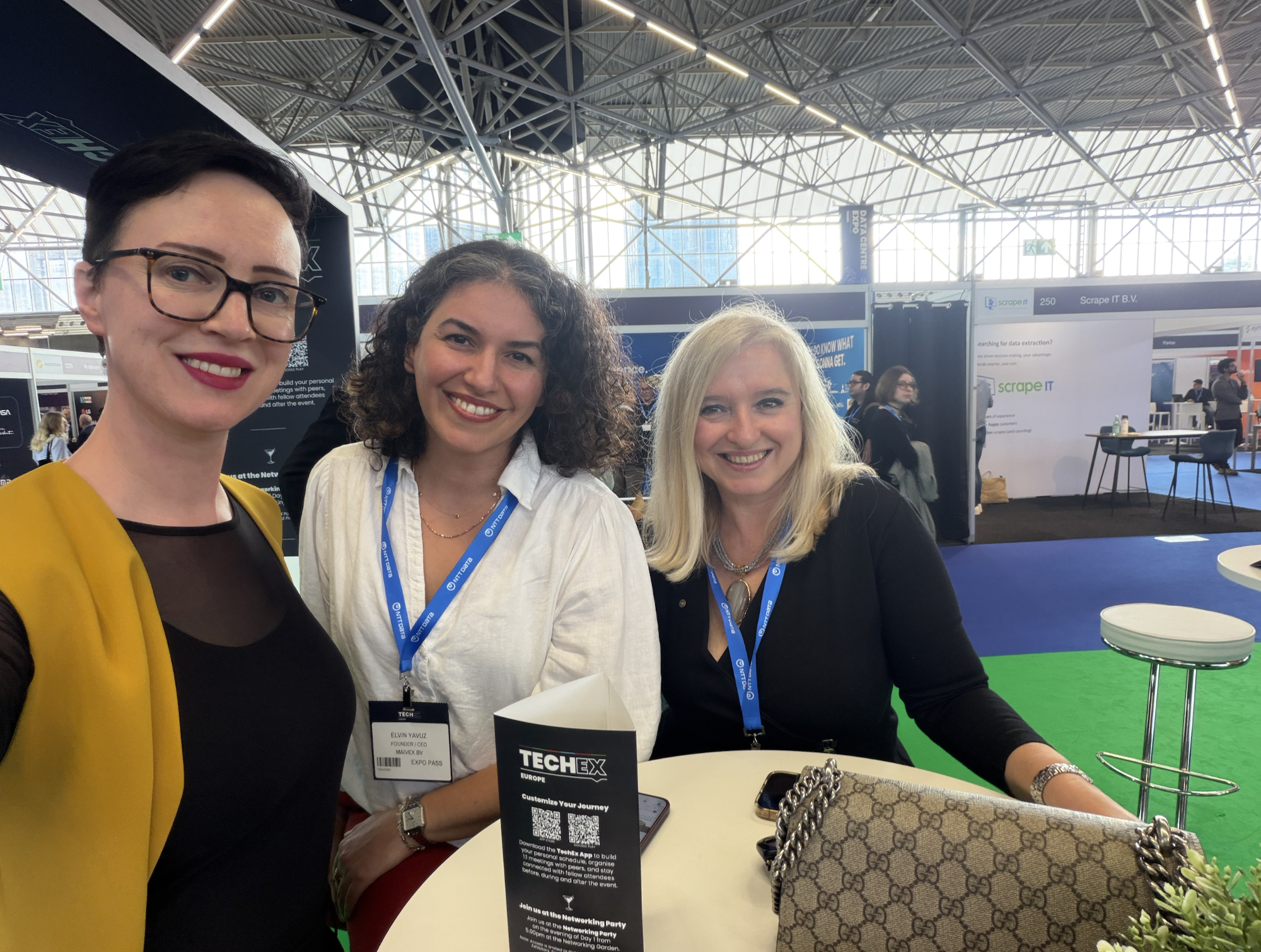
Events matter too, especially niche ones. A broad tech conference can be useful for exposure, but smaller founder salons, product meetups, AI roundtables, and women-led ecosystem events often create better conversation density. You are more likely to meet someone who shares your focus and has time for a real exchange.
Digital visibility is another overlooked path. Speakers on panels, authors of sharp LinkedIn posts, podcast guests, and women quoted in trade coverage are often easier to approach than people who look inaccessible on paper. You already know what they think, what they work on, and whether their perspective resonates with you.
If you work in the European ecosystem, this is especially relevant. The scene is connected, but still relationship-driven. You will often get further by showing up consistently in the same circles than by sending cold messages to the biggest names in the room.
Look for proximity, not just prestige
One of the most effective filters is proximity. That could mean geography, function, industry, or shared experience. A fintech operator in Amsterdam may be more helpful to you than a famous Silicon Valley executive if your real questions involve European regulation, local hiring, or regional investor expectations.
Shared context builds trust faster. It also leads to advice that is grounded instead of generic.
Don’t ignore peer and near-peer mentors
Not every mentor needs to be senior. Some of the most useful women tech mentors are peers or near-peers who can help you compare notes, share resources, and pressure-test decisions in real time.
This matters because mentorship does not always need to be top-down. Sometimes you need strategic perspective. Sometimes you need tactical clarity from someone who just navigated the same challenge last quarter.
What good outreach looks like
Once you have a shortlist, your message should be specific, brief, and respectful of time. Vague admiration is easy to ignore. Context is what gets attention.
Say why you are reaching out to this person in particular. Mention the shared context, their work, or a specific insight you found useful. Then ask for something small. A 20-minute conversation about one focused topic is more realistic than asking whether they will be your mentor.
This is the part many people miss. Mentorship usually starts after a good conversation, not before it. If the first exchange is useful and the fit is there, a longer-term rhythm can develop naturally.
A strong outreach note sounds like a professional with intent, not a fan asking for access. It might mention that you are moving into a product role, noticed their path from operations to product leadership, and would value 20 minutes on what made that transition work. Clear, relevant, and bounded.
Make it easy to say yes
Senior women in tech are busy, and many are asked for mentorship often. Your job is to lower the friction.
Be clear on the topic. Offer flexible timing. Avoid making the first conversation emotionally overloaded or overly broad. If you can show that you have done your homework, thought about your questions, and value their time, you already stand out.
It also helps to signal that you are open to different formats. Not everyone wants a standing monthly call. Some people prefer one-off conversations, occasional check-ins, or quick voice notes when a specific issue comes up. A lighter structure can still be deeply valuable.
Where mentorship programs help - and where they don’t
Formal mentorship programs can be excellent, especially if you are early in your career or entering a new function. They create structure, reduce awkwardness, and often surface mentors you would not have approached on your own.
But programs are not automatically better than organic relationships. Some matches stay shallow because they were assigned rather than chosen. Others work brilliantly because expectations are clear from day one.
The trade-off is simple. Programs are efficient for access. Organic relationships are often better for chemistry. If you can, use both.
How to turn one conversation into real mentorship
A good first call is not the finish line. If the conversation is useful, follow up with one or two concrete takeaways and, if appropriate, a thoughtful next step. That might be asking whether they would be open to reconnecting in a month after you test their advice.
Then do the work. Mentors stay engaged when they can see movement. If they suggested a new framing for your resume, a strategy for internal visibility, or a shortlist of communities to join, come back with what you tried and what happened.
This is how trust builds. Not through constant asking, but through visible action.
A few mistakes worth avoiding
The most common mistake is treating mentorship like a title instead of a relationship. Another is aiming too high too quickly and ignoring people who are more accessible and more relevant.
There is also the temptation to collect mentors without building depth with any of them. That usually creates more surface area than value. A small circle of trusted women in tech - one mentor, one peer advisor, one sponsor-like connection - can be more effective than a long list of names.
And one more point that matters: women mentors do not need to solve every part of your career. They can be essential, especially when you want advice shaped by lived experience, but they can also sit alongside other mentors, sponsors, and allies. The goal is not a perfect mentoring setup. It is useful support.
How to find women tech mentors and keep the relationship healthy
Once the connection is established, respect goes a long way. Come prepared. Keep your asks focused. Share wins, not just problems. Credit their advice when it helped. And do not assume access should become unlimited.
The healthiest mentorships feel reciprocal, even when the mentor is giving more. Reciprocity can mean bringing relevant industry insight, sharing an opportunity, making an introduction when appropriate, or simply showing that their time had impact.
That is especially true in community-led tech spaces, where reputation travels fast. People remember who approached with clarity, followed through, and contributed back.
If you are serious about how to find women tech mentors, think less like a requester and more like a participant in a professional network. The right mentor is rarely found through one perfect message. More often, she appears through consistent presence, smart outreach, and a genuine sense of what kind of support you need next.
The best place to start is smaller than you think: one clear goal, one well-chosen person, one respectful ask.