


Ex-BCG founders' Gallium Defense raises €7.1m to build a drone radar at a fraction of the usual price
Gallium Defense, a Paris start-up founded by three former Boston Consulting Group consultants, has emerged from stealth with €7.1 million in seed funding to build a drone-detection radar it says could sell for about €500,000, a fraction of what comparable systems cost. Its chief executive says armed forces, not the energy and data-centre operators it first targeted, make up almost all of its sales pipeline.
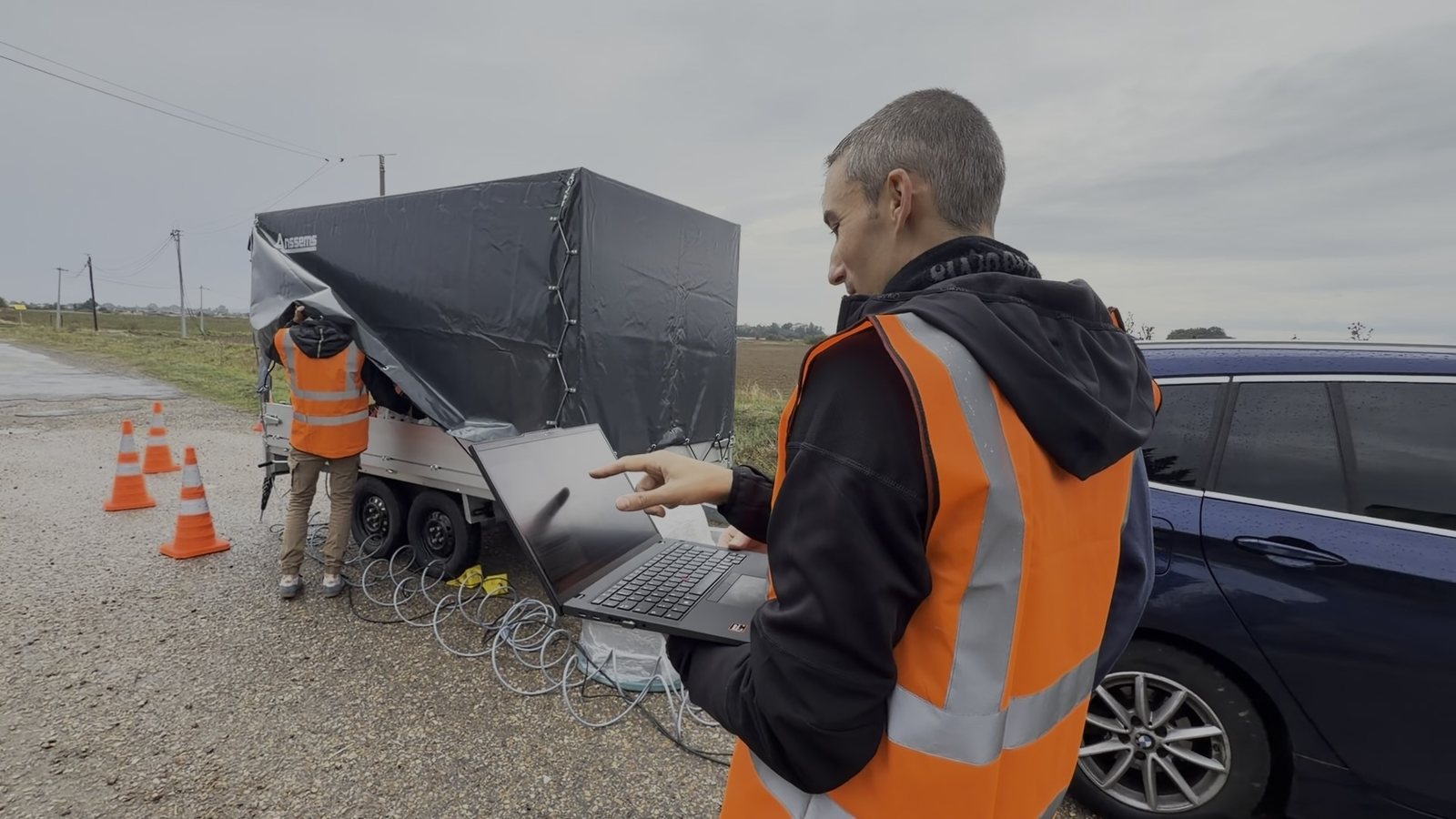
Photo: Gallium Defense field trial. Credit: Gallium Defense.
The seed round was led by Keen Venture Partners, the London and Amsterdam investor whose latest fund is dedicated to European defence and security technology, and Paris-based 360 Capital, with participation from Omnes Capital and Polytechnique Ventures. The financing was first reported on Monday by Resilience Media. Gallium's own website dates the seed round to June 2026; the round appears to have closed months before it was disclosed. The company was formally registered in Paris in April 2026, although its founders say development work began in 2024.
The funding is meant to take Gallium's first product, the GDS-10, from prototype to production. The company describes it as an AI-enabled 3D radar that covers a full 360 degrees and can detect small drones at distances of up to 10 kilometres, including the cheap first-person-view (FPV) drones that have reshaped the war in Ukraine. It says the radar can track several targets at once, including swarms. There will be two versions: the GDS-10 for airports, ports, energy sites and other critical infrastructure, and the GDS-10-M for military customers.
Telecom parts instead of radar parts
Gallium's pitch rests on price. Co-founder and chief executive Eric Fournier told Resilience Media he hopes to sell the GDS-10 for around €500,000, against the €2 million to €5 million he says comparable radars typically cost. The price will not be fixed until April 2027, after further testing.
The saving, according to the company, comes from building the antenna with components designed for 5G telecommunications networks, including gallium nitride amplifiers that Fournier says can be thousands of times cheaper than radar-specific parts, and from processing radar signals on Nvidia computing hardware. Fournier said this approach had cut the antenna's cost by more than 90%. "We said, okay, let's build a radar antenna, not with radar component, but with 5G telecom component," he said.
These figures are the company's own and have not been independently tested. Gallium has two operational prototypes and runs field trials of two to five days every month. Fournier acknowledged that the trials could still bring "some fixes that will have an impact on our bill of material". Orders are expected to open in the first quarter of 2027, with first deliveries possibly from June.
The customer mix has also shifted. "I was convinced when I started that I would have all the big energy players and data center players coming to us," Fournier said. "It's two out of 48 prospects right now. So most of the guys are indeed the armed forces, which was not our entry point."
Why it matters for European tech
Detecting small, low-flying drones has become one of Europe's most urgent defence gaps, after the war in Ukraine and a run of drone incursions over European airports, military bases and energy sites. In an earlier interview with French consulting publication Consultor, Fournier called air detection "the main gap" in the capabilities of NATO countries and their allies (translated from French). Gallium is betting on what NATO calls "affordable mass": many cheaper sensors networked together and moved around as needed, rather than a few expensive installations.
It joins a crowded field. Established suppliers such as Thales, Hensoldt and Saab already sell counter-drone radars, and well-funded start-ups in Europe and the US are chasing the same budgets. Whether a company that lists around nine staff on LinkedIn can turn telecom-grade parts into a reliable military sensor at scale is the question its 2027 delivery dates will answer.
Sources
- Resilience Media, "Gallium Defense raises €7.1M to develop lower-cost drone detection radar", 2 November 2026
- Gallium Defense company website, gallium-defense.com
- Consultor.fr, interview with Gallium Defense co-founders, 2026
- French company register (RNE) via Le Guichet des formalités