

How to Spot Deepfake Scams Before They Cost You

08/11/2026
61
How to Spot Deepfake Scams Before They Cost You

A finance lead gets a WhatsApp voice note from the CEO: a supplier payment needs approval before a deal closes. The voice is familiar, the request is specific, and the pressure is immediate. That is exactly the situation deepfake fraud is designed to exploit.

Knowing how to spot deepfake scams is no longer a niche cybersecurity skill. It is a practical workplace habit for founders, operators, finance teams, recruiters, and anyone whose name, voice, or professional network is visible online. Deepfakes are becoming more convincing, but scammers still rely on the same old weaknesses: urgency, authority, emotion, and a moment when no one stops to verify.

Why deepfake scams work so well

A deepfake uses artificial intelligence to create or alter audio, video, or images so a person appears to say or do something they did not. Fraudsters may clone a voice from a short podcast clip, conference recording, social video, or voicemail. They can also create a video impersonation using public headshots, recorded interviews, and social media content.

The technology is the attention-grabbing part. The real risk is social engineering. A fraudulent request is more likely to succeed when it appears to come from someone with authority, especially during a busy moment when a team is already expecting an invoice, hiring decision, investor update, or confidential document.

Women in visible leadership roles can face an additional layer of exposure. Public speaking, community building, and sharing expertise are valuable parts of career growth, but a larger public footprint gives bad actors more material to imitate. The answer is not to disappear from public platforms. It is to pair visibility with stronger verification norms.

How to spot deepfake scams: look beyond the face and voice

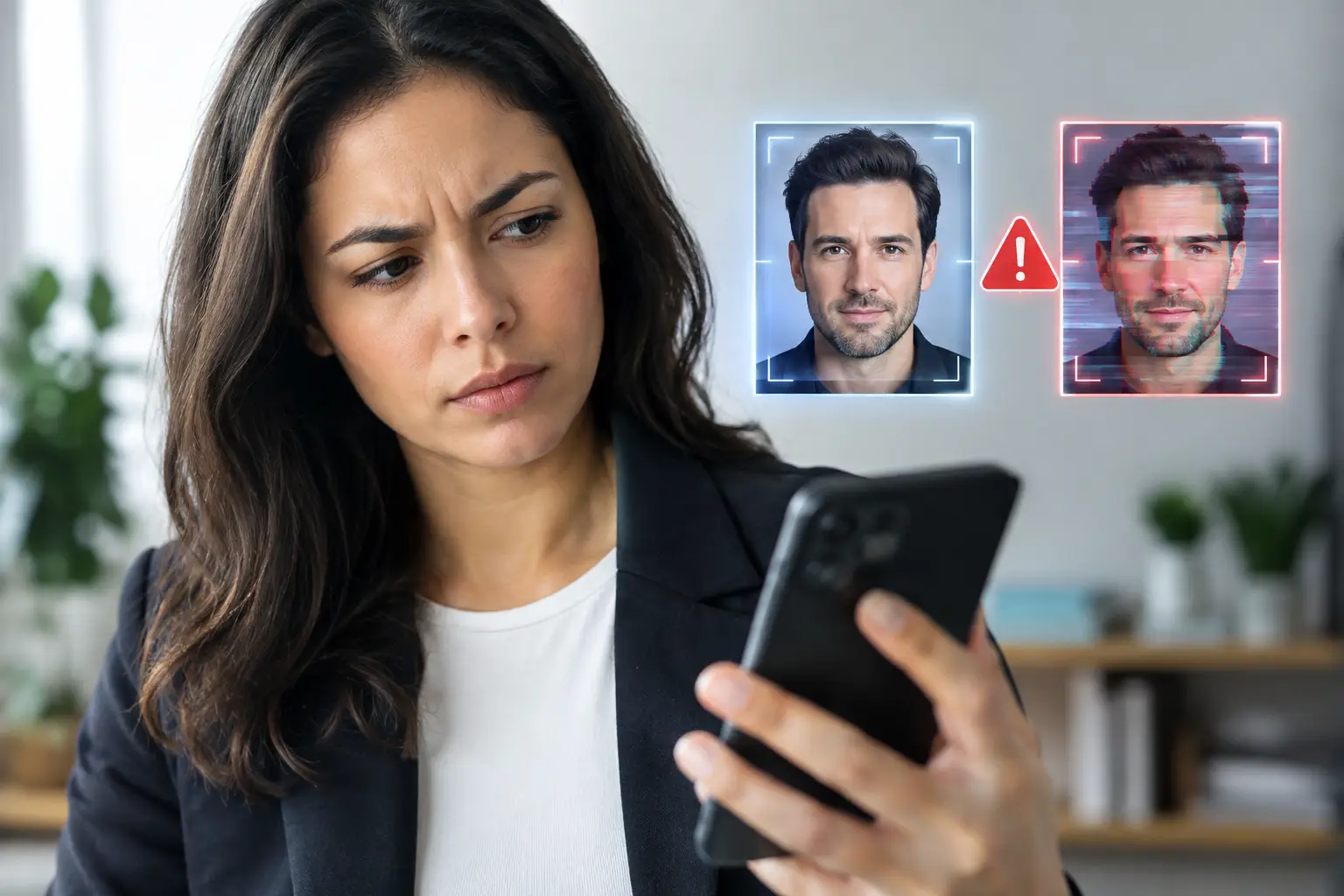
Do not treat a realistic-looking video or familiar voice as proof of identity. Deepfakes can be imperfect, but visual clues alone are not a dependable defense. Audio quality, lighting, camera angle, and a poor internet connection can all make a legitimate call look strange.

Instead, assess the entire situation. Ask whether the request matches the person’s normal behavior, communication channel, and decision-making process. A CEO who normally uses email and requires a second sign-off is unlikely to suddenly authorize a five-figure transfer through a disappearing-message app.

There are still signals worth noticing, especially when several appear together:

  • The caller creates unusual urgency, secrecy, or emotional pressure.
  • The request bypasses established approval steps or asks you to switch channels quickly.
  • A voice sounds slightly flat, overly polished, delayed, or oddly paced when interrupted.
  • Video and speech do not quite align, particularly around teeth, blinking, facial edges, or fast head movements.
  • The person refuses a callback, avoids a live verification question, or claims they cannot use their usual number.

None of these signs independently proves a deepfake. A stressed executive on weak Wi-Fi may sound unusual. What matters is the combination of an unusual request and a demand that you act before you can verify it.

The strongest red flag is a broken process

The most useful question is not, “Does this sound like my manager?” It is, “Would my manager normally ask for this in this way?”

Scammers often imitate people because authority shortens the path to compliance. If a request involves money, credentials, sensitive files, payroll changes, or customer data, the process should matter more than the personality delivering the request. A familiar voice does not override dual approval, vendor verification, or access controls.

That principle is especially relevant for fast-moving startups, where informal communication can be a strength until it becomes an opening for fraud. Teams do not need bureaucracy for every decision. They do need clear non-negotiables for high-risk actions.

Verify through a channel the requester did not choose

When a request feels off, do not continue the conversation on the same call, chat, or email thread. Use a known contact method instead: call the person using the phone number stored in your company directory, message them through an established internal platform, or speak to them in person.

This step matters because attackers can control the channel they initiated. They may use a spoofed number, compromised email account, or fake video meeting link. Calling back on a trusted number breaks that control.

For a high-value or sensitive request, add a second human check. Ask a colleague to confirm the instruction through a separate channel. This is not a sign of distrust. It is a sign that your organization understands how modern fraud works.

A pre-agreed verification phrase can help in some contexts, particularly for family scams or small teams. But treat it as one layer, not a magic password. If a phrase is written in a compromised chat or repeated aloud in a recorded call, it can be exposed. The safer approach is a combination of independent callback, established process, and a question that is not easily answered from public information.

Where deepfake fraud is showing up at work

Deepfake scams do not always look like a dramatic video call from a fake CEO. Many arrive in quieter, more plausible forms.

Payment fraud is one of the clearest examples. An impersonator may request an urgent wire transfer, claim a vendor’s bank details have changed, or ask an employee to buy gift cards for a confidential client initiative. The request may be reinforced with cloned audio from an executive.

Recruitment scams can target job seekers and employers alike. Candidates may encounter fake interviews, fraudulent offers, or requests for identity documents before a legitimate hiring process has begun. Companies may also face applicants using manipulated video or fabricated identities to gain access to remote roles and internal systems.

Account takeover attempts increasingly use voice cloning to persuade a help desk, bank, or telecom provider to reset credentials. If voice is accepted as identity verification, organizations need additional authentication factors and clear escalation procedures.

Relationship and investment scams can use AI-generated images, video messages, and voice notes to manufacture trust. For founders and investors, a convincing impersonation of a partner, advisor, or portfolio contact can lead to leaked information or rushed financial decisions.

Build a team culture that makes verification normal

Technology controls matter, but culture determines whether people use them under pressure. Employees should know they will be supported for pausing a request, even when the supposed sender is senior. A workplace where someone fears being labeled difficult is easier to exploit.

Leaders can set the tone by saying this clearly: no one will be penalized for verifying a payment, access request, or confidential instruction. In fact, a short delay should be expected when the stakes are high.

It also helps to define a few rules in advance. Financial transfers above a chosen threshold should require two approvers. Changes to vendor banking information should be confirmed using a trusted contact record. Requests for passwords, multifactor authentication codes, or identity documents should never be accepted through an unexpected call or message.

For public-facing leaders, consider what is openly available and what could be copied. This does not mean removing every speaking clip or avoiding press opportunities. It means being intentional about account privacy, limiting unnecessary personal details, and telling teams that a familiar voice or face is not enough to authorize sensitive action.

What to do if you think you have been targeted

Act quickly, but do not delete evidence. Save screenshots, emails, phone numbers, payment details, and the time of the interaction. Alert the person being impersonated and your internal security, finance, or IT contact. If money was sent, contact the bank immediately, as timing can affect whether a transfer can be stopped or recovered.

Reset passwords and review account activity if credentials may have been exposed. If the attempt involved customer, employee, or other personal data, your organization may also have reporting and notification responsibilities depending on where it operates. Escalate early rather than assuming the incident is too small to matter.

A near miss is useful intelligence. Share the pattern internally without blaming the person who received the scam. One report can prevent the next employee, family member, or community contact from being caught by the same impersonation.

The most effective response to deepfakes is not trying to become a forensic video expert. It is making one calm, confident habit part of your day: when a request is urgent, unusual, or sensitive, pause and verify it independently. That small pause protects money, data, reputations, and the trust that ambitious teams work hard to build.


Recent

Cybersecurity News Apps Worth Your Attention

Breaking Tech Europe: Top 5 – Anne Boden Builds a Bank for AI Agents, Whitehall Hands ElevenLabs a £10.8m Voice Deal, and AI Floods Brussels

Microsoft's day-long outage shut Dutch courts' email and Amsterdam's service desks, while Berlin's on-premise servers kept running

AI Meeting Assistants Are Changing Who Gets Heard

How to Spot Deepfake Scams Before They Cost You

08/11/2026
61
How to Spot Deepfake Scams Before They Cost You

A finance lead gets a WhatsApp voice note from the CEO: a supplier payment needs approval before a deal closes. The voice is familiar, the request is specific, and the pressure is immediate. That is exactly the situation deepfake fraud is designed to exploit.

Knowing how to spot deepfake scams is no longer a niche cybersecurity skill. It is a practical workplace habit for founders, operators, finance teams, recruiters, and anyone whose name, voice, or professional network is visible online. Deepfakes are becoming more convincing, but scammers still rely on the same old weaknesses: urgency, authority, emotion, and a moment when no one stops to verify.

Why deepfake scams work so well

A deepfake uses artificial intelligence to create or alter audio, video, or images so a person appears to say or do something they did not. Fraudsters may clone a voice from a short podcast clip, conference recording, social video, or voicemail. They can also create a video impersonation using public headshots, recorded interviews, and social media content.

The technology is the attention-grabbing part. The real risk is social engineering. A fraudulent request is more likely to succeed when it appears to come from someone with authority, especially during a busy moment when a team is already expecting an invoice, hiring decision, investor update, or confidential document.

Women in visible leadership roles can face an additional layer of exposure. Public speaking, community building, and sharing expertise are valuable parts of career growth, but a larger public footprint gives bad actors more material to imitate. The answer is not to disappear from public platforms. It is to pair visibility with stronger verification norms.

How to spot deepfake scams: look beyond the face and voice

Do not treat a realistic-looking video or familiar voice as proof of identity. Deepfakes can be imperfect, but visual clues alone are not a dependable defense. Audio quality, lighting, camera angle, and a poor internet connection can all make a legitimate call look strange.

Instead, assess the entire situation. Ask whether the request matches the person’s normal behavior, communication channel, and decision-making process. A CEO who normally uses email and requires a second sign-off is unlikely to suddenly authorize a five-figure transfer through a disappearing-message app.

There are still signals worth noticing, especially when several appear together:

  • The caller creates unusual urgency, secrecy, or emotional pressure.
  • The request bypasses established approval steps or asks you to switch channels quickly.
  • A voice sounds slightly flat, overly polished, delayed, or oddly paced when interrupted.
  • Video and speech do not quite align, particularly around teeth, blinking, facial edges, or fast head movements.
  • The person refuses a callback, avoids a live verification question, or claims they cannot use their usual number.

None of these signs independently proves a deepfake. A stressed executive on weak Wi-Fi may sound unusual. What matters is the combination of an unusual request and a demand that you act before you can verify it.

The strongest red flag is a broken process

The most useful question is not, “Does this sound like my manager?” It is, “Would my manager normally ask for this in this way?”

Scammers often imitate people because authority shortens the path to compliance. If a request involves money, credentials, sensitive files, payroll changes, or customer data, the process should matter more than the personality delivering the request. A familiar voice does not override dual approval, vendor verification, or access controls.

That principle is especially relevant for fast-moving startups, where informal communication can be a strength until it becomes an opening for fraud. Teams do not need bureaucracy for every decision. They do need clear non-negotiables for high-risk actions.

Verify through a channel the requester did not choose

When a request feels off, do not continue the conversation on the same call, chat, or email thread. Use a known contact method instead: call the person using the phone number stored in your company directory, message them through an established internal platform, or speak to them in person.

This step matters because attackers can control the channel they initiated. They may use a spoofed number, compromised email account, or fake video meeting link. Calling back on a trusted number breaks that control.

For a high-value or sensitive request, add a second human check. Ask a colleague to confirm the instruction through a separate channel. This is not a sign of distrust. It is a sign that your organization understands how modern fraud works.

A pre-agreed verification phrase can help in some contexts, particularly for family scams or small teams. But treat it as one layer, not a magic password. If a phrase is written in a compromised chat or repeated aloud in a recorded call, it can be exposed. The safer approach is a combination of independent callback, established process, and a question that is not easily answered from public information.

Where deepfake fraud is showing up at work

Deepfake scams do not always look like a dramatic video call from a fake CEO. Many arrive in quieter, more plausible forms.

Payment fraud is one of the clearest examples. An impersonator may request an urgent wire transfer, claim a vendor’s bank details have changed, or ask an employee to buy gift cards for a confidential client initiative. The request may be reinforced with cloned audio from an executive.

Recruitment scams can target job seekers and employers alike. Candidates may encounter fake interviews, fraudulent offers, or requests for identity documents before a legitimate hiring process has begun. Companies may also face applicants using manipulated video or fabricated identities to gain access to remote roles and internal systems.

Account takeover attempts increasingly use voice cloning to persuade a help desk, bank, or telecom provider to reset credentials. If voice is accepted as identity verification, organizations need additional authentication factors and clear escalation procedures.

Relationship and investment scams can use AI-generated images, video messages, and voice notes to manufacture trust. For founders and investors, a convincing impersonation of a partner, advisor, or portfolio contact can lead to leaked information or rushed financial decisions.

Build a team culture that makes verification normal

Technology controls matter, but culture determines whether people use them under pressure. Employees should know they will be supported for pausing a request, even when the supposed sender is senior. A workplace where someone fears being labeled difficult is easier to exploit.

Leaders can set the tone by saying this clearly: no one will be penalized for verifying a payment, access request, or confidential instruction. In fact, a short delay should be expected when the stakes are high.

It also helps to define a few rules in advance. Financial transfers above a chosen threshold should require two approvers. Changes to vendor banking information should be confirmed using a trusted contact record. Requests for passwords, multifactor authentication codes, or identity documents should never be accepted through an unexpected call or message.

For public-facing leaders, consider what is openly available and what could be copied. This does not mean removing every speaking clip or avoiding press opportunities. It means being intentional about account privacy, limiting unnecessary personal details, and telling teams that a familiar voice or face is not enough to authorize sensitive action.

What to do if you think you have been targeted

Act quickly, but do not delete evidence. Save screenshots, emails, phone numbers, payment details, and the time of the interaction. Alert the person being impersonated and your internal security, finance, or IT contact. If money was sent, contact the bank immediately, as timing can affect whether a transfer can be stopped or recovered.

Reset passwords and review account activity if credentials may have been exposed. If the attempt involved customer, employee, or other personal data, your organization may also have reporting and notification responsibilities depending on where it operates. Escalate early rather than assuming the incident is too small to matter.

A near miss is useful intelligence. Share the pattern internally without blaming the person who received the scam. One report can prevent the next employee, family member, or community contact from being caught by the same impersonation.

The most effective response to deepfakes is not trying to become a forensic video expert. It is making one calm, confident habit part of your day: when a request is urgent, unusual, or sensitive, pause and verify it independently. That small pause protects money, data, reputations, and the trust that ambitious teams work hard to build.

Recent

© European Tech On Heels - 2026
Made with
Web Wings