



Breaking Tech Europe: Top 5 – Delaware Trips Up the EU's €5bn Scaleup Fund, an AI Agent Pays for Pizza Without a Card, and Tesla's EU Vote Slips Again
28/11/2026
22
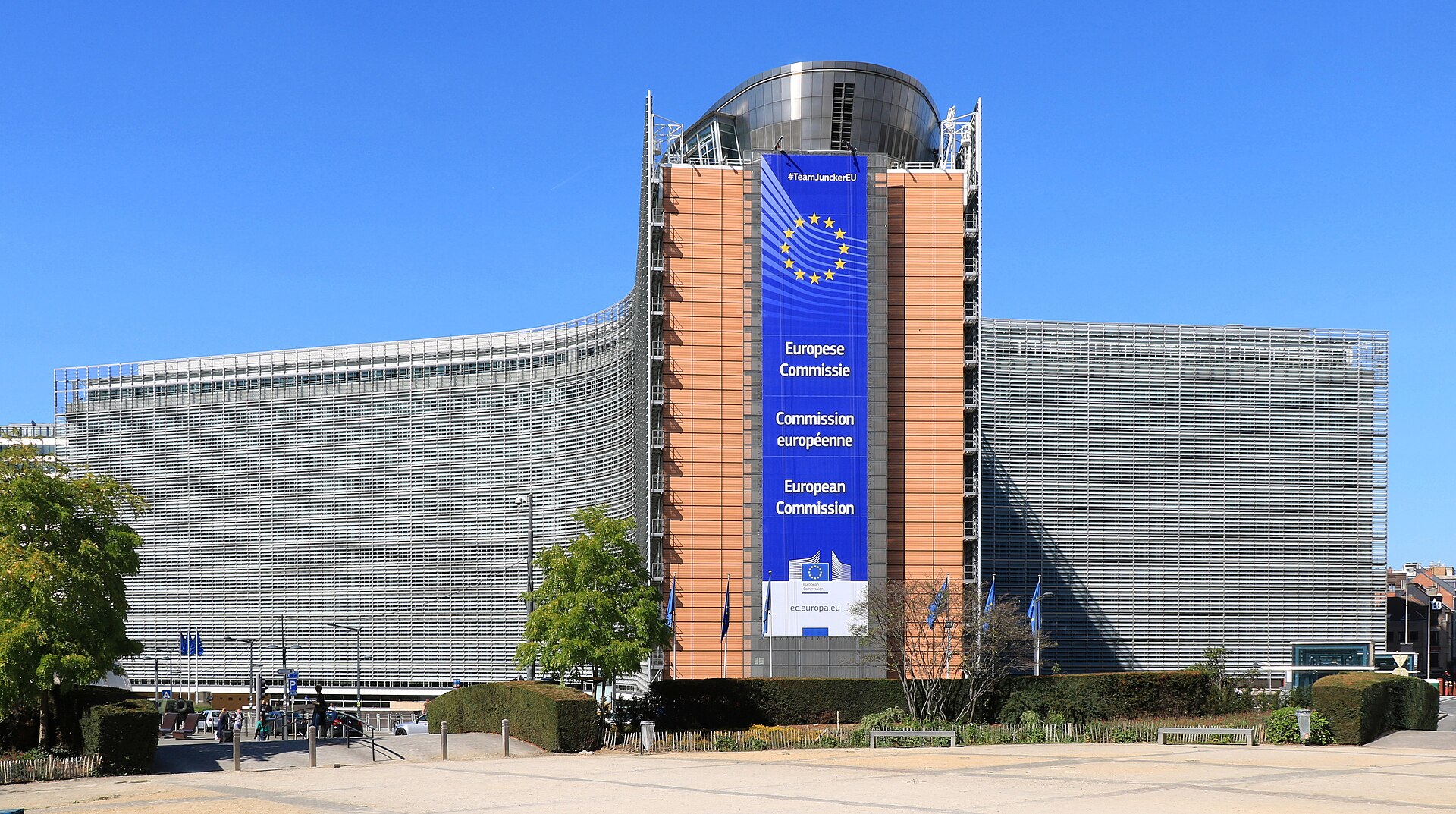
The Berlaymont building, headquarters of the European Commission in Brussels

Europe's flagship €5bn Scaleup Europe Fund is finding that many of its best targets are legally American, a British AI agent has made the UK's first cardless purchase for a real customer, Brussels has pushed Tesla's EU-wide driver-assistance decision back to 15 December, Vipps is cutting customer-service jobs because of AI, and Barcelona's HeyDiga has raised €5.5m to answer the phone for small businesses. Here are the five European tech stories to know this Saturday.

1. EQT's €5bn Scaleup Europe Fund struggles to find fully European companies: Delaware holding structures limit its investments

EQT, the Swedish investor running the EU-backed Scaleup Europe Fund, has found that "more prospective target companies than expected have a Delaware top holding company", according to a Commission state-of-play report seen by Rapporteur; the fund's rules may limit how much it can invest in them.

The document lists ICEYE, Mistral and Tandem among companies the fund has already backed, and records Sweden's Lovable and Spain's Fever as formally US-based. The fund typically writes tickets of €30m to €300m per company, and "more than half" of its €5bn target has been committed, including €1bn directly from the EU budget, the report says.

Why it is breaking news

The fund was created to stop European scaleups relocating to the US for growth capital, yet the report suggests many have already done so on paper. Sebastian Frisk, the fund's chief operating officer, told Rapporteur that US investors or accelerators usually require a Delaware holding company, that the founders, teams and operations are mostly still in Europe, and that EQT is working on ways to back more such companies. Rapporteur notes the EU's proposed "EU Inc" corporate regime, which Frisk sees as the lasting fix, is currently stuck in Parliament. Source: Rapporteur.

2. TrueLayer, Lloyds and Papa John's complete the UK's first AI-agent payment without a card

London-based TrueLayer, Lloyds Bank and Papa John's have completed what TrueLayer calls the first UK purchase by an AI agent for a real customer using cardless, account-to-account payment, an order of nine mini margherita pizzas made inside the Financial Conduct Authority's regulated sandbox.

According to The Guardian, the Papa John's agent was given permission to request payment from the customer's bank account under a strict mandate set with Lloyds, including a maximum spend per transaction and per month, and no account security details were shared.

Why it is breaking news

Agentic commerce is moving from demos to regulated trials. TrueLayer chief executive Francesco Simoneschi told BBC Radio 4 this could be "the last Black Friday as we know it", while stressing that the technology "does require control and supervision". The Guardian reports that the FCA warned financial firms this week that AI agents must comply with existing rules, and that Meta's Muse assistant, launched in the UK on Tuesday, pays with bank cards instead. Source: The Guardian.

3. EU committee pushes Tesla's bloc-wide driver-assistance decision to 15 December, with 12 national approvals at stake

The EU's Technical Committee on Motor Vehicles will not meet on 1 December as planned to consider Tesla Assisted Driving, the European name for "Full Self-Driving (Supervised)", which the Dutch regulator RDW approved on 10 April; a Commission spokesperson confirmed a new date of 15 December to Reuters, Electrek reports.

Electrek counts 12 countries that have recognised the Dutch approval, including the Netherlands, Belgium and, most recently, Italy, which it estimates at roughly 29% of the EU population. EU-wide approval needs at least 15 of 27 member states representing 65% of the population.

Why it is breaking news

The committee has already discussed the file twice without a vote, and a meeting does not guarantee one. Citing Reuters, Electrek reports that an EU-level rejection would invalidate the national approvals already granted, meaning paying drivers in Italy, the Netherlands and other recognising countries could lose the system. It adds that Sweden asked the EU in June to reject it, and that the RDW has not published its test results. Source: Electrek.

4. Vipps cuts 20 of 600 jobs in customer handling, citing AI and automation

Vipps, the Nordic payments app formerly branded Vipps MobilePay, is cutting 20 of its roughly 600 staff in Norway, Finland and Denmark, all in customer-handling teams, because "automation, AI and better ways of working" mean fewer routine tasks must be handled manually, Norwegian tech outlet kode24 reports.

Communications chief Kari Kjær told FinansWatch that some affected staff have been offered new tasks or part-time roles, and that the company is still recruiting into other teams.

Why it is breaking news

The cuts are small in number but explicit in their reasoning: a major Nordic fintech is naming AI as the cause of job losses in customer service. kode24 notes that DNB, Norway's largest bank, cited AI in October when announcing cuts of around 400 full-time positions, in technology and services. Source: kode24 (in Norwegian).

5. Barcelona's HeyDiga raises €5.5m for AI voice agents that answer calls and WhatsApp messages for small businesses

HeyDiga, a Barcelona and Madrid startup founded by Sergio Espeja and David Zafra, has raised €5.5m in a second funding round, after a €1m first round, to scale AI voice agents that answer phone calls and WhatsApp messages for small, less digitised businesses, La Vanguardia reports.

The company, which started operating in October 2025, has more than 300 customers, mostly in Spain but also in Italy, France and Portugal, employs 40 people and expects annual recurring revenue of close to €3m by year-end and above €5m in 2027, according to the founders. It works with more than 20 car brands and is present in 14 Spanish hospitals.

Why it is breaking news

HeyDiga is an example of generative voice AI reaching hairdressers, garages and clinics rather than large call centres. Zafra told La Vanguardia that 25% of calls are highly repetitive, rising to more than 70% when easy-to-resolve requests are included, and that many sales are lost to unanswered calls. Source: La Vanguardia (in Spanish).

Cover image: the Berlaymont building in Brussels, seat of the European Commission. Photo: EmDee, Wikimedia Commons, CC BY-SA 4.0, unaltered.

Recent

Korben raises €10.2m to run Europe's mixed robot fleets from French servers, plans 70 hires

SAP weighs cutting at least 10,000 jobs in its AI overhaul, and its German staff have no layoff ban to fall back on

Poland signs $300m Palantir deal for AI battlefield software as Western neighbours plan their exit

Digital Identity Is Becoming Europe’s Next Power Layer

Breaking Tech Europe: Top 5 – Delaware Trips Up the EU's €5bn Scaleup Fund, an AI Agent Pays for Pizza Without a Card, and Tesla's EU Vote Slips Again

28/11/2026
22
The Berlaymont building, headquarters of the European Commission in Brussels

Europe's flagship €5bn Scaleup Europe Fund is finding that many of its best targets are legally American, a British AI agent has made the UK's first cardless purchase for a real customer, Brussels has pushed Tesla's EU-wide driver-assistance decision back to 15 December, Vipps is cutting customer-service jobs because of AI, and Barcelona's HeyDiga has raised €5.5m to answer the phone for small businesses. Here are the five European tech stories to know this Saturday.

1. EQT's €5bn Scaleup Europe Fund struggles to find fully European companies: Delaware holding structures limit its investments

EQT, the Swedish investor running the EU-backed Scaleup Europe Fund, has found that "more prospective target companies than expected have a Delaware top holding company", according to a Commission state-of-play report seen by Rapporteur; the fund's rules may limit how much it can invest in them.

The document lists ICEYE, Mistral and Tandem among companies the fund has already backed, and records Sweden's Lovable and Spain's Fever as formally US-based. The fund typically writes tickets of €30m to €300m per company, and "more than half" of its €5bn target has been committed, including €1bn directly from the EU budget, the report says.

Why it is breaking news

The fund was created to stop European scaleups relocating to the US for growth capital, yet the report suggests many have already done so on paper. Sebastian Frisk, the fund's chief operating officer, told Rapporteur that US investors or accelerators usually require a Delaware holding company, that the founders, teams and operations are mostly still in Europe, and that EQT is working on ways to back more such companies. Rapporteur notes the EU's proposed "EU Inc" corporate regime, which Frisk sees as the lasting fix, is currently stuck in Parliament. Source: Rapporteur.

2. TrueLayer, Lloyds and Papa John's complete the UK's first AI-agent payment without a card

London-based TrueLayer, Lloyds Bank and Papa John's have completed what TrueLayer calls the first UK purchase by an AI agent for a real customer using cardless, account-to-account payment, an order of nine mini margherita pizzas made inside the Financial Conduct Authority's regulated sandbox.

According to The Guardian, the Papa John's agent was given permission to request payment from the customer's bank account under a strict mandate set with Lloyds, including a maximum spend per transaction and per month, and no account security details were shared.

Why it is breaking news

Agentic commerce is moving from demos to regulated trials. TrueLayer chief executive Francesco Simoneschi told BBC Radio 4 this could be "the last Black Friday as we know it", while stressing that the technology "does require control and supervision". The Guardian reports that the FCA warned financial firms this week that AI agents must comply with existing rules, and that Meta's Muse assistant, launched in the UK on Tuesday, pays with bank cards instead. Source: The Guardian.

3. EU committee pushes Tesla's bloc-wide driver-assistance decision to 15 December, with 12 national approvals at stake

The EU's Technical Committee on Motor Vehicles will not meet on 1 December as planned to consider Tesla Assisted Driving, the European name for "Full Self-Driving (Supervised)", which the Dutch regulator RDW approved on 10 April; a Commission spokesperson confirmed a new date of 15 December to Reuters, Electrek reports.

Electrek counts 12 countries that have recognised the Dutch approval, including the Netherlands, Belgium and, most recently, Italy, which it estimates at roughly 29% of the EU population. EU-wide approval needs at least 15 of 27 member states representing 65% of the population.

Why it is breaking news

The committee has already discussed the file twice without a vote, and a meeting does not guarantee one. Citing Reuters, Electrek reports that an EU-level rejection would invalidate the national approvals already granted, meaning paying drivers in Italy, the Netherlands and other recognising countries could lose the system. It adds that Sweden asked the EU in June to reject it, and that the RDW has not published its test results. Source: Electrek.

4. Vipps cuts 20 of 600 jobs in customer handling, citing AI and automation

Vipps, the Nordic payments app formerly branded Vipps MobilePay, is cutting 20 of its roughly 600 staff in Norway, Finland and Denmark, all in customer-handling teams, because "automation, AI and better ways of working" mean fewer routine tasks must be handled manually, Norwegian tech outlet kode24 reports.

Communications chief Kari Kjær told FinansWatch that some affected staff have been offered new tasks or part-time roles, and that the company is still recruiting into other teams.

Why it is breaking news

The cuts are small in number but explicit in their reasoning: a major Nordic fintech is naming AI as the cause of job losses in customer service. kode24 notes that DNB, Norway's largest bank, cited AI in October when announcing cuts of around 400 full-time positions, in technology and services. Source: kode24 (in Norwegian).

5. Barcelona's HeyDiga raises €5.5m for AI voice agents that answer calls and WhatsApp messages for small businesses

HeyDiga, a Barcelona and Madrid startup founded by Sergio Espeja and David Zafra, has raised €5.5m in a second funding round, after a €1m first round, to scale AI voice agents that answer phone calls and WhatsApp messages for small, less digitised businesses, La Vanguardia reports.

The company, which started operating in October 2025, has more than 300 customers, mostly in Spain but also in Italy, France and Portugal, employs 40 people and expects annual recurring revenue of close to €3m by year-end and above €5m in 2027, according to the founders. It works with more than 20 car brands and is present in 14 Spanish hospitals.

Why it is breaking news

HeyDiga is an example of generative voice AI reaching hairdressers, garages and clinics rather than large call centres. Zafra told La Vanguardia that 25% of calls are highly repetitive, rising to more than 70% when easy-to-resolve requests are included, and that many sales are lost to unanswered calls. Source: La Vanguardia (in Spanish).

Cover image: the Berlaymont building in Brussels, seat of the European Commission. Photo: EmDee, Wikimedia Commons, CC BY-SA 4.0, unaltered.

Recent

© European Tech On Heels - 2026
Made with
Web Wings