


Barcelona's ALLOX raises $10.5M to map hidden drug targets inside proteins with lab data and AI

30/10/2026
225
Abstract illustration of a folded protein with glowing hotspots and a small molecule in a pocket

The Barcelona spin-out from the Centre for Genomic Regulation will use the money to scale its experimental biophysics platform, train its own AI models and push a first pipeline of small molecules against targets long considered undruggable.

Image: illustrative, AI-generated (no press image supplied).

Spanish biotech start-up ALLOX has closed a seed round of $10.5 million (€9.4 million) to expand a drug discovery platform that combines large-scale lab experiments with artificial intelligence. The company announced the financing on 29 October, alongside the appointment of Danish biotech executive and investor Morten Graugaard as independent chair of its board.

The round was led by Barcelona venture capital firm Asabys Partners through its Sabadell Asabys II fund, with participation from Spain's innovation agency CDTI, via its Innvierte investment vehicle, and the Institut Català de Finances (ICF), the public financial institution of the Government of Catalonia. According to the Centre for Genomic Regulation (CRG), Asabys also backed ALLOX at its launch in November 2023.

Looking for hidden switches in proteins

ALLOX focuses on so-called allosteric sites: regulatory regions on a protein, away from its main active site, that can change how the protein behaves. Its platform measures the effects of thousands of mutations in parallel to map the "functional hotspots" that govern how proteins fold and interact, the company said. That data can reveal allosteric, orthosteric and other regulatory sites, including potential new binding pockets for drugs.

The company is initially targeting protein-protein interactions inside cells and transcription factors, two classes of targets that have historically been difficult to address with small-molecule medicines. The new funding will be used to scale the experimental platform, build proprietary AI models that predict therapeutic hotspots from its biophysical datasets, strengthen its in-house drug discovery team and support research collaborations with pharmaceutical and biotech partners.

"By combining large-scale functional data with predictive AI, we aim to unlock a much broader range of challenging drug targets and accelerate the discovery of truly differentiated small-molecule therapeutics," said Júlia Domingo, chief executive and co-founder of ALLOX.

A seasoned chair

Graugaard is chief business officer and co-founder of Orbis Medicines, and was previously a partner at Novo Holdings and director of corporate development at Lundbeck. "Importantly, ALLOX fills a critical data gap, enabling the development of functional molecules rather than simply identifying binders," he said in the announcement.

Clara Campàs, co-founder and managing partner at Asabys Partners, said the firm believes ALLOX "is uniquely positioned to expand the scope of druggable biology".

ALLOX was co-founded by Professor Ben Lehner, a researcher in predictive biology and genetics who heads generative genomics at the Wellcome Sanger Institute. The CRG said the company follows a dual model, developing its own drug candidates while partnering with pharmaceutical companies, and plans a larger funding round with international investors.

Why it matters

AI drug discovery is crowded, but many models are limited by the quality of the biological data they are trained on. ALLOX is betting that generating its own large, function-first experimental datasets gives it an edge over approaches that rely on public structural data alone. The deal is also a sign of the growing role of public co-investors in European deep tech: both a national agency and a regional development bank joined the round, and Asabys says its investment benefits from EU support under the InvestEU programme through the European Investment Fund. For Barcelona, it adds another research spin-out to a life sciences cluster that is increasingly built around computation as well as wet-lab science.

Sources

  • ALLOX press release via GlobeNewswire, 29 October 2026
  • Centre for Genomic Regulation (CRG) news release
  • Tech.eu and Startup.eu, 29 October 2026

Recent

Cybersecurity News Apps Worth Your Attention

Breaking Tech Europe: Top 5 – Anne Boden Builds a Bank for AI Agents, Whitehall Hands ElevenLabs a £10.8m Voice Deal, and AI Floods Brussels

Microsoft's day-long outage shut Dutch courts' email and Amsterdam's service desks, while Berlin's on-premise servers kept running

AI Meeting Assistants Are Changing Who Gets Heard

Barcelona's ALLOX raises $10.5M to map hidden drug targets inside proteins with lab data and AI
30/10/2026
225
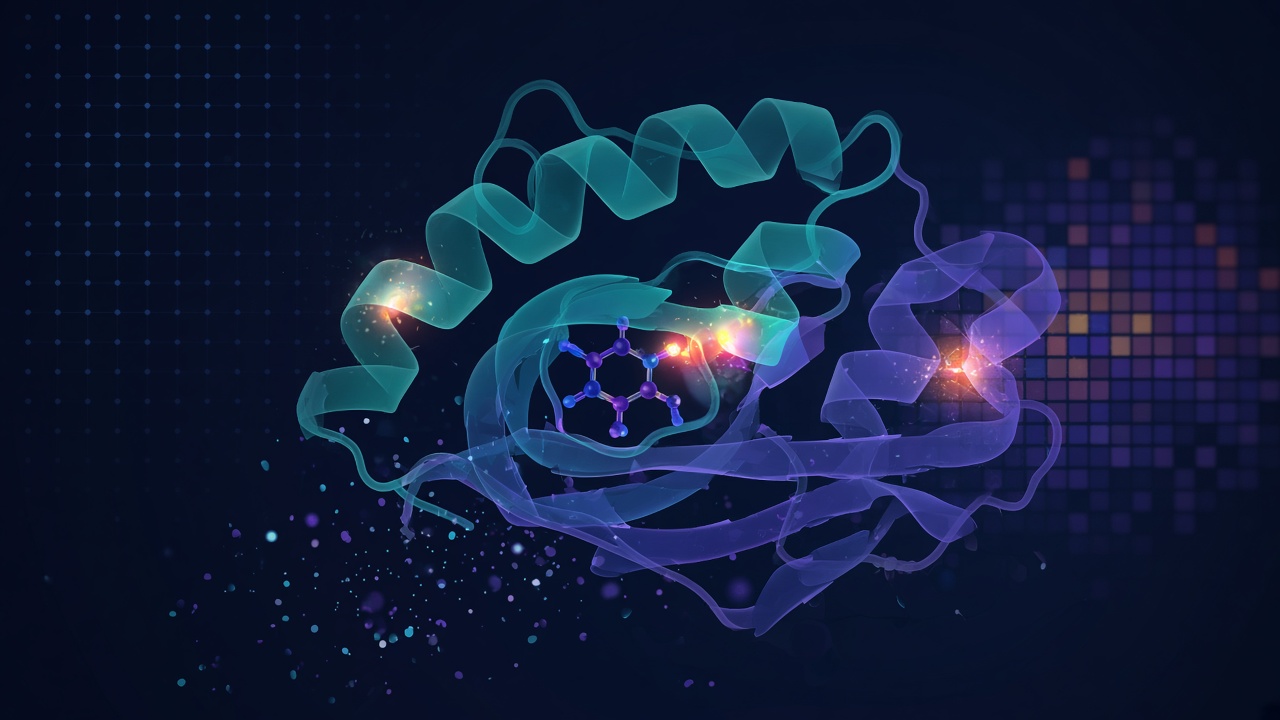
Abstract illustration of a folded protein with glowing hotspots and a small molecule in a pocket

The Barcelona spin-out from the Centre for Genomic Regulation will use the money to scale its experimental biophysics platform, train its own AI models and push a first pipeline of small molecules against targets long considered undruggable.

Image: illustrative, AI-generated (no press image supplied).

Spanish biotech start-up ALLOX has closed a seed round of $10.5 million (€9.4 million) to expand a drug discovery platform that combines large-scale lab experiments with artificial intelligence. The company announced the financing on 29 October, alongside the appointment of Danish biotech executive and investor Morten Graugaard as independent chair of its board.

The round was led by Barcelona venture capital firm Asabys Partners through its Sabadell Asabys II fund, with participation from Spain's innovation agency CDTI, via its Innvierte investment vehicle, and the Institut Català de Finances (ICF), the public financial institution of the Government of Catalonia. According to the Centre for Genomic Regulation (CRG), Asabys also backed ALLOX at its launch in November 2023.

Looking for hidden switches in proteins

ALLOX focuses on so-called allosteric sites: regulatory regions on a protein, away from its main active site, that can change how the protein behaves. Its platform measures the effects of thousands of mutations in parallel to map the "functional hotspots" that govern how proteins fold and interact, the company said. That data can reveal allosteric, orthosteric and other regulatory sites, including potential new binding pockets for drugs.

The company is initially targeting protein-protein interactions inside cells and transcription factors, two classes of targets that have historically been difficult to address with small-molecule medicines. The new funding will be used to scale the experimental platform, build proprietary AI models that predict therapeutic hotspots from its biophysical datasets, strengthen its in-house drug discovery team and support research collaborations with pharmaceutical and biotech partners.

"By combining large-scale functional data with predictive AI, we aim to unlock a much broader range of challenging drug targets and accelerate the discovery of truly differentiated small-molecule therapeutics," said Júlia Domingo, chief executive and co-founder of ALLOX.

A seasoned chair

Graugaard is chief business officer and co-founder of Orbis Medicines, and was previously a partner at Novo Holdings and director of corporate development at Lundbeck. "Importantly, ALLOX fills a critical data gap, enabling the development of functional molecules rather than simply identifying binders," he said in the announcement.

Clara Campàs, co-founder and managing partner at Asabys Partners, said the firm believes ALLOX "is uniquely positioned to expand the scope of druggable biology".

ALLOX was co-founded by Professor Ben Lehner, a researcher in predictive biology and genetics who heads generative genomics at the Wellcome Sanger Institute. The CRG said the company follows a dual model, developing its own drug candidates while partnering with pharmaceutical companies, and plans a larger funding round with international investors.

Why it matters

AI drug discovery is crowded, but many models are limited by the quality of the biological data they are trained on. ALLOX is betting that generating its own large, function-first experimental datasets gives it an edge over approaches that rely on public structural data alone. The deal is also a sign of the growing role of public co-investors in European deep tech: both a national agency and a regional development bank joined the round, and Asabys says its investment benefits from EU support under the InvestEU programme through the European Investment Fund. For Barcelona, it adds another research spin-out to a life sciences cluster that is increasingly built around computation as well as wet-lab science.

Sources

  • ALLOX press release via GlobeNewswire, 29 October 2026
  • Centre for Genomic Regulation (CRG) news release
  • Tech.eu and Startup.eu, 29 October 2026

Recent

© European Tech On Heels - 2026
Made with
Web Wings