




Breaking Tech Europe: Top 5 – UK Eyes Under-16 Ban for Vinted and eBay, Mistral Buys SkipLabs, and Gliwice's Aformic Raises $6.95m
09/11/2026
10
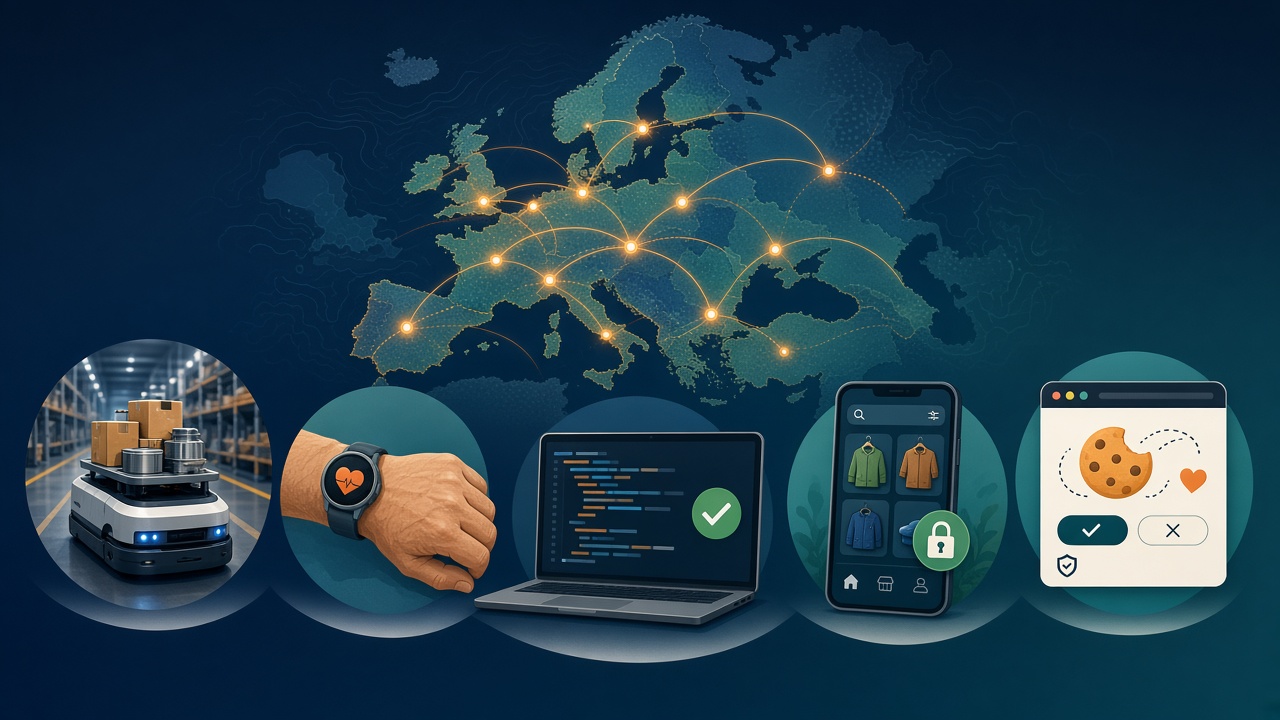
Illustration of a map of Europe above five vignettes: a factory robot, a senior's smartwatch, a laptop with code, a marketplace app with a padlock and a cookie-consent pop-up

Britain weighs pulling second-hand marketplaces into its under-16 social media ban, Mistral AI makes its fifth acquisition of the year, and start-ups in Poland, Spain and France raise fresh money for factory robots, AI-assisted telecare and paid-for cookie consent. These are the five European tech stories to know this Monday.

1. UK government "looking seriously" at banning under-16s from Vinted, eBay, Depop and Facebook Marketplace

Vinted and eBay could join Instagram, TikTok and Snapchat on the list of platforms closed to under-16s when the UK's social media ban takes effect in March 2027, Culture Secretary Lisa Nandy said on Sunday. Asked on the BBC's Sunday with Laura Kuenssberg whether the government wanted to bar children from the two marketplaces, Nandy said: "We are looking seriously at doing so in order to keep children safe." The Sunday Times had reported that the ban was being widened over fears that the platforms' messaging functions let strangers groom children, and that Depop and Facebook Marketplace would also be covered, according to the BBC.

Why it matters: it would stretch a law aimed at social networks into e-commerce. Vinted, which the BBC says has 17 million UK users, told the broadcaster that direct messaging is "part of how the platform works" and that it moderates harmful content; eBay said the details "are not yet clear". The Computer and Communications Industry Association warned against "scope creep" into services families use to stay in touch. No final list of covered platforms has been published.

2. Mistral AI buys Paris code-verification start-up SkipLabs, its fifth acquisition in nine months

Mistral AI has acquired SkipLabs, a Paris- and London-based start-up building tools to make AI code generation faster, more reliable and more secure, its fifth purchase since February, Maddyness reported. SkipLabs was founded six years ago by Julien Verlaguet, who spent nearly nine years as an engineer at Meta. His team joins the group of Mistral co-founder and chief scientist Guillaume Lample. The price was not disclosed.

Why it matters: the deal follows Koyeb (cloud, February), Emmi AI (industrial AI, May), Pimento (advertising, September) and New Material (AI user experience, October), according to Maddyness. Mistral is using the €3bn it raised in September at a €21bn valuation, a round the outlet says was led by Samsung with ASML and Nvidia, to buy capabilities beyond model-building. Verlaguet told Maddyness that error-checking tools were built for human readers and must be reinvented now that "the author is no longer a person".

3. Gliwice-built Aformic raises $6.95m from Veteran Ventures Capital to push its factory robots into US defence plants

Aformic, the autonomous mobile robot maker spun out of Polish industrial integrator AIUT, has raised $6.95m (about 27m złoty) in its first institutional round, led by US fund Veteran Ventures Capital, MyCompany Polska reports. ff Venture Capital, Mana Ventures, Red Beard Ventures and Alamo Angels also joined. The company, whose clients include Toyota, Hitachi, 3M, Hyundai Mobis and Oshkosh Defense, had about $10m of revenue last year, citing trade outlet Tectonic, and says cumulative orders exceed $34m.

Why it matters: defence is under 20% of Aformic's business today, but CEO Michał Fiuk, a West Point graduate and former BCG consultant, calls it the priority. The company is formally headquartered in Duncan, South Carolina, while engineering and production stay in Gliwice, a rare case of Polish-built industrial technology chasing US military manufacturing budgets. Funds will also go to its Qursor fleet software, heavier robots and tools for building AI data centres.

4. Telefónica-, Atresmedia- and Prosegur-backed Durcal raises €3m to take its AI telecare to Italy

Spanish telecare company Durcal has closed a €3m round that brings in businessman Adrián Cheb Terrab, CEO of Brava Investments Management, as a new reference investor and chief financial officer, alongside existing shareholders Atresmedia, Telefónica and Prosegur, Cinco Días reported on Monday. The company, which sells a smartwatch-based alarm service for older people, says more than 16,000 families use its technology and that it handles around 300 emergencies a month.

Why it matters: Durcal has named Italy as its priority market and is already testing its product there before a larger roll-out, with Latin America to follow, according to Cinco Días. The money will also speed up its use of AI in telecare. It is a test of whether a Spanish model can be exported into Europe's ageing-population market: the company says its platform now runs in several languages and plugs into different alarm-receiving centres and connectivity providers.

5. French adtech Gimii raises €1.5m for "solidarity cookies" that trade consent for charity donations

Gimii, whose pop-up asks visitors who rejected cookies to accept them in exchange for a donation to a charity of their choice, has raised €1.5m from Daphni's Time4 fund, Tomcat and Provence Angels, The Media Leader FR reports. The tool runs at Leboncoin, TF1, M6 and Orange; sites hand back 10% of the ad revenue from the recovered consents. Gimii says it lifts consent rates from about 60% to 85-90%, and that €330,000 has gone to more than 70 charities so far.

Why it matters: European publishers are losing ad revenue as users refuse tracking, and Gimii is betting that a charitable incentive is an acceptable way to win consent back. It plans to expand to the UK, Spain and Germany and grow from 10 to 30 staff in 2027. The consent-rate figures are the company's own, and how data-protection regulators view consent nudged by donations is likely to come under scrutiny as it scales.

Cover: AI-generated illustration by EuropeanTechOnHeels, not a photograph of any event or product mentioned.


Recent

Breaking Tech Europe: Top 5 – Brussels Targets TikTok's Feed, Amsterdam Arrests Data-Centre Protesters, and TEKEVER Lands in Odense

Breaking Tech Europe: Top 5 – Resilience Care Raises €48m from PSG, Oxford's Alethio Banks $90m, and Vensum Power Lands €9m

Dutch cabinet's AI plan puts just €120m on the table, and that money was already in the budget

Binance to shut accounts in France, Italy, Spain and Poland on 31 December, with fees on leftover crypto from 29 November

Breaking Tech Europe: Top 5 – UK Eyes Under-16 Ban for Vinted and eBay, Mistral Buys SkipLabs, and Gliwice's Aformic Raises $6.95m

09/11/2026
10
Illustration of a map of Europe above five vignettes: a factory robot, a senior's smartwatch, a laptop with code, a marketplace app with a padlock and a cookie-consent pop-up

Britain weighs pulling second-hand marketplaces into its under-16 social media ban, Mistral AI makes its fifth acquisition of the year, and start-ups in Poland, Spain and France raise fresh money for factory robots, AI-assisted telecare and paid-for cookie consent. These are the five European tech stories to know this Monday.

1. UK government "looking seriously" at banning under-16s from Vinted, eBay, Depop and Facebook Marketplace

Vinted and eBay could join Instagram, TikTok and Snapchat on the list of platforms closed to under-16s when the UK's social media ban takes effect in March 2027, Culture Secretary Lisa Nandy said on Sunday. Asked on the BBC's Sunday with Laura Kuenssberg whether the government wanted to bar children from the two marketplaces, Nandy said: "We are looking seriously at doing so in order to keep children safe." The Sunday Times had reported that the ban was being widened over fears that the platforms' messaging functions let strangers groom children, and that Depop and Facebook Marketplace would also be covered, according to the BBC.

Why it matters: it would stretch a law aimed at social networks into e-commerce. Vinted, which the BBC says has 17 million UK users, told the broadcaster that direct messaging is "part of how the platform works" and that it moderates harmful content; eBay said the details "are not yet clear". The Computer and Communications Industry Association warned against "scope creep" into services families use to stay in touch. No final list of covered platforms has been published.

2. Mistral AI buys Paris code-verification start-up SkipLabs, its fifth acquisition in nine months

Mistral AI has acquired SkipLabs, a Paris- and London-based start-up building tools to make AI code generation faster, more reliable and more secure, its fifth purchase since February, Maddyness reported. SkipLabs was founded six years ago by Julien Verlaguet, who spent nearly nine years as an engineer at Meta. His team joins the group of Mistral co-founder and chief scientist Guillaume Lample. The price was not disclosed.

Why it matters: the deal follows Koyeb (cloud, February), Emmi AI (industrial AI, May), Pimento (advertising, September) and New Material (AI user experience, October), according to Maddyness. Mistral is using the €3bn it raised in September at a €21bn valuation, a round the outlet says was led by Samsung with ASML and Nvidia, to buy capabilities beyond model-building. Verlaguet told Maddyness that error-checking tools were built for human readers and must be reinvented now that "the author is no longer a person".

3. Gliwice-built Aformic raises $6.95m from Veteran Ventures Capital to push its factory robots into US defence plants

Aformic, the autonomous mobile robot maker spun out of Polish industrial integrator AIUT, has raised $6.95m (about 27m złoty) in its first institutional round, led by US fund Veteran Ventures Capital, MyCompany Polska reports. ff Venture Capital, Mana Ventures, Red Beard Ventures and Alamo Angels also joined. The company, whose clients include Toyota, Hitachi, 3M, Hyundai Mobis and Oshkosh Defense, had about $10m of revenue last year, citing trade outlet Tectonic, and says cumulative orders exceed $34m.

Why it matters: defence is under 20% of Aformic's business today, but CEO Michał Fiuk, a West Point graduate and former BCG consultant, calls it the priority. The company is formally headquartered in Duncan, South Carolina, while engineering and production stay in Gliwice, a rare case of Polish-built industrial technology chasing US military manufacturing budgets. Funds will also go to its Qursor fleet software, heavier robots and tools for building AI data centres.

4. Telefónica-, Atresmedia- and Prosegur-backed Durcal raises €3m to take its AI telecare to Italy

Spanish telecare company Durcal has closed a €3m round that brings in businessman Adrián Cheb Terrab, CEO of Brava Investments Management, as a new reference investor and chief financial officer, alongside existing shareholders Atresmedia, Telefónica and Prosegur, Cinco Días reported on Monday. The company, which sells a smartwatch-based alarm service for older people, says more than 16,000 families use its technology and that it handles around 300 emergencies a month.

Why it matters: Durcal has named Italy as its priority market and is already testing its product there before a larger roll-out, with Latin America to follow, according to Cinco Días. The money will also speed up its use of AI in telecare. It is a test of whether a Spanish model can be exported into Europe's ageing-population market: the company says its platform now runs in several languages and plugs into different alarm-receiving centres and connectivity providers.

5. French adtech Gimii raises €1.5m for "solidarity cookies" that trade consent for charity donations

Gimii, whose pop-up asks visitors who rejected cookies to accept them in exchange for a donation to a charity of their choice, has raised €1.5m from Daphni's Time4 fund, Tomcat and Provence Angels, The Media Leader FR reports. The tool runs at Leboncoin, TF1, M6 and Orange; sites hand back 10% of the ad revenue from the recovered consents. Gimii says it lifts consent rates from about 60% to 85-90%, and that €330,000 has gone to more than 70 charities so far.

Why it matters: European publishers are losing ad revenue as users refuse tracking, and Gimii is betting that a charitable incentive is an acceptable way to win consent back. It plans to expand to the UK, Spain and Germany and grow from 10 to 30 staff in 2027. The consent-rate figures are the company's own, and how data-protection regulators view consent nudged by donations is likely to come under scrutiny as it scales.

Cover: AI-generated illustration by EuropeanTechOnHeels, not a photograph of any event or product mentioned.

Recent

© European Tech On Heels - 2026
Made with
Web Wings