


Berlin and Schleswig-Holstein have formally granted about €215m in Chips Act aid to the German arm of US chipmaker Vishay. The money backs a new fab that is meant to more than double output of the power transistors used in electric cars and AI data centres. The company has not said what it will spend itself; a regional MP puts the figure at about €1bn.
Germany has signed over the money for a new chip fab in the far north of the country. On Thursday 30 October, Schleswig-Holstein's economy minister Claus Ruhe Madsen presented a funding notice worth about €215m to Vishay Siliconix Itzehoe GmbH, the German subsidiary of US-listed Vishay Intertechnology. The federal economy ministry is paying €172m and the state €43m, according to the state government's announcement. The story has so far been covered only in German, by the regional broadcaster NDR and by heise online with material from the dpa news agency.
From 200mm to 300mm
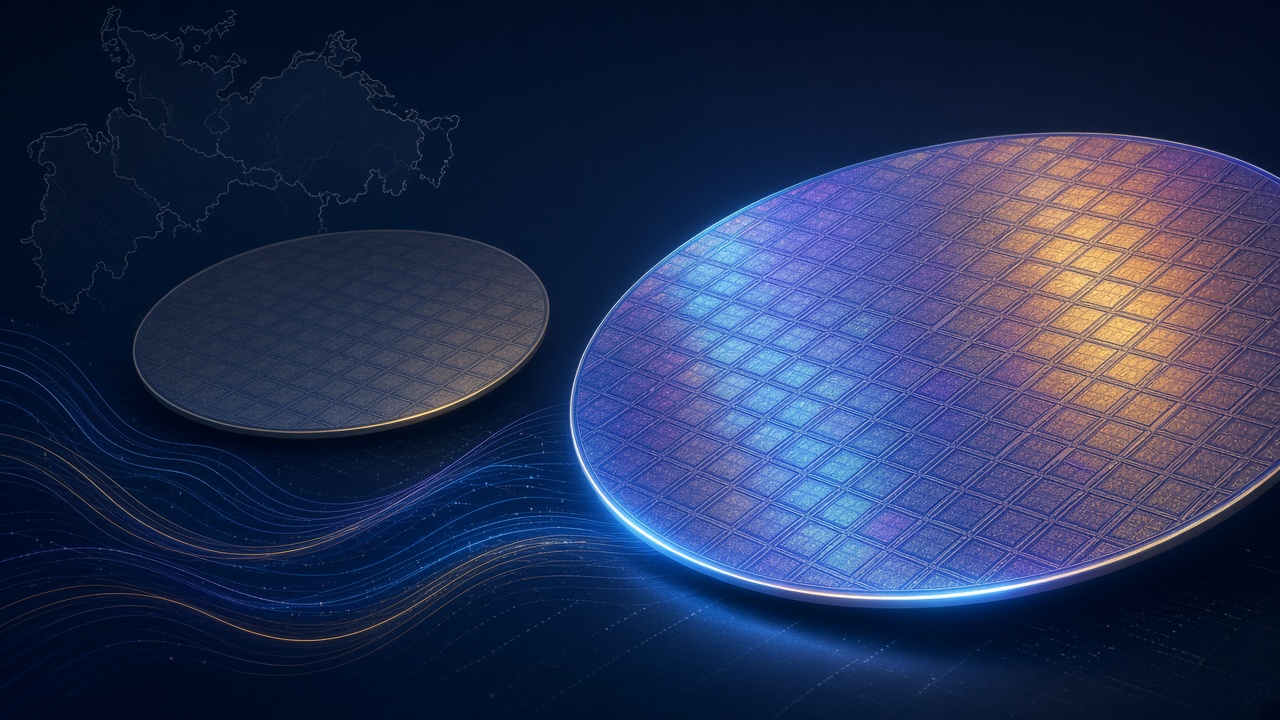
The aid pays for a new fab section at Itzehoe, north-west of Hamburg, that will process 300-millimetre silicon wafers instead of the 200mm wafers the site uses today. Heise calculates that the larger format offers 125% more usable chip area per production run. The state says capacity will more than double. Production is due to start next year, and Vishay says it will create up to 250 jobs.
The plant will make silicon power MOSFETs, transistors that switch high currents and voltages. Vishay says the chips are intended for cars and for industrial and commercial uses, "including high-performance computers for artificial intelligence, telecommunications and IT infrastructure" (translated). NDR reports that the new building has five storeys, three of them for utilities and climate control, with a 4,000-square-metre cleanroom served by an automated overhead transport system.
The European Commission cleared the aid in July as part of a €659m package for four German projects. The others are €353m for Element 3-5's silicon-carbide epiwafer plant in Baesweiler, €74.4m for KLA's metrology site in Weilburg and €17.9m for KETEK in Munich.
How much is Vishay putting in?
The company has only said it is investing a "high three-digit million amount" (translated). Andreas Hein, economic spokesman for the CDU group in the state parliament, told dpa it is about €1bn. If that figure is right, taxpayers would cover roughly a fifth of the project. Vishay has not confirmed it.
The company is open about its dependence on the aid. "Subsidies are dramatically important, because costs in Europe are significantly higher than in competing countries, for example in Asia" (translated), Markus Keil, Vishay's head of wafer manufacturing, said, according to heise. Heise notes that chip subsidies are common in Asia too. The opposition FDP welcomed the investment but said the government should have informed parliament fully and early about a project of this size, as the state constitution requires.
Why it matters
Unlike the Magdeburg megafab that Intel abandoned in 2025, Itzehoe is not about cutting-edge processors. Alexander Stanitzki of the German Chips Competence Centre told NDR that "power MOSFETs are the backbone of all power-electronics applications, from the electric-car drive to AI accelerators in data centres" (translated). He said Europe, unlike in processors, holds a strong position in power semiconductors, and that expanding Itzehoe helps stop strategic capacity moving to Asia.
Vishay is part of the Northern Chip Network, founded this year with Nexperia, NXP, Semikron Danfoss and X-Fab. The real test of whether Europe's Chips Act subsidies pay off will come next year, when the new line has to show it can find 250 workers and compete on cost. Keil told NDR that the shortage of skilled staff is a serious issue.
Sources
- Land Schleswig-Holstein, Ministry of Economy, "215 Millionen Euro für Halbleiterproduktion in Itzehoe", 30 Oct 2026 (German)
- NDR, Vinetta Richter, "Millionen für Chip-Fabrik: Vishay baut Werk in Itzehoe aus", 30 Oct 2026 (German)
- heise online, Nico Ernst with dpa, "Förderung für 300mm-Wafer in Itzehoe an Vishay übergeben", 31 Oct 2026 (German)
- European Commission Representation in Germany, "Vier neue Halbleiteranlagen: Kommission genehmigt Beihilfe Deutschlands in Höhe von 659 Millionen Euro", 14 Jul 2026 (German)