




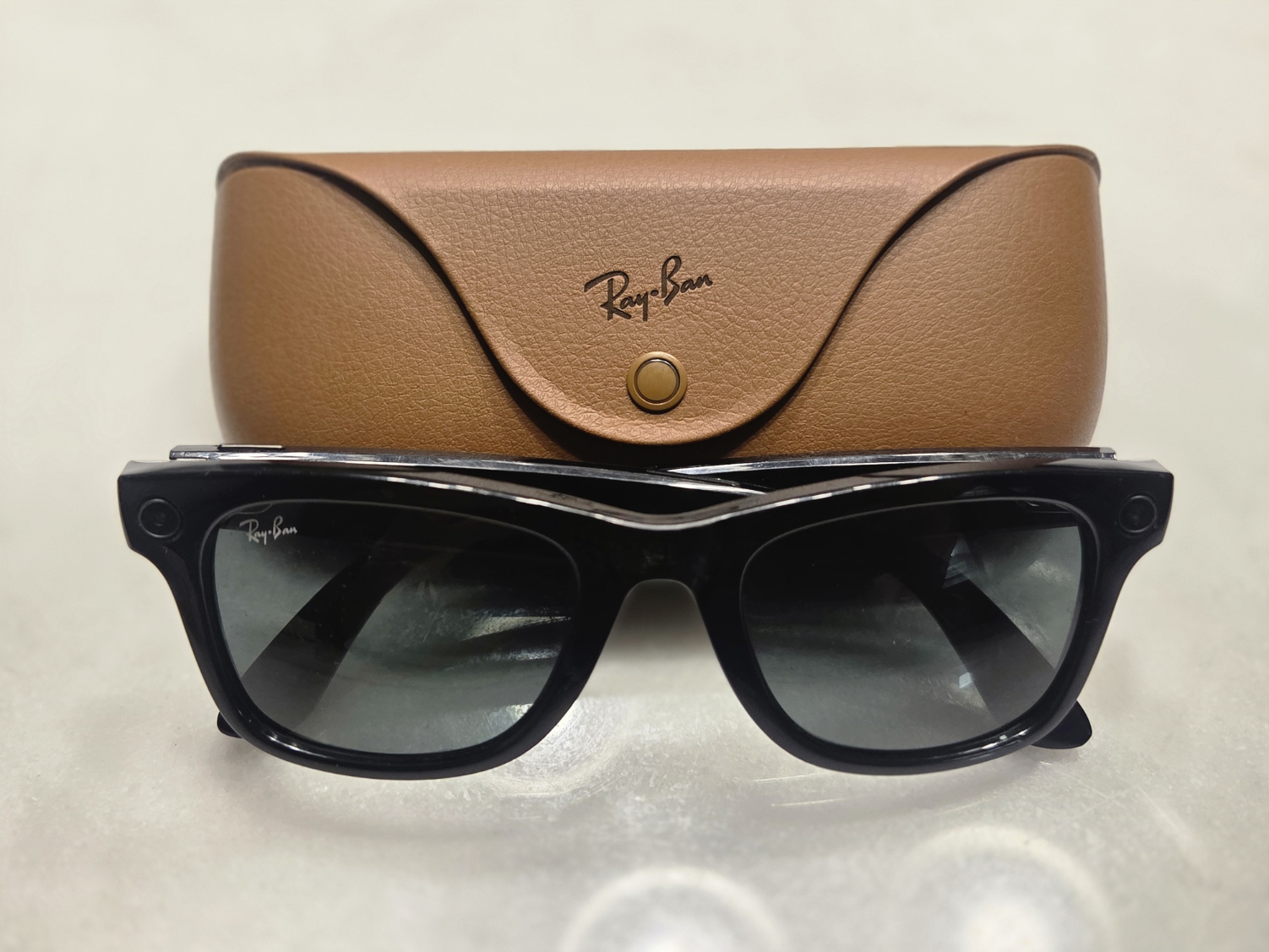
Germany's 16 federal states want any recording device that is "technically suited to record unnoticed" brought under the country's ban on covert cameras, whether or not it shows a recording light. If Berlin agrees, many of the camera glasses now on sale, Meta's Ray-Ban models among them, could become illegal in Europe's largest consumer market. The telecoms regulator sees no grounds for a ban. Hamburg's data-protection authority disagrees, and the digital lobby Bitkom is pushing back.
The Bundesrat, the chamber that represents Germany's states, adopted its formal opinion on the federal government's bill against "digital violence" on Friday 20 November. Most of its demands are about criminal law. One goes much further than the government's draft. The states ask that Section 8 of the TDDDG, the telecoms and digital-services data-protection law that already bans disguised listening and filming devices, be extended to recording devices "that are technically suited to record unnoticed, so that the recognisability of the recording no longer matters" (translated), according to the Bundesrat resolution (Drucksache 590/26).
That wording matters. Under today's rules, a device is banned only if its design makes it especially suitable for covert recording. netzpolitik.org reports that the change would "probably lead to a ban on many currently popular models in Germany" (translated).
Two regulators, two answers
The proposal reaches the government while Germany's own regulators disagree. The Bundesnetzagentur, which polices the TDDDG ban, has so far found no reason to act against the Ray-Ban Meta glasses, heise online reports, because the glasses show a small light while recording. The Hamburg data-protection authority, which is responsible for Meta and Google in Germany, reached the opposite view after its own review: the light is not easy to see, according to netzpolitik.org.
The states also want manufacturers kept in check at EU level. They ask Berlin to push in Brussels for technical minimum standards and for safeguards that stop users from switching off, covering or otherwise tampering with recording indicators. In their reasoning, the processing of footage on manufacturers' servers is "at least problematic" (translated) under data-protection law, especially where artificial intelligence, facial recognition or livestreaming is involved. People with visual impairments who use the glasses as assistive technology would be exempt.
Who stands to lose
The obvious loser would be Meta and its eyewear partner EssilorLuxottica, which have made the Ray-Ban glasses the best-known product in the category. Smaller brands selling cheap camera glasses would be hit as well. Bitkom, which represents Germany's digital industry, said on the day of the vote that "smart glasses should not be banned across the board" (translated), in a statement by chief executive Bernhard Rohleder. He argues that a clearly visible LED makes an active pair of glasses easier to spot than an active phone camera. Bitkom's own survey found that 82% of Germans want recordings by smart glasses to be clearly signalled. That is a case for better signalling, not for a ban.
Germany is not the only country with doubts. On 20 November the Dutch data-protection authority, the AP, advised consumers not to buy AI camera glasses after testing six models, NOS reported. It also asked politicians to consider whether the devices should be banned.
What happens next
The Bundesrat's opinion is not binding. The federal government will reply before the bill goes to the Bundestag, and it can decline to widen the TDDDG. The states want tougher penalties in the same bill: up to five years in prison, instead of the two the government proposes, for spreading intimate images or sexualised deepfakes without consent, and a tracker-stalking offence that would no longer require "repeated" surveillance to be proven. For hardware makers, the question is whether a recording light will still count as enough of a warning in Germany.
Photo: CCadio via Wikimedia Commons, CC BY 4.0 (Ray-Ban Meta Gen 1 smart glasses with charging case; the camera and indicator light sit in the corners of the frame).
Sources
- Bundesrat, Drucksache 590/26 (Beschluss), 20 November 2026: https://www.bundesrat.de/SharedDocs/drucksachen/2026/0501-0600/590-26(B).pdf?__blob=publicationFile&v=1
- netzpolitik.org, Chris Köver, 23 November 2026: https://netzpolitik.org/2026/gesetz-gegen-digitale-gewalt-bundesrat-will-strengere-regeln-fuer-smart-glasses/
- heise online, Stefan Krempl, 22 November 2026: https://www.heise.de/news/Bundesrat-fordert-strengere-Regeln-fuer-Smart-Glasses-und-Deepfakes-11533616.html
- Bitkom press release, 20 November 2026: https://www.bitkom.org/Presse/Presseinformation/Traeger-von-Smart-Glasses-nicht-unter-Generalverdacht-stellen
- NOS on the Dutch AP warning, 20 November 2026: https://nos.nl/artikel/2640119-autoriteit-persoonsgegevens-ai-camerabrillen-brengen-veiligheid-in-gevaar