




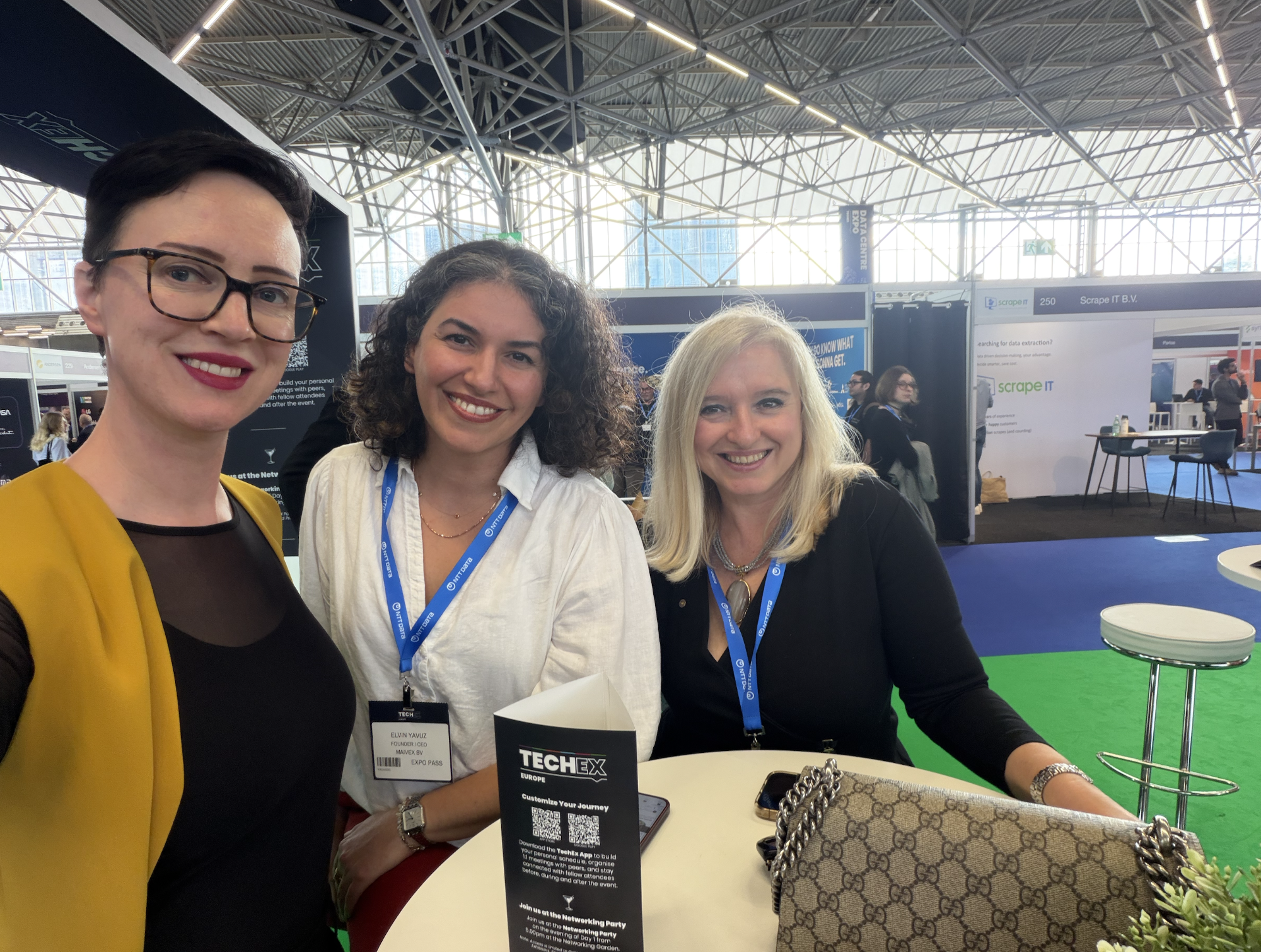
From energy shortages and edge AI to cybersecurity, digital sovereignty and robotics: 19 voices at TechEx Europe reveal where technology is heading over the next 12 months.
At TechEx Europe in Amsterdam, EuropeanTechOnHeels spoke with 19 technology professionals, entrepreneurs and industry specialists about one central question: Which technology or development will have the biggest impact between now and October 2027?
The answers went well beyond the predictable enthusiasm for AI. Energy infrastructure, cybersecurity, data ownership, robotics, quantum-resistant encryption and sustainability all emerged as important developments.
But a common theme connected many of the conversations: the next chapter of technology will be less about what is possible and more about what can actually be delivered, secured and scaled.

The AI revolution has an energy problem
For Peter Holden, one of the biggest technological breakthroughs of the coming year may have very little to do with developing smarter AI models.
"It will be around power, because that is the bottleneck right now for AI data centres. Not chips, not LLMs, not open-weight models from China. It's going to be power."
Holden believes that electricity availability has become a critical constraint on the expansion of AI infrastructure.
His company is developing compact power systems, including a 7.5-megawatt gas-fired solution that he expects to become commercially available within approximately eight months. According to Holden, the system is designed to offer greater efficiency and substantially lower emissions than conventional gas-turbine solutions.
The urgency is clear in his assessment.
"It's a race to power, and people are struggling."
With demand increasing faster than conventional energy infrastructure can be expanded, he expects more creative solutions and smaller, modular data centres to emerge.
That shift could also change where AI processing happens.
Edge AI moves computing closer to the user
Jai Rambaratsingh sees a major opportunity in moving more artificial intelligence away from centralised cloud infrastructure.
"I think what we're aiming for, and I guess that's because we think it's going to be big, is edge AI."
Rather than relying exclusively on distant data centres, edge AI allows processing to happen locally, whether on a device, a machine or within an organisation's own infrastructure.
Rambaratsingh argues that the underlying technology is already largely available.
"The hardware is there. The chips are there, the GPUs are there. There's a lot of stuff possible already."
The missing piece is the widespread emergence of applications that demonstrate clear value.
"I think we're on the verge of this breakthrough."
One reason for the expected shift is economic. As the cost of using AI increases, organisations will have to think more carefully about whether every task needs to be processed in the cloud.
According to Rambaratsingh, companies will increasingly make conscious decisions between cloud computing and their own local capacity.
The result could be more affordable AI, greater flexibility and less dependence on major technology providers.

Physical AI and robotics enter everyday operations
For Elvin Yavuz, AI's next phase will increasingly involve the physical world.
"AI is not only about technology; it's about marketing, sales, and it's all about data."
He points towards physical AI and robotics, particularly in factories, industrial operations and device management.
Although robotics itself is hardly new, Yavuz expects its importance to continue growing as organisations connect machines with increasingly sophisticated data-driven systems.
Violeta Vieru is equally interested in the development of robotics.
"I'm quite intrigued about the robots that keep walking around here. I haven't seen that one before, so it seems that the motion range has developed quite greatly in the past year."
For Vieru, the next step is not simply making robots more intelligent. It is making them genuinely useful in daily life.
She expects artificial intelligence to move beyond predominantly digital tasks and increasingly take on physical chores.
The opportunity is significant: machines could free people from repetitive practical work, allowing them to spend more time on creative activities.
Sridevi Namilakonda, founder of StratPilot, is also optimistic about the expansion of AI beyond traditional software.
She expects more sophisticated robotics and potentially even flying vehicles to become increasingly visible as the technology develops.
But her most immediate argument is about accessibility.
"Even if you don't have a background in coding, you don't have to code but still get things done."
For entrepreneurs and smaller businesses, she believes that this ability to create and operate technology without extensive technical expertise could be transformative.

Not every important technology needs to be spectacular
While much of the exhibition floor focused on AI and robotics, Danny Fu highlighted the continued importance of more established technologies such as Bluetooth Low Energy (BLE) and LoRa.
These technologies allow low-power devices and sensors to communicate, helping organisations track assets, monitor equipment and improve operational decision-making.
Warehouses, hospitals and educational institutions are among the environments where such applications can provide value.
Fu was careful not to exaggerate the likely pace of growth.
"Our technology is not so fancy, just kind of basics."
Rather than promising an explosive breakthrough, he anticipates steady adoption.
It is a useful reminder that the most commercially valuable developments are not necessarily the ones attracting the loudest applause.
From experimenting with AI to making it work
Several interviewees believe that 2027 will mark an important transition from AI experimentation towards practical implementation.
Ferry Haris sees a clear shift in what businesses are buying.
Where organisations previously focused on testing AI, they are now increasingly concerned with production, reliability and measurable outcomes.
"Most people will also realise that actually they don't need the latest model to do their job."
Haris argues that the emphasis will move away from selling technology itself and towards delivering services and results.
In his own work involving security, he has sometimes found older and more narrowly focused models better suited to particular tasks than newer alternatives.
That experience challenges the assumption that the newest technology is always the most effective.
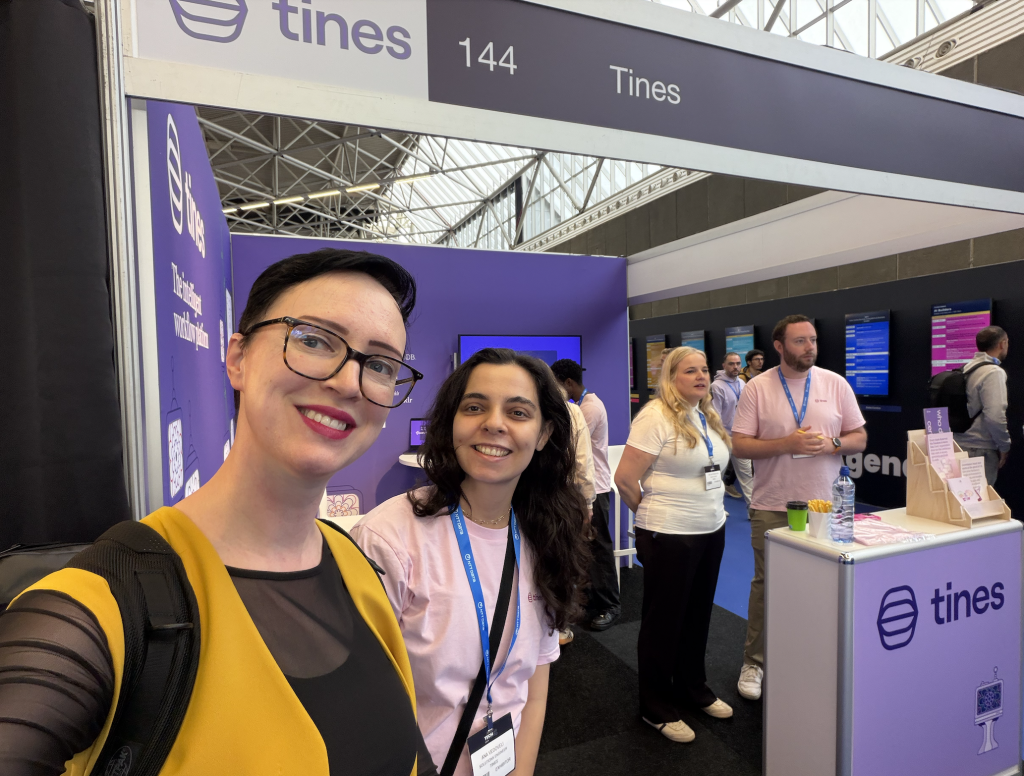
Ana Vedoveli of Tines expects the ability to deploy and manage AI securely to become one of the most important developments of the coming year.
"People built with AI, but now they're starting to think of, okay, how do we control what we've done? How do we keep it secure?"
She describes an important debate taking place within organisations.
Should employees be allowed to experiment independently with different AI tools, or should organisations centralise AI use to create greater control?
The answer will matter particularly to security and IT departments, which must balance innovation with the responsibility to protect company information.
Sanket Sheth of Axonis agrees that governance will become central to successful implementation.
"Governance is really going to make sure that people move quicker, but in a structured way, in a secure way."
According to Sheth, many companies are moving beyond pilot projects, which creates new questions about legal compliance, security, accountability and the ownership of AI-generated decisions.
Regulated sectors, including healthcare, finance and defence, face particular pressure to address these challenges.
People and organisations need to catch up
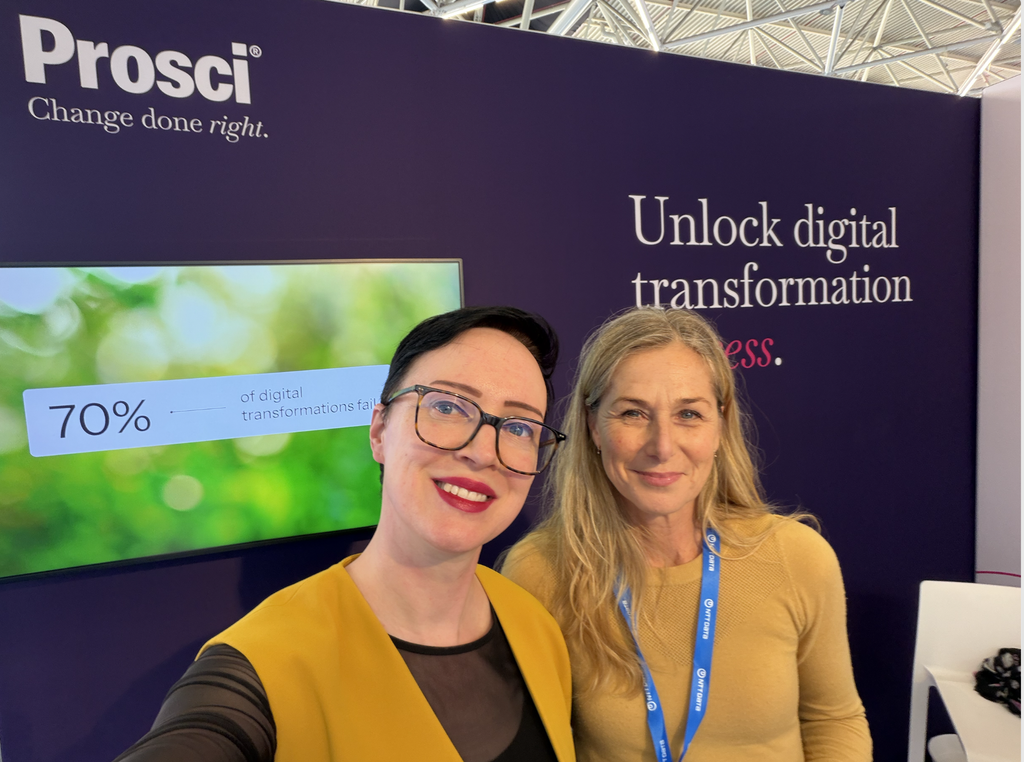
Caroline Mørck Jensen of Prosci Europe believes the coming year will also require organisations to rethink how employees use artificial intelligence.
She expects tools such as Claude and Copilot to continue improving productivity, but questions whether companies are introducing them thoughtfully enough.
"I think we are going to do more, but hopefully we are going to be better at using it so that we use it much more thoughtfully than we do today."
For her, AI adoption is not just a matter of providing employees with software.
Companies need to explain why the tools are being introduced, what they are intended to achieve and when employees should choose not to use them.
The distinction is important: access to AI does not automatically create meaningful change.
Saskia Kamp offered an example of how accessible development tools are already influencing creativity.
At TechEx, her team invited visitors to contribute ideas to a self-described "Never List": projects they had always wanted to build but never found the time to pursue.
A developer would then select an idea and use AI to create a live minimum viable product.
The initiative illustrates how AI-assisted development can shorten the distance between an idea and a working prototype.
Bauke Ferwerda expects these capabilities to develop rapidly. He predicts: "More agents, greater speed and less need for human thinking."
He believes the pace of change makes it difficult to predict what AI systems will be capable of by October 2027.
For businesses, that creates both enormous opportunities and new security concerns.
Cybersecurity becomes an even bigger priority
As AI systems become more powerful, protecting organisations against increasingly sophisticated threats becomes more important.
Philip Voogt sees cybersecurity as one of the developments likely to have the greatest impact.
"We are becoming smarter and faster, and AI is helping with that. But we also need to protect ourselves at the same speed," he said in his Dutch-language interview.
He expects a growing need for reliable identification and authentication, particularly as digital communication becomes harder to distinguish from machine-generated content.
Businesses may increasingly question whether emails, messages and other communications genuinely originate from the person or organisation they appear to represent.

Paul Permentier identifies a similar challenge.
As attackers gain access to more advanced AI capabilities, defenders must learn to use the same technology to identify threats and respond faster.
"If AI is being used by the enemy, you need to be able to defend yourself against it," he explained.
For Permentier, the growing digital dependence of organisations makes effective cybersecurity essential rather than optional.
Europe wants greater control over its data
Cybersecurity is not the only concern. Digital sovereignty emerged as another recurring theme.
Ines Anahory of Proton believes European businesses and consumers are becoming increasingly conscious of their dependence on large technology providers.
"There is more and more of an understanding continent-wide in Europe that the dependencies that we've created, especially with hosting our data with big tech providers, is becoming more and more of a risk."
She expects the coming 12 to 18 months to bring more questions about data ownership, privacy and digital independence.
"Where is my data and how do I make sure that I have full ownership of my data?"
Johan Waaldijk of wynEnterprise believes more organisations will choose to keep sensitive data and business information within infrastructure they control.
His concern extends beyond raw data to business intelligence: processed information that may reveal commercially or personally sensitive insights.
"Our data, our law," he said, arguing for greater control over where information is stored and who can access it.
For European organisations, technological progress may therefore increasingly be measured not only by capability, but also by independence.
Preparing for the quantum era
Arzu Barske looks further into the foundations of digital security.
She believes preparation for post-quantum cybersecurity will become an important priority, even before sufficiently powerful quantum computers become widely available.
"There's still some work to do here."
Barske argues that many large organisations are still assessing their internal systems and the potential consequences of future advances in quantum computing.
Her warning is straightforward: organisations should not wait for a future security threat to become an immediate problem before preparing for it.
Edwin Weijdema, Field CTO at Veeam, also sees quantum computing as an important future development, although he expects AI to remain the more immediate influence during the coming twelve months.
He believes quantum computing could eventually support discoveries involving materials and molecules, but stresses that it is a fundamentally different technology rather than simply a more powerful form of AI.
His more immediate concern is that organisations are moving quickly with AI without fully understanding their existing data.
"We used to call it the big data lake. I call it the big data swamp," he said, translated from Dutch.
Businesses have collected enormous volumes of information, but much of it may be outdated, duplicated or poorly understood.
When AI systems use unreliable information, the consequences become more visible.
In Weijdema's view, better data management will be a prerequisite for successful AI adoption.

Sustainability is another opportunity for intelligent technology
For sustainability analyst Hilda Harle, the most promising developments may be those that help companies understand and measure their environmental performance.
"I think that AI use in sustainability is quite big and quite groundbreaking because people can actually see the results of sustainability in companies."
Harle expects growing attention to sustainability information, particularly as smaller organisations face changing reporting expectations and pressure from larger companies in their supply chains.
The opportunity lies in making complex information more accessible and useful for both businesses and their customers.
What will really matter by October 2027?
The 19 conversations at TechEx Europe suggest that the next twelve months will not be defined by a single technology.
AI will almost certainly remain central to the discussion. But its future depends on much more than bigger models or more sophisticated chatbots.
It depends on energy availability, secure infrastructure, reliable data, practical applications, affordable computing, human adoption and the ability of businesses to retain control over their technology.
Robotics may move further into physical environments. Edge AI may reduce dependence on centralised computing. Cybersecurity and digital sovereignty may become more pressing. And companies may finally demand measurable results from their AI investments.
The overriding message from Amsterdam is clear: the next phase of technological progress will not be won by whoever makes the biggest promises. It will be won by those who can turn innovation into something useful, secure and sustainable.
And that may be the most important technology story of 2027.
PS: Have a different take? We'd love to hear it!
Think we're missing a major trend? Strongly disagree with one of the opinions shared? Or feeling inspired to write your own opinion piece?
At EuropeanTechOnHeels, we're always looking for fresh perspectives, bold opinions and thought-provoking stories from the European tech community.
Got something to say? Get in touch through our contact form. We'd love to hear your story — and perhaps feature it on our platform!