


Breaking Tech Europe: Top 5 – Denmark's Data Centres With Secret Owners, Trustly Raises $60m, and Airbus Keeps 36,000 Staff on Microsoft Office
25/11/2026
16
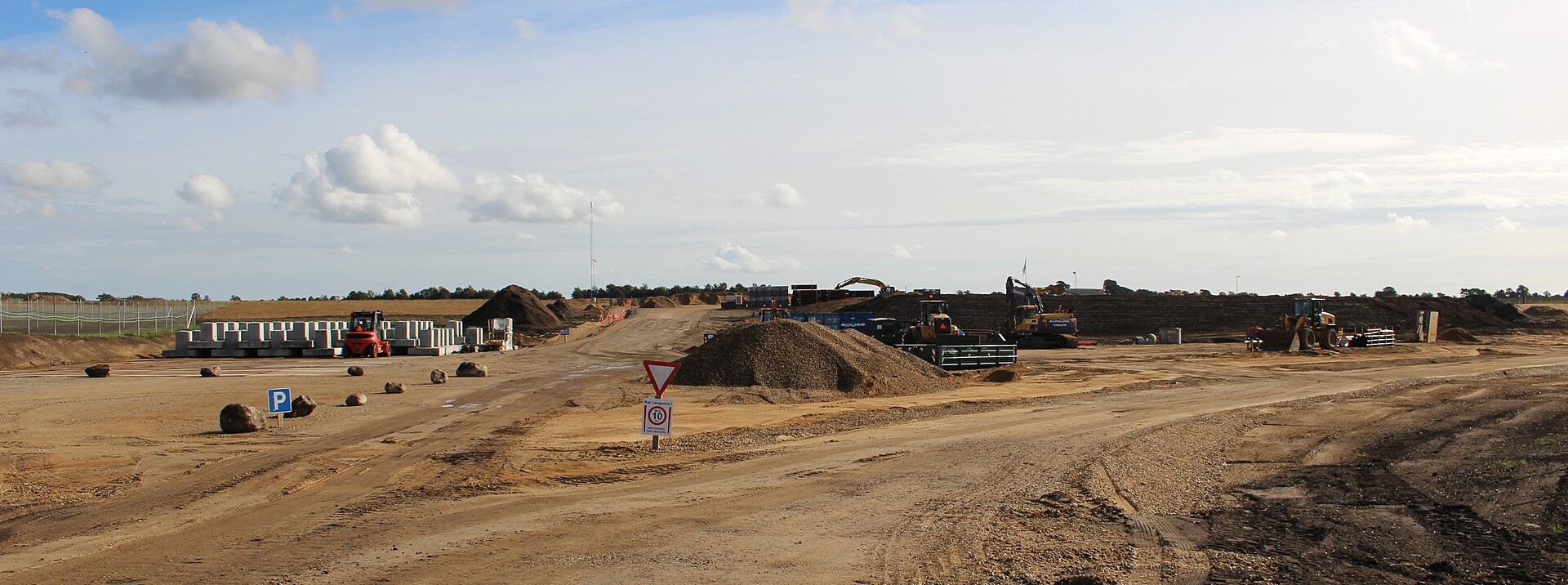
Panorama of Apple's data centre at Foulum near Viborg, Denmark, in 2016

Hidden owners behind Danish data halls, a recapitalised Swedish payments firm, Airbus's eight-year office-software exit, a Swiss tokenisation test and Poland's push for a home-grown large model: the European tech stories that matter this Wednesday, 25 November 2026.

1. At least nine planned Danish data centres have owners that are unknown or kept secret

Danish municipalities and developers cannot or will not name the future owners of at least nine planned data centres, and Holbæk has frozen its hyperscale plan pending a national strategy due before New Year.

A survey of municipalities and developers with data-centre projects in the pipeline found that for at least nine sites it is unknown or secret which companies will ultimately own them, Ingeniøren reports. Several councils also cannot say what the facilities will be used for; experts quoted by the engineering weekly call the secrecy "very worrying" and want tougher transparency requirements. The precedent is familiar: when a data centre at Foulum near Viborg was announced in 2014, it was only later revealed that Apple was behind it.

Meanwhile, Holbæk Kommune said on 19 November that a council majority had paused work on the local plan for a hyperscale data centre by the Omfartsvejen ring road, to await the national data-centre strategy that business minister Martin Lidegaard is expected to present before New Year.

2. Trustly completes a $60m raise from existing shareholders after announcing about 200 job cuts in September

Trustly, Nordic Capital and Alfvén & Didrikson: $60m of fresh capital for the Swedish open-banking payments firm, up from $40m in commitments announced last month, to fund AI-driven products.

Stockholm-based Trustly has completed a $60m round from main shareholder Nordic Capital, existing shareholder Alfvén & Didrikson and other existing investors, including funds and accounts managed by BlackRock, Tech.eu reports. The company, which lets consumers pay directly from their bank account instead of by card, has raised more than $450m in total. In September it said it would cut around 200 jobs, about a quarter of its headcount, after revenue fell by more than $50m last year, according to Tech.eu. Group chief executive Johan Tjärnberg said the money will "accelerate the development of new products that leverage AI to turn payments into intelligence".

3. Airbus is still leaving Microsoft Office after eight years, but 22% of its staff will never switch

Airbus, Google and Microsoft: of roughly 165,000 Airbus employees, about 22% will stay on on-premise Microsoft Office because classified defence work cannot move to Google's cloud.

Airbus signed with Google in spring 2018 to move most of its workforce from Microsoft Office to Google's cloud suite, and the shift is still not finished, Golem.de reports, citing executive vice president Catherine Jestin's interview with The Register, in which she put the remaining time at two to three years. Jestin said Google has fixed compatibility problems, such as comments that were lost when contracts moved between Excel and Sheets. Golem notes that some Airbus spreadsheets had around 20 million cells in 2025, which at the time only Excel could handle. Defence and space work must stay on-premise, and Google offers no offline equivalent.

4. SNB, UBS and SIX start testing a shared ledger for central-bank money and tokenised securities

The Swiss National Bank, UBS, SIX and six other institutions launch an exploratory "Swiss Financial Ledger" to test a single DLT platform for central-bank money, bank deposits and securities, with no commitment to build it.

The project brings together the SNB, UBS, SIX, Zürcher Kantonalbank, PostFinance, Banque Cantonale Vaudoise, Basler Kantonalbank, Sygnum Bank and settlement platform Seturion, the Swiss National Bank announced on 24 November. It sits within Project Helvetia and builds on the BIS-led Project Agorá, and will assess whether one ledger can serve both domestic and cross-border transactions. A Helvetia Strategic Board has been set up, with the Swiss Bankers Association as observer. The SNB stresses that the work "should not be interpreted as an indication" that such a ledger will launch or that it will issue tokenised central-bank money.

5. Poland's Bielik plans a model ten times larger, on its own architecture instead of Mistral's weights

Bielik.AI and the SpeakLeash foundation: 11bn parameters today, a model roughly ten times larger next, and one million monthly downloads, but an 11-month wait for public money.

SpeakLeash president and Bielik co-creator Sebastian Kondracki told WNP.pl that the team's main goal is a model about ten times the size of the current one, built on its own architecture; earlier versions started from Mistral's weights before training on Polish text, Rzeczpospolita reports. The latest Bielik 11B v3.1 supports 56 languages, and the model reached one million monthly downloads in August, which Kondracki says makes it the second most-downloaded European open-weight model. He criticised waits of up to 11 months for public funding and a shortage of Polish GPU capacity, calling domestic AI infrastructure a matter of national interest.

Why it is breaking news

Each story tests the same question from a different angle: who controls Europe's digital infrastructure. Danish towns are being asked to host power-hungry data halls without knowing who will own them; Airbus shows that even a decade-long cloud migration stops at the door of classified work; Switzerland's central bank is testing, cautiously, whether money and securities can share one ledger; and Bielik's founders say Poland lacks the GPUs and fast funding to keep a national model at home. Trustly's recapitalisation, meanwhile, shows existing owners still backing European payments challengers through a painful restructuring.

Sources: Ingeniøren, Holbæk Kommune, Tech.eu, Golem.de (citing The Register), the Swiss National Bank and Rzeczpospolita (citing WNP.pl), linked in each item. Cover image: Apple's data centre at Foulum near Viborg, Denmark, photographed in 2016 by Finn Årup Nielsen, CC BY-SA 4.0, via Wikimedia Commons.


Recent

German states push for a rule that could take Ray-Ban Meta glasses off the market

The Future of Workplace Analytics in Europe

Breaking Tech Europe: Top 5 – Agon Raises $70m for AI Battlefields, Hugendubel Cyberattack Freezes Tolino Cloud, and MEPs Revive the Network-Fee Fight

Brussels confirms EU Academy data leak as a month-old cyberattack, suspected to be China-linked, is still not contained

Breaking Tech Europe: Top 5 – Denmark's Data Centres With Secret Owners, Trustly Raises $60m, and Airbus Keeps 36,000 Staff on Microsoft Office

25/11/2026
16
Panorama of Apple's data centre at Foulum near Viborg, Denmark, in 2016

Hidden owners behind Danish data halls, a recapitalised Swedish payments firm, Airbus's eight-year office-software exit, a Swiss tokenisation test and Poland's push for a home-grown large model: the European tech stories that matter this Wednesday, 25 November 2026.

1. At least nine planned Danish data centres have owners that are unknown or kept secret

Danish municipalities and developers cannot or will not name the future owners of at least nine planned data centres, and Holbæk has frozen its hyperscale plan pending a national strategy due before New Year.

A survey of municipalities and developers with data-centre projects in the pipeline found that for at least nine sites it is unknown or secret which companies will ultimately own them, Ingeniøren reports. Several councils also cannot say what the facilities will be used for; experts quoted by the engineering weekly call the secrecy "very worrying" and want tougher transparency requirements. The precedent is familiar: when a data centre at Foulum near Viborg was announced in 2014, it was only later revealed that Apple was behind it.

Meanwhile, Holbæk Kommune said on 19 November that a council majority had paused work on the local plan for a hyperscale data centre by the Omfartsvejen ring road, to await the national data-centre strategy that business minister Martin Lidegaard is expected to present before New Year.

2. Trustly completes a $60m raise from existing shareholders after announcing about 200 job cuts in September

Trustly, Nordic Capital and Alfvén & Didrikson: $60m of fresh capital for the Swedish open-banking payments firm, up from $40m in commitments announced last month, to fund AI-driven products.

Stockholm-based Trustly has completed a $60m round from main shareholder Nordic Capital, existing shareholder Alfvén & Didrikson and other existing investors, including funds and accounts managed by BlackRock, Tech.eu reports. The company, which lets consumers pay directly from their bank account instead of by card, has raised more than $450m in total. In September it said it would cut around 200 jobs, about a quarter of its headcount, after revenue fell by more than $50m last year, according to Tech.eu. Group chief executive Johan Tjärnberg said the money will "accelerate the development of new products that leverage AI to turn payments into intelligence".

3. Airbus is still leaving Microsoft Office after eight years, but 22% of its staff will never switch

Airbus, Google and Microsoft: of roughly 165,000 Airbus employees, about 22% will stay on on-premise Microsoft Office because classified defence work cannot move to Google's cloud.

Airbus signed with Google in spring 2018 to move most of its workforce from Microsoft Office to Google's cloud suite, and the shift is still not finished, Golem.de reports, citing executive vice president Catherine Jestin's interview with The Register, in which she put the remaining time at two to three years. Jestin said Google has fixed compatibility problems, such as comments that were lost when contracts moved between Excel and Sheets. Golem notes that some Airbus spreadsheets had around 20 million cells in 2025, which at the time only Excel could handle. Defence and space work must stay on-premise, and Google offers no offline equivalent.

4. SNB, UBS and SIX start testing a shared ledger for central-bank money and tokenised securities

The Swiss National Bank, UBS, SIX and six other institutions launch an exploratory "Swiss Financial Ledger" to test a single DLT platform for central-bank money, bank deposits and securities, with no commitment to build it.

The project brings together the SNB, UBS, SIX, Zürcher Kantonalbank, PostFinance, Banque Cantonale Vaudoise, Basler Kantonalbank, Sygnum Bank and settlement platform Seturion, the Swiss National Bank announced on 24 November. It sits within Project Helvetia and builds on the BIS-led Project Agorá, and will assess whether one ledger can serve both domestic and cross-border transactions. A Helvetia Strategic Board has been set up, with the Swiss Bankers Association as observer. The SNB stresses that the work "should not be interpreted as an indication" that such a ledger will launch or that it will issue tokenised central-bank money.

5. Poland's Bielik plans a model ten times larger, on its own architecture instead of Mistral's weights

Bielik.AI and the SpeakLeash foundation: 11bn parameters today, a model roughly ten times larger next, and one million monthly downloads, but an 11-month wait for public money.

SpeakLeash president and Bielik co-creator Sebastian Kondracki told WNP.pl that the team's main goal is a model about ten times the size of the current one, built on its own architecture; earlier versions started from Mistral's weights before training on Polish text, Rzeczpospolita reports. The latest Bielik 11B v3.1 supports 56 languages, and the model reached one million monthly downloads in August, which Kondracki says makes it the second most-downloaded European open-weight model. He criticised waits of up to 11 months for public funding and a shortage of Polish GPU capacity, calling domestic AI infrastructure a matter of national interest.

Why it is breaking news

Each story tests the same question from a different angle: who controls Europe's digital infrastructure. Danish towns are being asked to host power-hungry data halls without knowing who will own them; Airbus shows that even a decade-long cloud migration stops at the door of classified work; Switzerland's central bank is testing, cautiously, whether money and securities can share one ledger; and Bielik's founders say Poland lacks the GPUs and fast funding to keep a national model at home. Trustly's recapitalisation, meanwhile, shows existing owners still backing European payments challengers through a painful restructuring.

Sources: Ingeniøren, Holbæk Kommune, Tech.eu, Golem.de (citing The Register), the Swiss National Bank and Rzeczpospolita (citing WNP.pl), linked in each item. Cover image: Apple's data centre at Foulum near Viborg, Denmark, photographed in 2016 by Finn Årup Nielsen, CC BY-SA 4.0, via Wikimedia Commons.
Recent

© European Tech On Heels - 2026
Made with
Web Wings