


Danish start-up KineDB raises €850K to build a database that works offline and in the cloud

30/10/2026
1
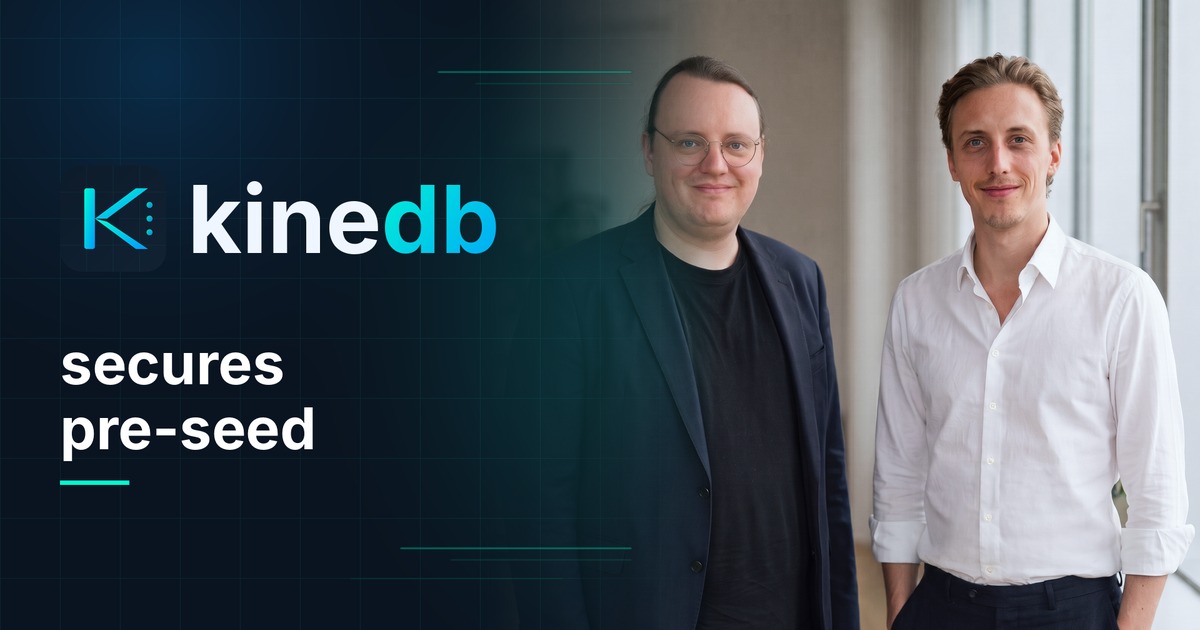
KineDB co-founders next to the KineDB logo and the words secures pre-seed

Copenhagen start-up KineDB is building a single database engine that runs both inside offline apps and in the cloud, and says the AI coding boom makes the problem more urgent.

Image: KineDB co-founders Axel Löwenhoff and Allan Zimmermann. Photo: KineDB / Superhero Capital (press image).

KineDB, a Copenhagen-based database technology company, has raised €850,000 in pre-seed funding to build a general-purpose database designed to run "wherever software runs", from cloud infrastructure to local devices without an internet connection.

The round was led by Helsinki-based Superhero Capital, with participation from NGL Ventures and angel investors including Cactos CTO Jussi Pyörre and Kristoffer Abell and Jakob Lilholm, co-CEOs of Danish compliance company Formalize. According to Startup.eu, it is NGL Ventures' first investment in Denmark.

One engine, online and offline

KineDB's central idea is to use a single database engine both locally inside an application and across backend infrastructure. The company says this sets it apart from common approaches that stitch together separate systems to handle offline and cloud data. According to Startup.eu and Dealroom, the engine is written in Rust and combines storage, replication, synchronisation and version history in one system.

The start-up is initially targeting sectors that depend on databases but often lack a reliable connection. In the example given in the announcement, a mine worker deep underground could record progress or machine health on a tablet, updating a local database, which then syncs with the wider system once a connection returns. The company is developing the product with design partners, according to RoundOS, and plans to grow into a general-purpose database over time.

The company was founded in 2026 by Axel Löwenhoff and Allan Zimmermann. Zimmermann spent twenty years building cloud and hosting infrastructure, most recently on a serverless platform where he repeatedly ran into limits of existing database architecture. Löwenhoff has spent more than a decade selling software to companies worldwide, including for UiPath, Grafana Labs and Lacework.

The AI coding angle

KineDB frames its pitch around the surge in AI-assisted software development. Citing Google's DORA research, the announcement says 90 per cent of technology professionals now use AI.

"The way AI has opened the gates for developers of all levels to experiment and launch new software is a wonderful thing," Löwenhoff said. "A consequence, however, is a lot of software where creators haven't necessarily considered the underlying databases essential to functionality."

Gytenis Galkis, partner at Superhero Capital, said: "AI means more software is being built than ever, often by people who've never had to think about databases." He added that the founders "have already shown that one engine can handle data both offline and in the cloud", calling offline-first apps "a sharp entry point into a much bigger market".

The funding will go towards developing the engine and hiring engineers with experience in databases, storage and query engines.

Why it matters

Databases are among the most entrenched layers of the software stack, and many of the most widely used products come from the US. KineDB is small, but it is attacking a real gap: industrial, field and mobile applications that must keep working without connectivity. A Nordic-built, offline-first engine also fits Europe's push for infrastructure it controls. The challenge will be turning a tightly focused pre-seed product into a general-purpose database that developers trust with critical data.

Sources

  • KineDB / Superhero Capital press release, Copenhagen, 29 October 2026
  • Tech.eu, 29 October 2026
  • Startup.eu, Dealroom News and RoundOS, 29 October 2026

Recent

Freiburg's VUSE XR raises €1.2M to make mixed reality training as easy to update as a document

Norway's Fronted raises €1.7M to take on Deel and Rippling in cross-border hiring

London's Easol raises $30M and launches AI agents for festivals and venues

Showpad co-founder's Entourage closes €100M second fund for AI, robotics and deep tech

Danish start-up KineDB raises €850K to build a database that works offline and in the cloud
30/10/2026
1
KineDB co-founders next to the KineDB logo and the words secures pre-seed

Copenhagen start-up KineDB is building a single database engine that runs both inside offline apps and in the cloud, and says the AI coding boom makes the problem more urgent.

Image: KineDB co-founders Axel Löwenhoff and Allan Zimmermann. Photo: KineDB / Superhero Capital (press image).

KineDB, a Copenhagen-based database technology company, has raised €850,000 in pre-seed funding to build a general-purpose database designed to run "wherever software runs", from cloud infrastructure to local devices without an internet connection.

The round was led by Helsinki-based Superhero Capital, with participation from NGL Ventures and angel investors including Cactos CTO Jussi Pyörre and Kristoffer Abell and Jakob Lilholm, co-CEOs of Danish compliance company Formalize. According to Startup.eu, it is NGL Ventures' first investment in Denmark.

One engine, online and offline

KineDB's central idea is to use a single database engine both locally inside an application and across backend infrastructure. The company says this sets it apart from common approaches that stitch together separate systems to handle offline and cloud data. According to Startup.eu and Dealroom, the engine is written in Rust and combines storage, replication, synchronisation and version history in one system.

The start-up is initially targeting sectors that depend on databases but often lack a reliable connection. In the example given in the announcement, a mine worker deep underground could record progress or machine health on a tablet, updating a local database, which then syncs with the wider system once a connection returns. The company is developing the product with design partners, according to RoundOS, and plans to grow into a general-purpose database over time.

The company was founded in 2026 by Axel Löwenhoff and Allan Zimmermann. Zimmermann spent twenty years building cloud and hosting infrastructure, most recently on a serverless platform where he repeatedly ran into limits of existing database architecture. Löwenhoff has spent more than a decade selling software to companies worldwide, including for UiPath, Grafana Labs and Lacework.

The AI coding angle

KineDB frames its pitch around the surge in AI-assisted software development. Citing Google's DORA research, the announcement says 90 per cent of technology professionals now use AI.

"The way AI has opened the gates for developers of all levels to experiment and launch new software is a wonderful thing," Löwenhoff said. "A consequence, however, is a lot of software where creators haven't necessarily considered the underlying databases essential to functionality."

Gytenis Galkis, partner at Superhero Capital, said: "AI means more software is being built than ever, often by people who've never had to think about databases." He added that the founders "have already shown that one engine can handle data both offline and in the cloud", calling offline-first apps "a sharp entry point into a much bigger market".

The funding will go towards developing the engine and hiring engineers with experience in databases, storage and query engines.

Why it matters

Databases are among the most entrenched layers of the software stack, and many of the most widely used products come from the US. KineDB is small, but it is attacking a real gap: industrial, field and mobile applications that must keep working without connectivity. A Nordic-built, offline-first engine also fits Europe's push for infrastructure it controls. The challenge will be turning a tightly focused pre-seed product into a general-purpose database that developers trust with critical data.

Sources

  • KineDB / Superhero Capital press release, Copenhagen, 29 October 2026
  • Tech.eu, 29 October 2026
  • Startup.eu, Dealroom News and RoundOS, 29 October 2026

Recent

© European Tech On Heels - 2026
Made with
Web Wings