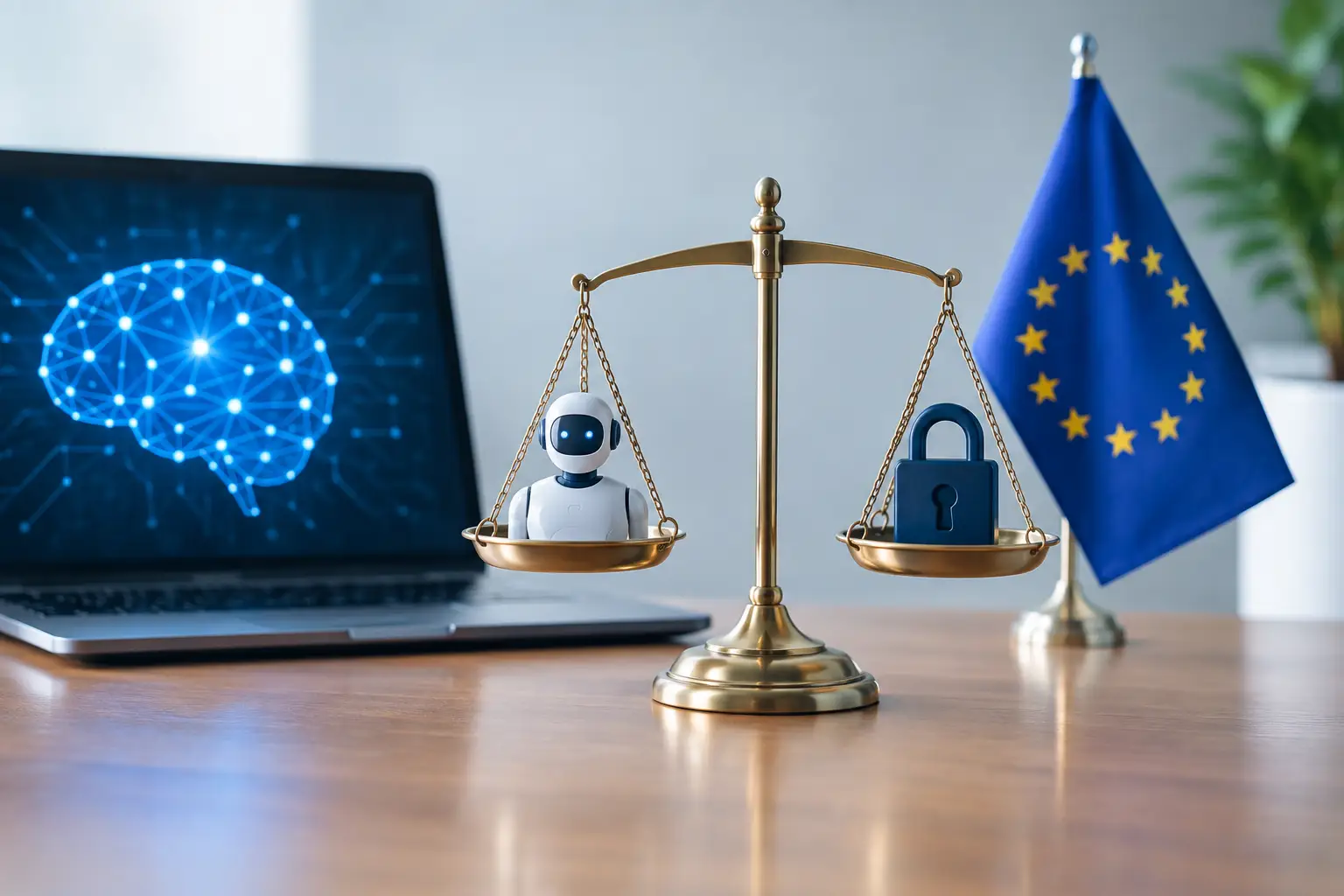
A government ministry moves its data from a U.S. cloud provider. A European startup discovers its AI product depends on models, chips, and infrastructure it cannot control. A hospital faces a ransomware incident and learns that its critical systems are connected to suppliers across several jurisdictions. These are no longer edge cases. Digital sovereignty has become a practical question of power, resilience, and choice for Europe’s tech ecosystem.
The term can sound abstract, even political. But for founders, operators, developers, investors, and public-sector leaders, it increasingly shapes procurement decisions, product roadmaps, funding conversations, and careers. Europe is trying to reduce strategic dependencies in the technologies that run its economy - without cutting itself off from the global innovation system.
What digital sovereignty actually means
Digital sovereignty is a country’s or region’s ability to make independent choices about its digital infrastructure, data, technology standards, and critical services. It does not necessarily mean building every tool at home, banning foreign providers, or creating a European version of every major platform.
The more useful definition is about meaningful control. Can an organization understand where its data is stored and who can access it? Can a public institution keep operating if a foreign supplier changes terms, faces sanctions, or suffers an outage? Can Europe develop and govern AI systems in line with its own laws and democratic values?
That question spans several layers of the stack: cloud and data centers, semiconductors, telecommunications networks, cybersecurity, operating systems, AI models, digital identity, and the platforms used by public services and businesses.
For European policymakers, the concern is not hypothetical. A large share of the region’s cloud market is controlled by non-European hyperscalers. Advanced chip supply chains remain concentrated in a small number of countries. Generative AI has intensified the pressure, because the companies with the most computing power, proprietary data, and foundation models can shape entire markets.
Why the debate is moving so fast
Geopolitical tension has made technological dependence harder to ignore. The pandemic exposed supply-chain fragility. Russia’s invasion of Ukraine put cybersecurity, communications infrastructure, and energy resilience at the center of European security discussions. Export controls on advanced chips showed how quickly access to strategic technology can become a political lever.
At the same time, European regulation has become more ambitious. Rules around privacy, platform accountability, competition, cybersecurity, and AI have positioned the EU as a major global rule-maker. Regulation alone, however, does not create technical capacity. A region can set standards for AI while still relying heavily on infrastructure and models developed elsewhere.
That gap explains the urgency behind investments in European chips, supercomputing, secure connectivity, cloud initiatives, and defense technology. It also explains why national governments are looking more carefully at where public data lives and which suppliers are involved in essential services.
For the Dutch ecosystem, this matters acutely. The Netherlands is deeply connected to global technology supply chains, home to vital semiconductor expertise, major data infrastructure, and a highly international startup scene. Openness is a strength. It also means resilience cannot be treated as someone else’s policy issue.
Sovereignty is not the same as protectionism
The most productive version of digital sovereignty is not about isolation. Europe’s tech sector needs global research partnerships, international talent, interoperable standards, and access to the best tools available. Trying to replace every foreign technology with a local alternative would be expensive, slow, and often counterproductive.
The real objective is to avoid a situation where there is no credible alternative, no negotiating power, and no visibility into risk. An organization may still choose a U.S. cloud provider because it offers scale, security capabilities, and developer tools that fit the job. That can be a sensible decision. But it should be a decision made with clear safeguards, portability plans, and an honest view of dependency.
This is why open standards, interoperability, and open-source software are part of the conversation. They can reduce lock-in and give European companies more room to build specialized products. Yet open source is not a shortcut to independence. It requires maintainers, security investment, implementation skills, and sustainable business models.
The same applies to European cloud. Local providers may offer stronger alignment with regional compliance needs and data residency expectations. They may not match every hyperscaler on global reach, service breadth, or pricing. The right approach depends on the workload, the sensitivity of the data, the sector, and the organization’s tolerance for risk.
The business questions leaders should be asking
Digital sovereignty becomes useful when it moves from a slogan to operating discipline. Leadership teams do not need to solve Europe’s entire infrastructure challenge. They do need to know where their most consequential dependencies sit.
A good starting point is mapping critical systems and asking four questions: What would stop us from serving customers? Which vendors, jurisdictions, and technical components do those systems rely on? How easily could we move data or workloads if circumstances changed? And who owns the decision when convenience conflicts with resilience?
For startups, this should not become a procurement burden that drains scarce resources. Early-stage companies need speed. But choices made in the first year can become expensive constraints later, especially in health, finance, public services, and other regulated sectors. Building with portable architecture, clear data governance, and documented vendor exits is often cheaper than untangling dependency after a major contract is signed.
For larger organizations, the challenge is usually less about awareness and more about coordination. Security, legal, engineering, procurement, and product teams may each see a different part of the risk. A cloud contract can look efficient to procurement while creating technical lock-in for engineering or legal exposure for compliance teams.
AI makes the sovereignty question sharper
AI is where the debate becomes most visible. Training and deploying large models requires immense compute capacity, specialized chips, data, and talent. Those resources are unevenly distributed. If European organizations can only consume AI through a handful of external platforms, they may lose influence over pricing, access, data handling, and the direction of innovation.
That does not mean every company needs to train a foundation model. Most do not. Many will get more value from applying smaller, domain-specific models to real business problems. But they should understand where models are hosted, whether sensitive inputs are retained, how outputs can be audited, and whether a provider can change access conditions with limited notice.
There is also a public-interest dimension. AI systems increasingly influence hiring, credit, healthcare, education, and public administration. Decisions about the data, languages, cultural context, and safety testing behind these systems should not be concentrated only among a narrow group of companies or geographies.
Who gets to shape the sovereign tech agenda?
Digital sovereignty is often discussed through infrastructure, regulation, and national security. Those matter. But the people designing the systems matter just as much. If the agenda is led by the same narrow networks that have historically dominated technology, Europe risks reproducing familiar blind spots under a new label.
A more resilient European tech ecosystem needs women and other underrepresented groups in technical leadership, cybersecurity teams, AI governance, public procurement, venture capital, and policy rooms. This is not a symbolic add-on. Diverse teams are more likely to challenge assumptions about whose data is protected, which users are considered, and what risks deserve attention.
Visibility matters here because the expertise already exists. European women are building privacy-focused products, leading security programs, researching responsible AI, investing in deep tech, and shaping digital policy. The ecosystem should treat that expertise as central to strategic capacity, not as a separate diversity conversation held after the technical decisions are made.
A practical measure of progress
Europe will not achieve digital sovereignty through a single regulation, funding announcement, or flagship platform. Progress will look less dramatic: more interoperable systems, stronger local suppliers, better cyber preparedness, capable public procurement, and companies that can switch providers without breaking their business.
It will also require patience. Building chips, cloud capacity, trusted AI ecosystems, and technical talent takes years. The risk is that sovereignty becomes a label attached to products without proving real control, security, or economic value.
For Europe’s tech community, the opportunity is bigger than compliance. The next generation of infrastructure and AI companies can build trust, transparency, and user agency into their products from the start. The strongest test of digital sovereignty is not whether Europe does everything alone. It is whether Europe can keep choosing its own direction - and ensure more people have a hand in setting it.