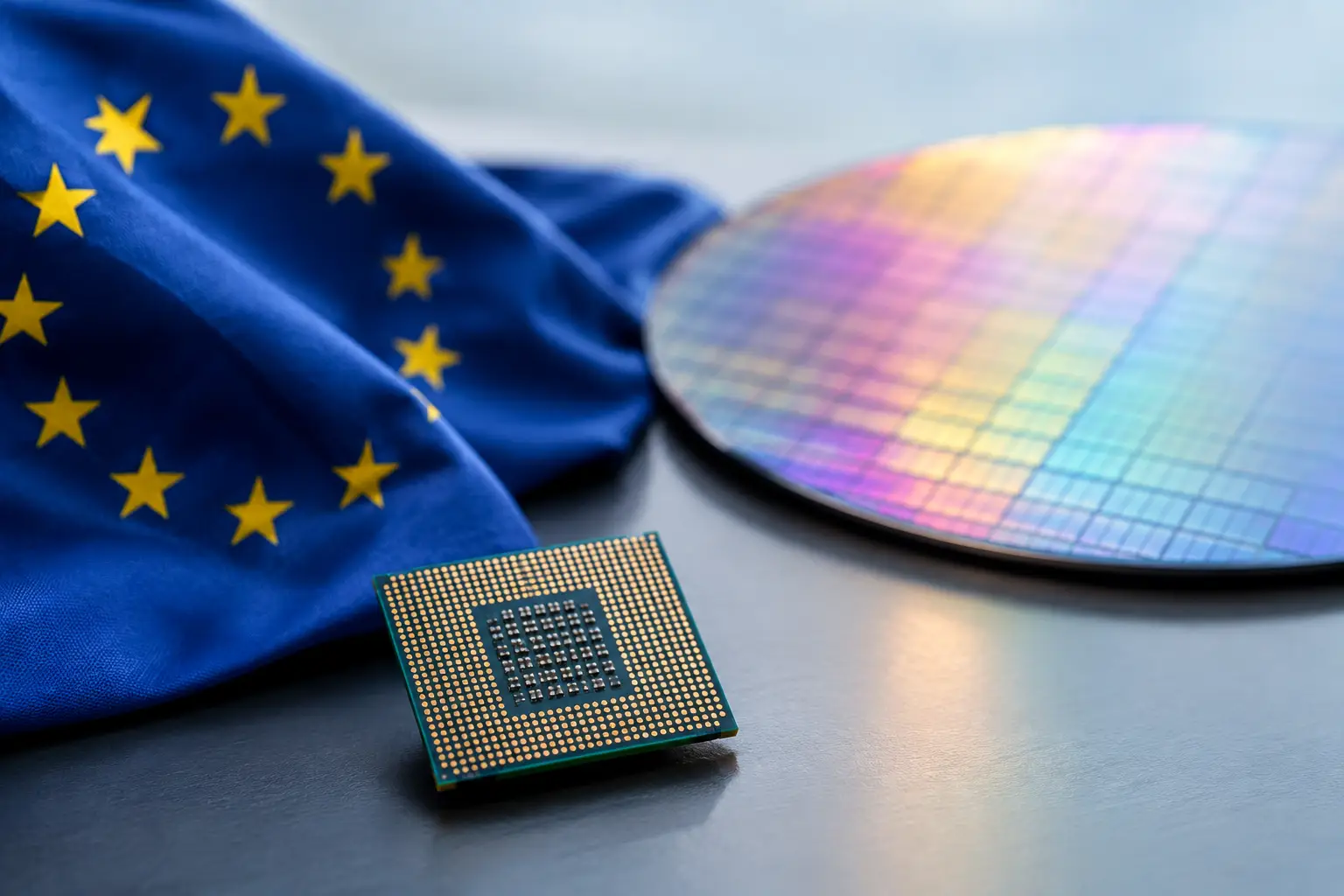
A chip shortage can stop a car factory, delay hospital equipment, and turn a consumer electronics launch into a costly guessing game. That is why the European semiconductor strategy has moved from a policy niche to a boardroom issue. Europe is not simply trying to manufacture more chips. It is trying to decide which parts of a critical global supply chain it must be able to shape, secure, and sustain.
For Europe’s tech community, this is also a talent and visibility story. The semiconductor sector will need engineers, researchers, founders, operators, manufacturing specialists, and policy leaders. If the same narrow networks fill those roles, Europe may build capacity without building the diverse leadership base needed to make it last.
The European Semiconductor Strategy Is About Leverage
Semiconductors sit inside almost every strategic technology category: AI infrastructure, cybersecurity hardware, electric vehicles, renewable energy systems, industrial automation, medical devices, and defense. Yet chip production is highly concentrated geographically and technologically. Designing a chip, manufacturing it, packaging it, testing it, and supplying the equipment and materials are separate specialties, often spread across continents.
Europe enters this race with real strengths. Dutch lithography champion ASML is indispensable to leading-edge chipmaking. Europe also has deep capabilities in power semiconductors, automotive chips, sensor technology, research institutions, industrial equipment, and specialist materials. Germany, France, the Netherlands, Belgium, Italy, Austria, and Ireland each play distinct roles in the wider ecosystem.
The weakness is scale at the most advanced manufacturing nodes and, in some areas, dependence on suppliers outside the region. The EU Chips Act was designed to address that gap through public and private investment, faster coordination, research support, supply-chain monitoring, and incentives for manufacturing projects. Its headline ambition has been to raise Europe’s share of global semiconductor production by 2030.
That target is politically useful because it creates urgency. But market share alone is a blunt measure of success. A region can produce more chips and still remain exposed if it lacks access to advanced packaging, critical materials, design tools, skilled labor, or reliable demand from local customers. The smarter question is not whether Europe can make every type of chip. It is where European capacity most meaningfully reduces risk and creates durable economic value.
Why Leading-Edge Fabs Are Not the Whole Story
When people picture semiconductors, they often picture the most advanced processors used in AI servers and flagship smartphones. Those chips matter. They are also exceptionally expensive to develop and manufacture, requiring enormous capital investment, water, power, equipment, and a highly specialized workforce.
But European industry depends heavily on mature-node and specialty chips too. Automotive systems, power management, factory equipment, smart grids, and medical devices often use chips built on established manufacturing processes. A shortage of a relatively inexpensive microcontroller can halt production of a much more valuable product. For an industrial economy, resilience in these categories may be just as consequential as a new leading-edge fab.
This creates a strategic trade-off. Governments want the prestige and security associated with cutting-edge facilities, while businesses need dependable supply across many chip categories. Public funding should not turn into a competition for the largest announcement. It should strengthen the areas where European companies and research centers can remain globally relevant after subsidies have done their initial job.
Advanced packaging deserves more attention in this conversation. Increasing performance no longer depends only on shrinking transistors. Packaging can combine multiple chips, improve efficiency, and support specialized AI and automotive applications. It is less glamorous than a major fab announcement, but it is increasingly central to the value chain and offers a meaningful area for European investment.
The energy and water question is real
New semiconductor facilities are not just technology projects. They are regional infrastructure projects. They require stable low-carbon electricity, substantial water planning, transport links, housing, and partnerships with local education providers. Communities are right to ask who benefits, what resources are used, and whether jobs will endure.
Europe should not treat those questions as obstacles to overcome with messaging. They are part of industrial credibility. A chip strategy that claims to support climate goals must be transparent about energy demand and serious about efficiency, reuse, and local impact.
Talent Is the Strategy Behind the Strategy
Capital can help build a plant. It cannot instantly create experienced process engineers, equipment technicians, chip designers, yield specialists, and manufacturing leaders. Semiconductor skills take time to develop, and competition for them is global.
This is where the European strategy needs a broader definition of talent. The sector is not only for electrical engineers with years of fabrication experience. It needs software professionals working on chip design automation, cybersecurity experts securing connected factories, data teams optimizing production, procurement leaders managing complex supply chains, and commercial teams translating deep technology into viable markets.
It also needs more women in visible technical and decision-making roles. Semiconductor companies have historically reflected many of the tech industry’s representation gaps, often compounded by the perception that manufacturing and hardware are male domains. That perception narrows the talent pool at precisely the moment Europe cannot afford to do so.
The practical response is not a generic diversity statement. Universities, employers, and investors should create clearer entry routes: paid internships, retraining programs, returnships, apprenticeships, sponsorship, and leadership pathways that put women and underrepresented talent close to high-impact work. Conference panels, deal teams, technical advisory boards, and factory leadership teams shape who gets seen as credible. Visibility is not cosmetic when it influences hiring, funding, and promotion.
For professionals considering a move into the sector, adjacent experience can be more valuable than it first appears. Automotive software, cloud infrastructure, industrial IoT, materials science, logistics, energy systems, and B2B product management all intersect with semiconductor growth. The opportunity is to connect that experience to a specific point in the chip value chain rather than waiting to fit an outdated image of a semiconductor expert.
What the Strategy Means for European Startups
The chip industry is capital-intensive, but that does not mean only large corporations have a role. Startups can build valuable companies around chip design, specialized IP, photonics, edge AI, power electronics, test systems, materials, manufacturing software, and security.
Europe’s challenge is turning excellent research into companies that can survive the long path from prototype to qualified product. Hardware timelines are slower than software timelines. Customers require rigorous testing, supply commitments, and reliability evidence. Investors accustomed to fast SaaS metrics may need more patience and deeper technical diligence.
Public programs can help close part of that gap, especially for research infrastructure and pilot lines. Still, founders should be wary of building around grant logic alone. The strongest semiconductor startups start with a real customer pain point: reducing energy consumption in data centers, improving battery management, securing industrial devices, or enabling more accurate sensing in healthcare and mobility.
There is a similar message for investors. Europe does not need every fund to finance a multibillion-dollar fab. It needs more investors who understand how to back the surrounding innovation layer, and who can support companies through long sales cycles without forcing software-style growth expectations onto hardware businesses.
Security Should Not Become Isolation
A more resilient European chip ecosystem does not require technological nationalism. Semiconductor supply chains are inherently international, and no region can efficiently control every stage. The goal should be trusted interdependence: diverse suppliers, strategic domestic capabilities, reliable partnerships, and early warning when vulnerabilities emerge.
That distinction matters. Protectionist measures can attract investment in the short term, but they can also raise costs, trigger retaliation, or leave smaller companies navigating a fragmented rulebook. Europe must coordinate across member states while remaining a credible partner to allies and global customers.
The best test for any policy is straightforward: does it make European industry more capable after the incentive expires? If it supports research, skills, infrastructure, and commercially viable ecosystems, it has a chance. If it merely relocates activity without deepening local knowledge and supplier networks, the resilience gain may be temporary.
The Next Measure of Success
Europe’s semiconductor ambition will be judged by more than the number of fabs announced or euros committed. Watch for stronger university-to-industry pathways, suppliers growing around major sites, startups winning global customers, and a workforce that looks more like the society it serves.
For readers building careers and companies in European tech, this is a moment to look beyond the chip itself. The most meaningful opportunities may sit in the systems around it: energy, security, design software, advanced manufacturing, supply-chain intelligence, and leadership. Make room in those conversations for the people who have too often been left outside them. Europe’s chip future will be stronger when its talent pipeline is as deliberate as its industrial policy.