
Breaking Tech Europe: Top 5 – Axelera Seeks $400m, Danish Defence Supplier Systematic Hit by Cyberattack, and Pareto Warns Elliptic Labs Could Run Out of Cash
An Eindhoven chipmaker goes back to investors, a Danish defence-software house discloses a cyberattack, Denmark's largest pension fund backs a new venture fund, an Oslo sensor company faces a cash warning and France's startup lobby sets out its demands for the 2027 election: the European tech stories that matter this Thursday, 26 November 2026.
1. Axelera AI is in talks to raise about $400m, less than a year after a record round
Axelera AI, Bloomberg and IPCEI: the Eindhoven AI-inference chipmaker is negotiating roughly $400m in new funding plus several hundred million dollars in EU subsidies, which would nearly double what it has raised since 2021.
Axelera is in talks to raise about $400m, Bloomberg reported citing people familiar with the matter, according to IO+. The company confirmed that talks are under way and said investor interest reflects its commercial growth, but gave no amount, valuation or timeline, and the talks may not result in a deal. In February 2026 Axelera raised more than $250m in a round led by Innovation Industries, with funds managed by BlackRock joining, described as the largest investment ever in a European AI semiconductor company. Counting equity, grants and venture debt, it has raised more than $450m to date. Separately, it is seeking several hundred million dollars through IPCEI, the EU programme for strategic technology projects. Its Europa chip began shipping in September; Titania, a data-centre chip for large language models, is expected to ship in 2027.
2. Systematic, software supplier to the Danish Defence and police, discloses a cyberattack
Systematic, Aarhus: attackers reached a test environment last week, the company shut down systems and internet access at its offices, and the incident has been reported to police, PET and the Centre for Cyber Security.
The Aarhus-based software company was hit by a cyberattack last week, it said on LinkedIn, DR reports. "Our internal systems effectively detected the attack, and we quickly shut down systems and internet access at our offices as a security precaution," the company said. Systematic stresses that no customer systems or data were affected and that the attackers did not reach critical systems, only a test environment. The incident has been reported to the police, the Danish Security and Intelligence Service (PET) and the Centre for Cyber Security. Systematic supplies software for what it calls "critical functions in society", including the Danish Defence, the police and the health sector. No attribution has been made public.
3. PFA commits up to DKK450m to a new Heartcore venture fund for AI, quantum and robotics
PFA and Heartcore: Denmark's largest pension company pledges up to DKK450m (about €60m) to an upcoming venture fund, as part of a plan to raise its European investments by DKK100bn by 2030.
PFA, which manages DKK830bn on behalf of 1.3 million customers, has committed up to DKK450m to a forthcoming fund to be invested by Heartcore, Berlingske reports via Ritzau. The fund is expected to focus on artificial intelligence, quantum technology and robotics; Heartcore has previously backed Danish companies such as Podimo and Soundboks. "Heartcore has shown over many years that they can find promising tech companies early," said PFA investment director Kasper Lorenzen. PFA acknowledged that it has been hard to find attractive opportunities among smaller startups, but said that as a large investor it must help find solutions.
4. Pareto cuts Elliptic Laboratories' price target by 54% and warns it could run out of cash in early 2028
Elliptic Laboratories and Pareto Securities: the Oslo-listed AI virtual-sensor company is downgraded from buy to hold, its target cut from NOK4.80 to NOK2.20, with cash forecast to fall from NOK53m to NOK19m by the end of Q2 2027.
Pareto analysts Jørgen Weidemann and Olav Rødevand say the liquidity risk is "real, given the current market situation for consumer electronics", Finansavisen reports. Elliptic had NOK53m in cash at the end of the third quarter; despite annualised cost cuts of NOK24m it has burned NOK50m over the past three quarters, according to Pareto, raising the question of whether it must raise new equity next year. The broker links the slump indirectly to the AI investment boom: demand for memory chips has pushed up component prices and weakened PC and smartphone sales. Third-quarter revenue was NOK19m against Pareto's NOK23m forecast, with smartphone sensor shipments down 44% year on year and laptop sensor shipments up 15%.
5. France Digitale sets out 24 proposals to put tech on the 2027 presidential agenda
France Digitale and Bettina Reveyron: the French startup lobby's new chief, formerly of Doctolib, proposes a "compte avenir" savings vehicle with a tax credit, a dedicated tech ministry and a national debate on AI use.
In an interview with Les Echos, Reveyron, who took over France Digitale six weeks ago, says "tech must impose itself in the presidential campaign". Her manifesto of 24 proposals aims to finance innovative companies, strengthen technological sovereignty and open a debate on the uses of artificial intelligence. Headline measures include a "compte avenir" to channel savings into innovative companies, backed by a tax credit, a ministry dedicated to tech, and a "Grenelle" national consultation on AI use.
Why it is breaking news
Together, these stories show where European tech's money and risk are moving. Axelera's talks, if completed, would nearly double the money raised by a European company pitching itself as a lower-cost alternative to Nvidia in AI inference. PFA's commitment is a concrete example of the pension capital that founders and policymakers have long said Europe lacks, while France Digitale is trying to make similar savings-to-startups policy an election issue. On the risk side, the Systematic incident is a reminder that suppliers to defence and police are targets in their own right, and Pareto's warning on Elliptic Laboratories shows how the AI boom's pressure on component prices can hurt smaller hardware-dependent firms.
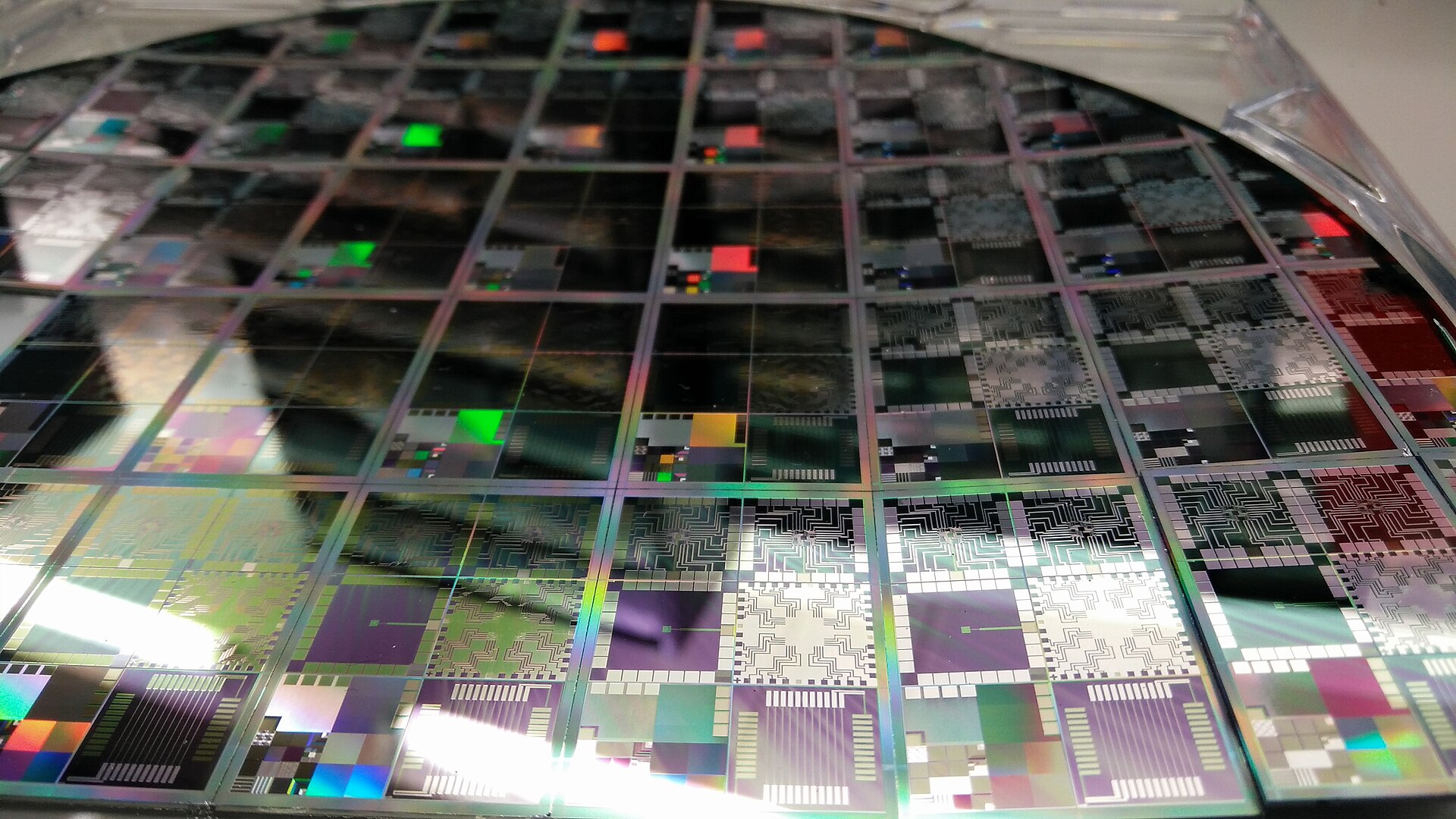
Sources: IO+ (citing Bloomberg), DR, Berlingske (Ritzau), Finansavisen and Les Echos, linked in each item. Cover image: a semiconductor wafer, photographed by DrHughManning, CC BY-SA 4.0, via Wikimedia Commons.