

Brussels wants a €50bn fund to keep quantum companies in Europe, but the money hinges on a budget fight that starts today
The European Commission's Quantum Act would force critical infrastructure onto quantum-safe encryption by 2030 and sets up a Sovereign Tech Equity Fund for tickets of hundreds of millions of euros. The €50bn is a target rather than a budget, and industry groups in Berlin and Copenhagen say firms need the cash now.
The European Commission on Wednesday proposed a Quantum Act and a new Sovereign Tech Equity Fund (STEF) meant to stop Europe's quantum start-ups from moving abroad to raise growth capital. The fund has an "envisioned size" of €50bn, according to Politico Europe. That figure is a goal. It is not committed money, and whether it ever arrives depends on the EU's next seven-year budget, which leaders begin negotiating at a European Council summit today and tomorrow.
The plan is to put public money from the EU, member states and the European Investment Bank into deals and draw in up to €6 of private capital for every public euro, Euronews reported. The Commission wants STEF running by 2028 at the latest. A Commission official told reporters that the existing tools are too small: the European Innovation Council invests up to €30m and the Scaleup Europe Fund up to €300m. "What is missing in this landscape is therefore larger tickets aimed to finance our strategic companies," the official said, adding that quantum companies "often find the capital they need in order to grow, to scale up outside Europe."
The money is a target, not a budget
Commission figures cited by Euronews show the gap the fund is meant to close. Public quantum spending in the EU is expected to reach €8.6bn this year, against €13.6bn in China and €5.3bn in the US. Private investment, though, came to only €1.1bn in Europe last year, against €7bn in the US.
Danish business lobby Dansk Erhverv says the Commission itself puts the funding need for quantum technology at €12.9bn–18.1bn for 2028–2034, without saying how much Brussels will pay. "While the EU negotiates its next budget, European quantum companies have to decide where and when to put the technology into production. They need capital to make those decisions now," said Frederikke Saabye, its director for digital, technology and telecoms (translated). The US, she noted, has announced more than $2bn of investment in nine quantum companies this year.
Germany's digital association Bitkom welcomed the plan but set a condition. "What is decisive, however, is that these ambitions are followed by concrete funding commitments," managing director Niklas Veltkamp said (translated).
Who gains and who pays
The clearest obligation falls on governments and operators of critical infrastructure. Under the Act, member states would have to move high-risk systems to post-quantum cryptography by 2030 and all other systems by 2035. Bitkom's own survey found that, earlier this year, just under a third of German companies using or interested in quantum computing had put protective measures in place or planned them.
The Act also sets up supply-chain monitoring. The Commission found that nine of 47 critical quantum components have no EU supplier at all. Public procurement stays open to non-EU firms with a European-controlled presence, which falls well short of "made in Europe". IBM and Cisco still warned against shutting out foreign vendors.
Natasha Friis Saxberg, CEO of the Danish trade body IT-Branchen, said firms need clear rules on "how and when companies get access to the capital", or Europe risks "paying for the research and later buying the solutions back at a high price" (translated).
What happens next
The Act now goes to the European Parliament and the Council. The European Quantum Industry Consortium wants public buyers to commit €300m–500m within six months of the law taking effect and €7.7bn–12.3bn over five years, plus a ring-fenced quantum share of STEF. Until the budget is settled, the €50bn is a promise without a cheque.
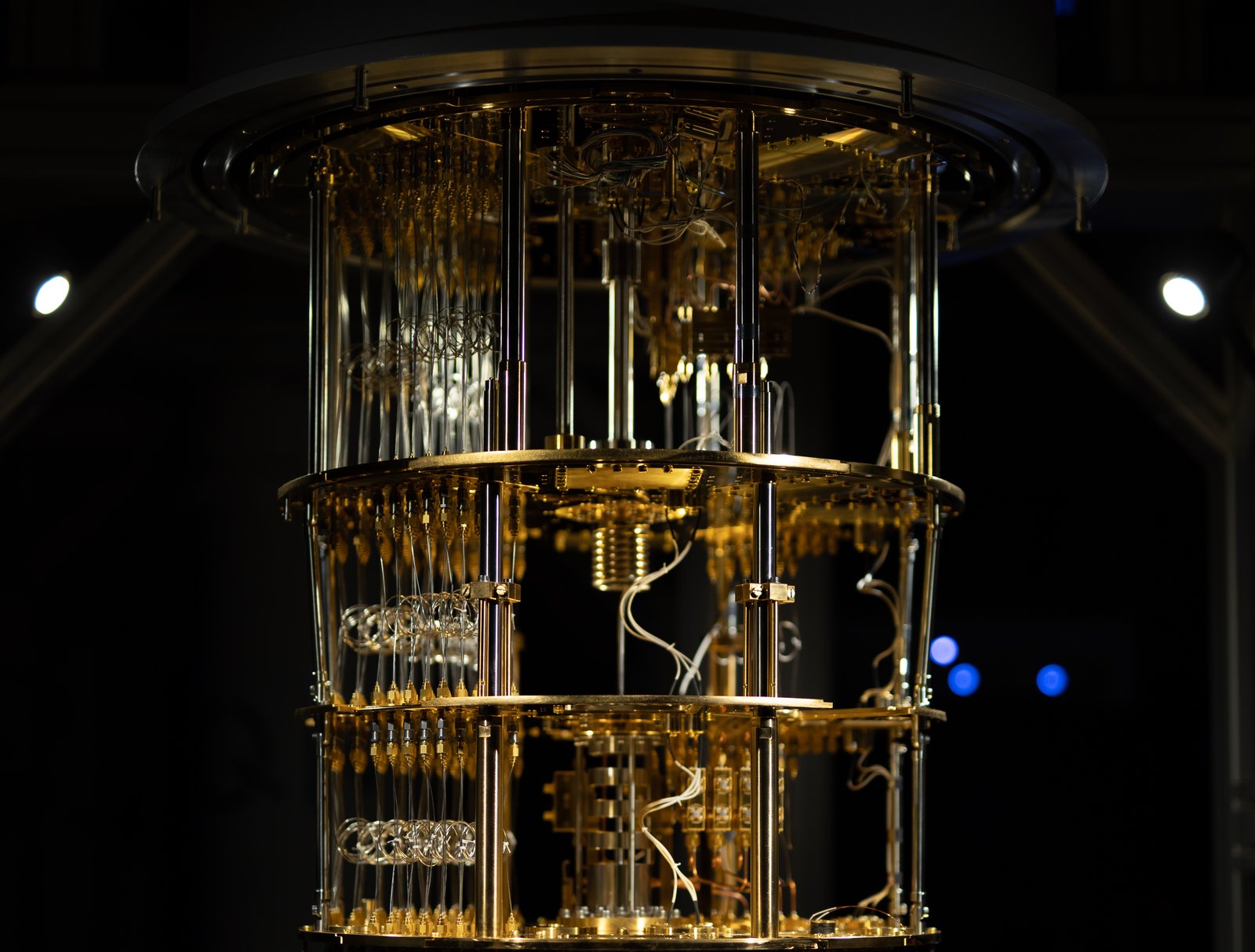
Photo: IQM quantum computer in Espoo, Finland. Ragsxl via Wikimedia Commons, CC BY-SA 4.0 (cropped)
Sources
- European Commission, "Commission proposes Quantum Act and new Sovereign Tech Equity Fund", 25 Nov 2026: https://digital-strategy.ec.europa.eu/en/news/commission-proposes-quantum-act-and-new-sovereign-tech-equity-fund-strengthen-europes-industrial
- Politico Europe, "EU Commission wants €50B fund to keep tech European", 25 Nov 2026: https://www.politico.eu/article/commission-wants-e50-billion-fund-to-keep-tech-european/
- Euronews, "EU unveils €50 billion tech fund to challenge US and China", 25 Nov 2026: https://www.euronews.com/2026/11/25/eu-unveils-50-billion-quantum-industry-investment-plans
- Dansk Erhverv (Danish), 25 Nov 2026: https://www.danskerhverv.dk/presse-og-nyheder/nyheder/2026/november/quantum-act-viser-vejen-for-europas-kvanteindustri.-nu-skal-kapital-og-indkob-pa-plads
- Bitkom (German), "Bitkom zum Quantum Act", 25 Nov 2026: https://www.bitkom.org/Presse/Presseinformation/Bitkom-zum-Quantum-Act
- IT-Branchen (Danish), "Nu rykker EU på kvanteagendaen", 25 Nov 2026: https://itb.dk/nyheder/nu-rykker-eu-paa-kvanteagendaen/
- Image: https://commons.wikimedia.org/wiki/File:IQM_Quantum_Computer_Espoo_Finland.jpg