




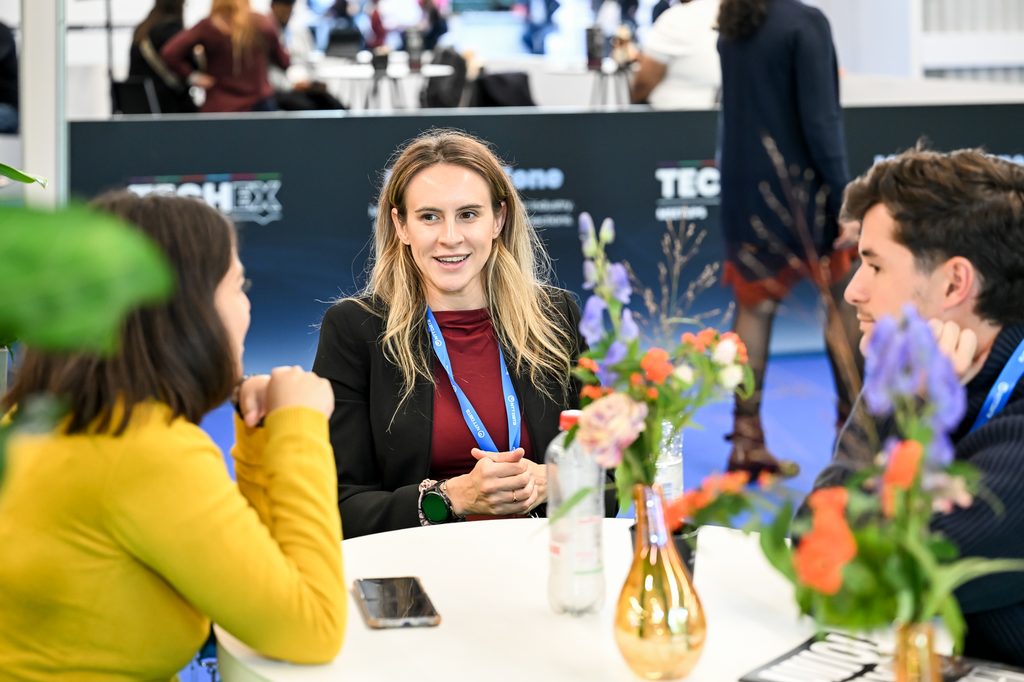
At TechEx Europe in Amsterdam, artificial intelligence was everywhere. But when we asked technology professionals what was receiving more attention than it deserved, the answers revealed a fascinating contradiction: many of AI's biggest believers are also among its most outspoken critics.
Walk through almost any major technology exhibition today and one thing becomes immediately apparent: artificial intelligence is everywhere.
It appears in product descriptions, demonstrations, company presentations and marketing materials. Nearly every organisation has an AI story to tell.
But how much of that excitement reflects genuine technological progress, and how much is simply hype?
During TechEx Europe in Amsterdam, EuropeanTechOnHeels asked technology professionals a deliberately provocative question:
Which technology do you think is getting too much attention right now?
The most frequently mentioned answer was hardly surprising.
AI.
What was surprising, however, was why.
Many of those questioning the excitement surrounding artificial intelligence were the same people predicting that AI would transform businesses and industries over the next twelve months.
Their criticism was rarely that AI lacks potential. Instead, they questioned exaggerated promises, the dominance of large language models, weak business cases and the failure to address the technological and human challenges underneath.
Has AI become a marketing buzzword?
For Bauke Ferwerda, the problem is not necessarily the technology itself, but the businesses surrounding it.
"New companies are starting every day, and all you have to do is put AI in your name or in what you do. It's become a kind of magic word," he said, translated from Dutch.
Ferwerda questions whether all companies claiming to work with AI are delivering the technological sophistication their marketing suggests.
He also wonders whether the enormous investments being made across the industry will ultimately generate adequate returns.
"Whether all that money will ever be earned back is something I have serious doubts about."
The concern is shared by Paul Permentier, who sees increasingly familiar claims being made by AI providers.
"Everyone promises everything with AI," he said. "But fundamentally, many of these solutions are just chatbots connected together."
Permentier believes the market will eventually make a clearer distinction between businesses that use AI meaningfully and those that merely benefit from the terminology.
Sanket Sheth of Axonis identifies another issue: convincing demonstrations are becoming easier to create, even when a product is not ready for enterprise deployment.
"In the world of AI, you're able to vibe code something that looks production-ready."
The real test, he argues, comes later.
Can the technology satisfy a finance director demanding results, a legal team requiring compliance and a security officer concerned about new risks?
Sheth believes the industry currently struggles to distinguish companies with genuine technological foundations and execution capabilities from those with impressive-looking prototypes.
In other words, AI can make it easier than ever to build something that looks impressive. That does not mean it will work reliably in a real business environment.
The newest AI model isn't necessarily the best
Ferry Haris offers a particularly interesting counterargument to the industry's obsession with ever-more-powerful AI models.
In his company's security applications, newer models have not always produced better outcomes.
"As we test, actually the newer it gets, the worse it gets."
Haris explains that more advanced models can, in some applications, produce less predictable results or introduce errors that smaller, more narrowly focused systems avoid.
For organisations making sensitive business decisions, accuracy and reliability are often more important than having access to the latest technology.
He also questions the idea that companies should pursue AI capabilities simply because they are available.
"Most people are still thinking of AI as something that can do anything. In reality, it's not."
Haris has experimented with using AI for activities such as marketing and communication, but found that the results could become overly robotic.
Human interaction, he argues, remains essential.
He expects businesses to become increasingly critical as the real costs of AI become apparent.
The question will no longer simply be whether AI can perform a task.
It will be whether it performs that task well enough to justify the investment.
Have large language models taken over the entire conversation?
Jai Rambaratsingh believes the industry's focus on large language models has become disproportionately narrow.
"Large language models. I mean, they deserve the attention, of course they do. But for many people, it's all that AI is, and I think there's much more around it."
He hopes the coming year will bring greater awareness of the alternatives and complementary technologies that exist beyond chat-based AI.
His own interest in edge AI reflects that broader perspective.
Locally deployed computing, on-device intelligence and new approaches to infrastructure could become increasingly important as users look for more efficient and independent solutions.
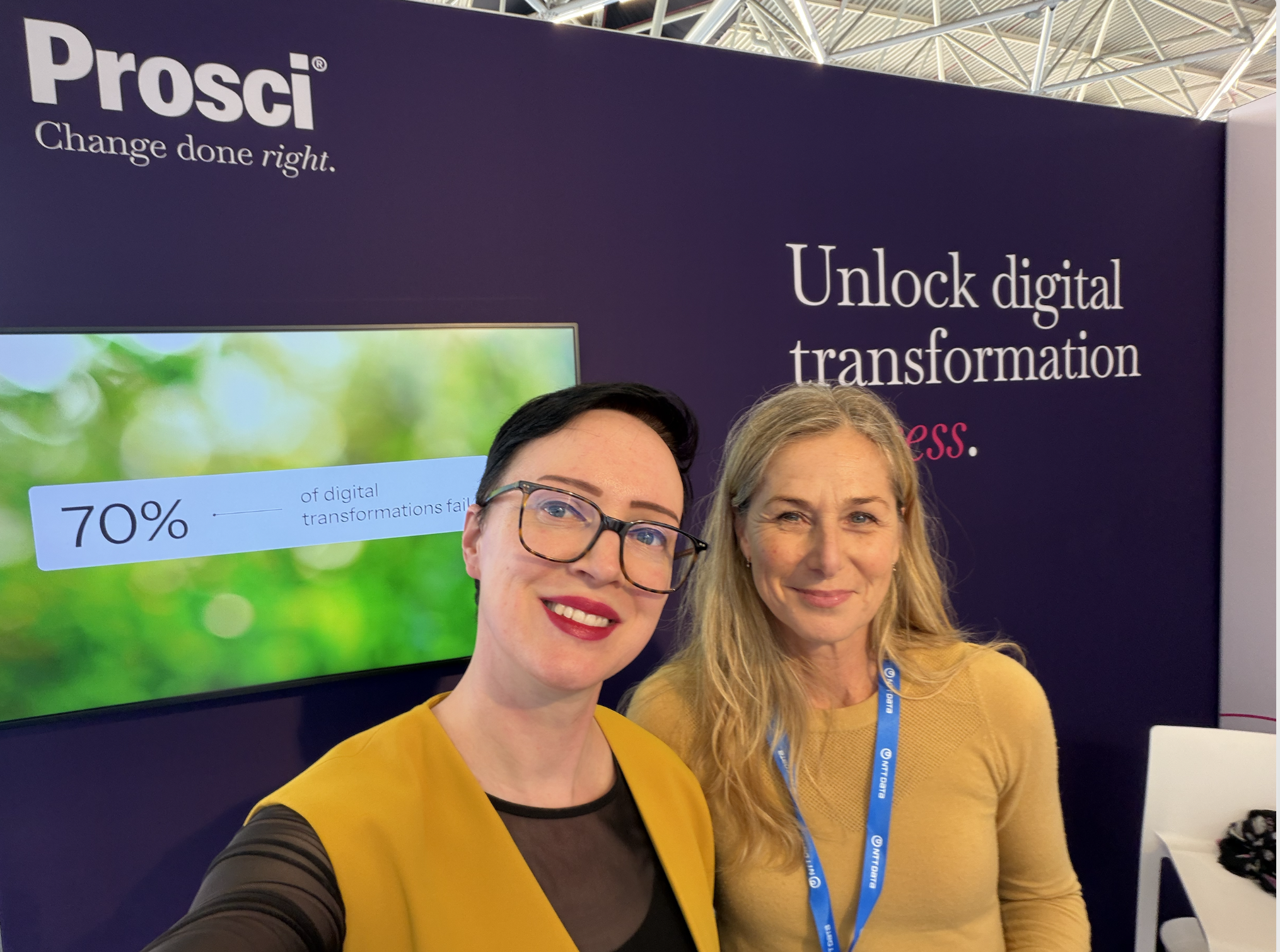
Caroline Mørck Jensen of Prosci Europe shares the concern that generative AI has become too dominant.
"I think probably generative AI is getting too much attention compared to other technologies."
She believes the term AI is frequently used without distinguishing between fundamentally different applications.
That lack of differentiation makes it more difficult for organisations to understand which technologies are relevant to their needs.
It can also lead companies to focus too heavily on the assumption that younger employees are automatically better equipped to work with AI.
Mørck Jensen questions whether this is always true.
Younger generations may find the tools intuitive, but experienced employees can bring important critical-thinking and business judgment skills.
Successful AI adoption, she argues, requires more than technical familiarity.
AI doesn't need less discussion. It needs better discussion.
Edwin Weijdema, Field CTO at Veeam, takes a nuanced position.
He does not necessarily believe AI should receive less attention. Instead, he believes that attention is often directed towards the wrong questions.
For many organisations, particularly those whose leaders are less familiar with emerging technology, the conversation still revolves around fear, uncertainty and impressive demonstrations.
But the practical questions are far more important.
What can AI actually do? How should people use it? And what happens when organisations discover that their experiments come with substantial costs?
Weijdema compares the current excitement to introducing something new without sufficiently preparing people for the responsibility of using it.
He also sees a growing need for organisations to address the quality of their underlying information.
Businesses have accumulated enormous quantities of data, but not all of it is reliable or relevant.
Adding artificial intelligence to that environment does not automatically solve the problem.
It can make the consequences of poor data management worse.
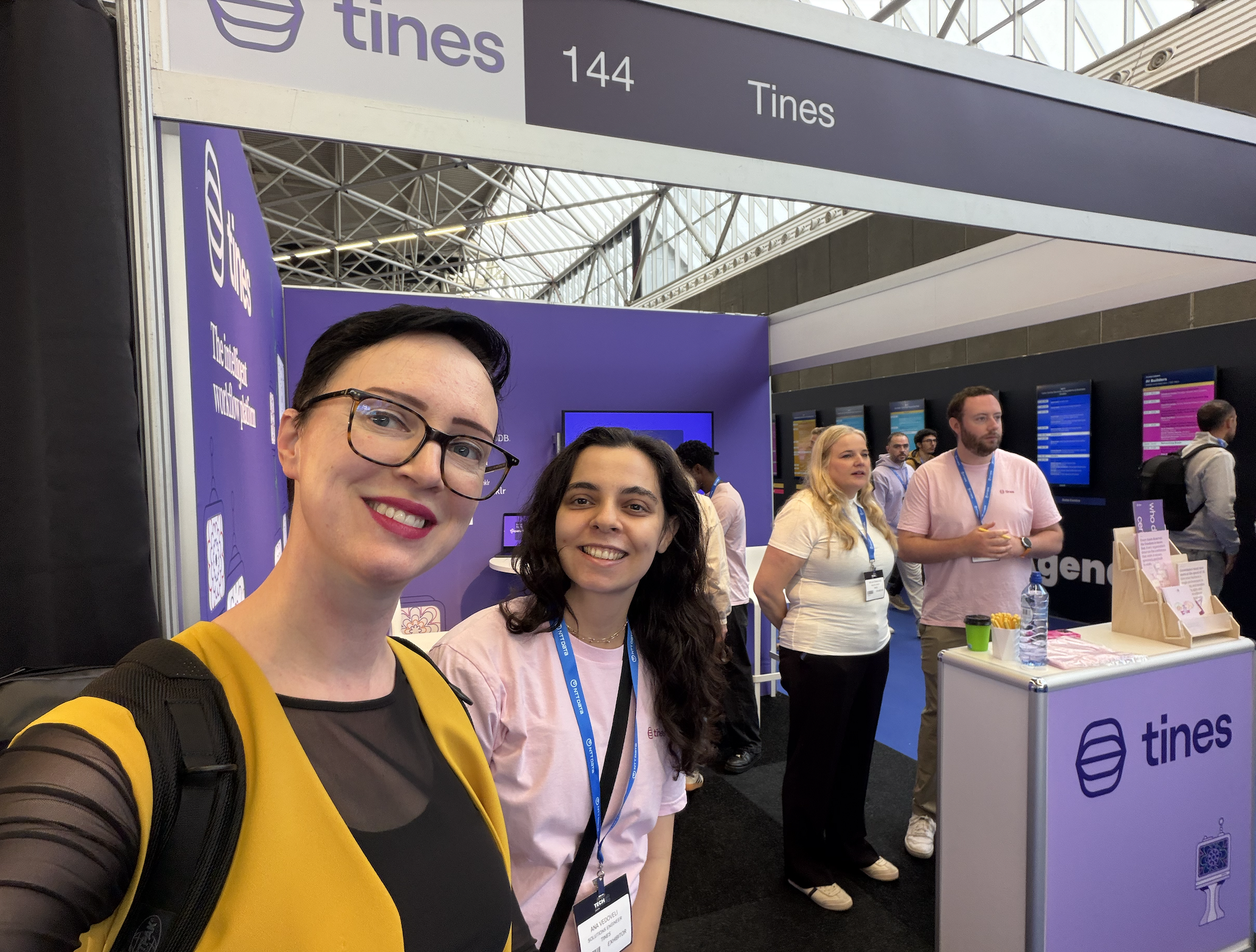
Ana Vedoveli of Tines makes a related point.
"I think that's also getting a lot of attention, but there are lots of things that we need to think together on how to make that scalable in a reasonable way within an organisation."
For Vedoveli, the real challenge is moving beyond enthusiasm towards secure, controlled and effective enterprise adoption.
AI is important, but the systems, safeguards and organisational decisions that make it successful deserve just as much attention.
What about the technologies AI is overshadowing?
Some interviewees were particularly concerned about the important subjects getting lost in the excitement.
Philip Voogt sees AI dominating conversations that should also address cybersecurity and data sovereignty.
"Everything and everyone seems to be working on AI, while there are other areas that deserve attention," he said, translated from Dutch.
Voogt points specifically to the location, ownership and security of data.
As AI capabilities become more powerful, businesses must understand not only what technology can do with their data, but also where that information is stored and who can access it.
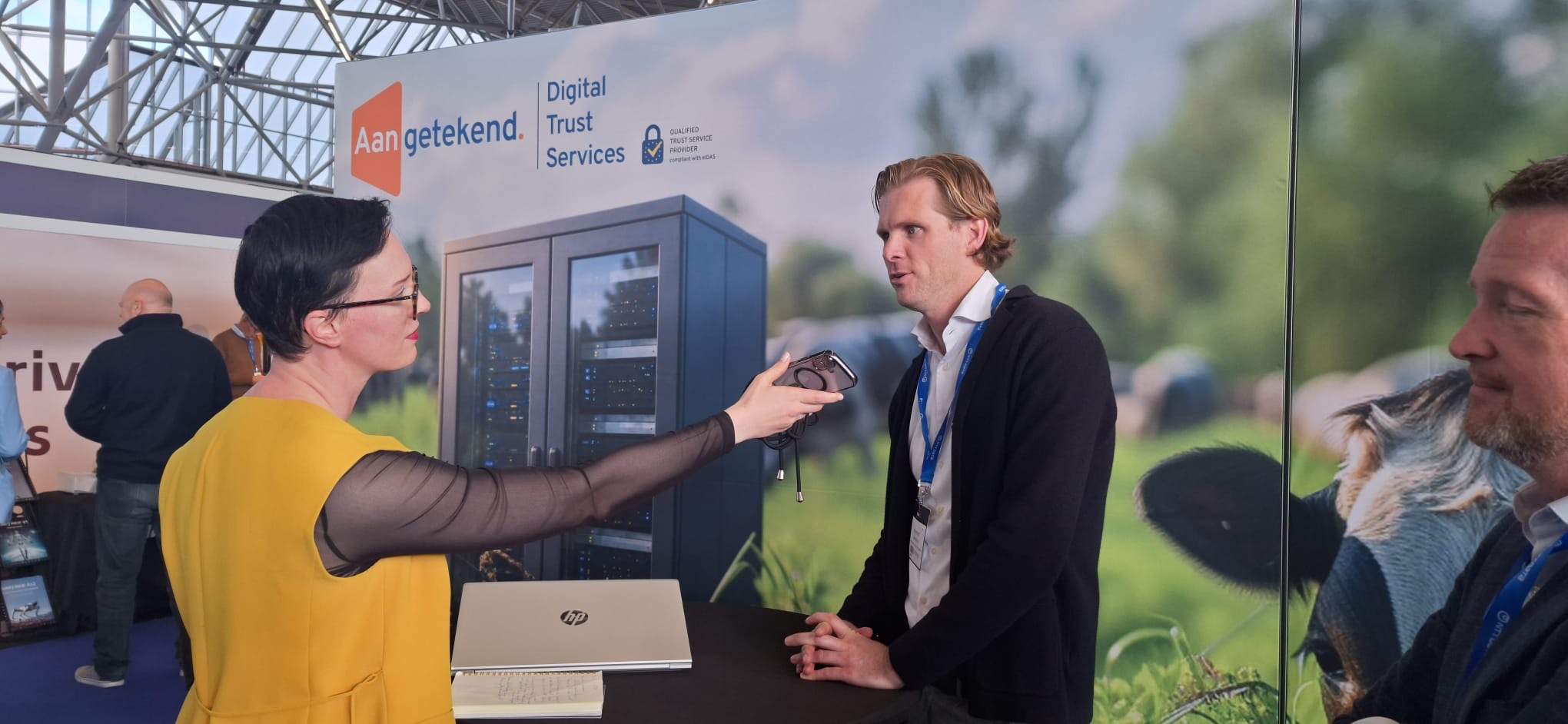
Ines Anahory of Proton identifies a similar concern.
Although she considers AI an important development, she also sees a growing European need to address privacy, encryption and digital sovereignty.
"The dependencies that we've created, especially with hosting our data with big tech providers, is becoming more and more of a risk."
For Anahory, discussions about artificial intelligence should not crowd out the equally important question of who controls the information on which these systems depend.
Johan Waaldijk of wynEnterprise takes an even more sceptical view.
"I'm afraid it's AI, a little bit," he said when asked which technology receives too much attention.
His concern extends to whether the technology can be adequately controlled, particularly when organisations are handling confidential information.
He warns that businesses must carefully evaluate how AI systems interact with sensitive data and ensure that information remains properly separated and protected.
"Our data, our law" is his guiding principle.
For Waaldijk, innovation should never come at the expense of control over sensitive business information.
The infrastructure problem nobody can ignore
Peter Holden approaches the AI hype from a different direction.
While many companies compete to build increasingly sophisticated models, he argues that one of the industry's most important challenges is receiving insufficient attention.
Power.
"Not chips, not LLMs, not open-weight models from China. It's going to be power."
Holden believes electricity availability and the infrastructure needed to deliver it will play a decisive role in how rapidly the AI industry can expand.
He also questions the degree to which a small number of major US technology companies dominate the international AI narrative.
"Five or six US companies are controlling the global technology AI narrative."
He believes governments, legislation and regulation need to catch up with the pace of technological change.
His warning highlights an important contradiction: while AI developers pursue ever-greater computational capabilities, the systems required to power that ambition are already under considerable pressure.
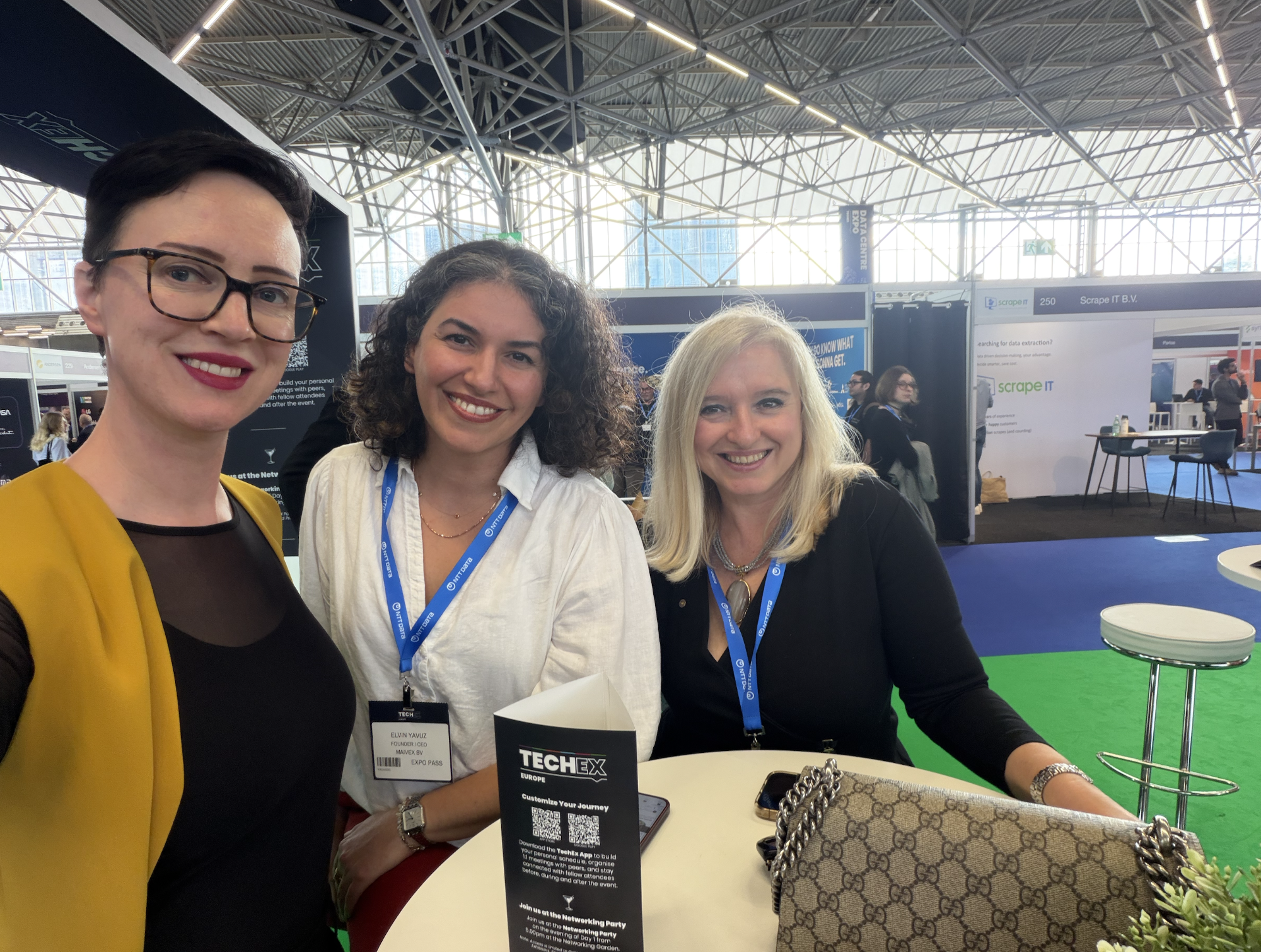
What happens to the next generation of engineers?
Arzu Barske raised a different concern when asked about overhyped technology.
Rather than singling out one technology, she questioned how businesses are responding to the arrival of AI.
She has observed reports of declining demand for junior engineers as companies increasingly look towards automation.
But replacing entry-level opportunities with technology could have long-term consequences for the workforce.
"If you don't hire juniors, how can you have the seniors over five years?"
It is a deceptively simple question.
AI may help organisations perform tasks faster, but businesses still depend on people acquiring experience and developing professional judgment.
If entry-level opportunities disappear, where will tomorrow's experienced specialists come from?
Barske's concern is not that technological progress should stop. It is that companies should think more carefully about the consequences of decisions made in response to it.
What if technology made us more human?
Violeta Vieru also finds the overwhelming focus on AI somewhat limiting.
"It's the technology that we see literally on every board here."
She acknowledges that AI is important, but would like to see more emphasis on technology that enhances human capabilities rather than simply automating existing work.
"I would love to see a little bit more of the technology that enhances our human part."
Her interest in robotics reflects this ambition.
Rather than using AI primarily to produce written content or perform creative activities, she imagines technology increasingly taking over physical chores.
That could free up time for people to do things they genuinely enjoy.
It is a different way of evaluating innovation: not simply by how many human tasks a machine can replace, but by how much it improves the quality of human life.
Sridevi Namilakonda of StratPilot expresses a similar tension.
She expects AI to become increasingly important, but also recognises the anxiety surrounding it.
"People are scared about AI because people think AI is taking their work away."
Her response is to encourage people to understand and use the technology rather than allow fear to define their relationship with it.
But the concern reflects how quickly the conversation about AI has expanded beyond technology into employment, identity and society.
Danny Fu also worries about the speed of development.
He believes artificial intelligence is attracting considerable attention partly because of its potential to replace human activities and influence everyday decision-making.
"We're not ready for this. It's too fast, I think."
The hype around fully autonomous AI agents
Rebecca Hinds, Head of the Work AI Institute at Glean, believes the promise of fully autonomous AI agents is getting ahead of reality.
While AI systems can increasingly complete multiple tasks without human intervention, that doesn't necessarily mean the work is truly autonomous.
Humans still need to verify decisions, catch mistakes and take responsibility when things go wrong. In her view, the real challenge isn't achieving 100% automation, but designing workflows where AI has the right context, clear boundaries and accountability.
As Hinds puts it: “Autonomy should be earned through reliability, context, and clear accountability.”
The companies that benefit most from AI won't necessarily be those automating the most, but those finding the right balance between AI capabilities and human responsibility.
The unexpected contenders: smartwatches and social platforms
Not everyone nominated artificial intelligence.
Sustainability analyst Hilda Harle identified smartwatches as a technology that might receive more trust than it deserves.
"Some of them are accurate, but some of them are not."
Harle worries that consumers can become overly confident in the reliability of data generated by wearable devices.
Her concern is not necessarily with the concept of wearable technology, but with the assumption that every measurement is accurate.
Saskia Kamp, meanwhile, tentatively pointed towards the growing number of social media platforms.
"Maybe certain social media platforms don't do very much," she suggested in her Dutch-language interview.
Her view was that having one or two useful platforms may be sufficient, while additional services do not necessarily create meaningful value.
Both answers offer an alternative perspective on the hype debate.
Technology does not need to be new or revolutionary to become overrated. Sometimes the problem is simply that users assign more value or reliability to a product than it can deliver.
So is AI really overrated?
The interviews at TechEx Europe reveal an important distinction between believing in a technology and believing in every promise made about it.
Artificial intelligence is clearly changing how businesses operate, how software is developed and how people interact with technology.
Many of the professionals we interviewed expect that change to accelerate.
Yet they also see real problems beneath the excitement: exaggerated marketing, unreliable outcomes, uncertain business models, inadequate security, insufficient governance and the risk of overlooking other essential technologies.
From electricity infrastructure and cybersecurity to human skills and digital sovereignty, the industry's biggest challenges are often less glamorous than its most impressive demonstrations.
Perhaps the most revealing conclusion is that the people questioning the hype are not necessarily the people resisting technological progress.
Many are actively developing, implementing and selling AI solutions themselves.
They understand its potential precisely because they also understand its limitations.
The technology may deserve the attention. But not every product, promise or prediction deserves the hype.
And as the industry moves towards October 2027, that distinction could become increasingly important.
PS: Have a different take? We'd love to hear it!
Think we're missing a major trend? Strongly disagree with one of the opinions shared? Or feeling inspired to write your own opinion piece?
At EuropeanTechOnHeels, we're always looking for fresh perspectives, bold opinions and thought-provoking stories from the European tech community.
Got something to say? Get in touch through our contact form. We'd love to hear your story — and perhaps feature it on our platform!