Europe's internet registry confronts its exposure to US sanctions after an Italian provider is wiped off the web

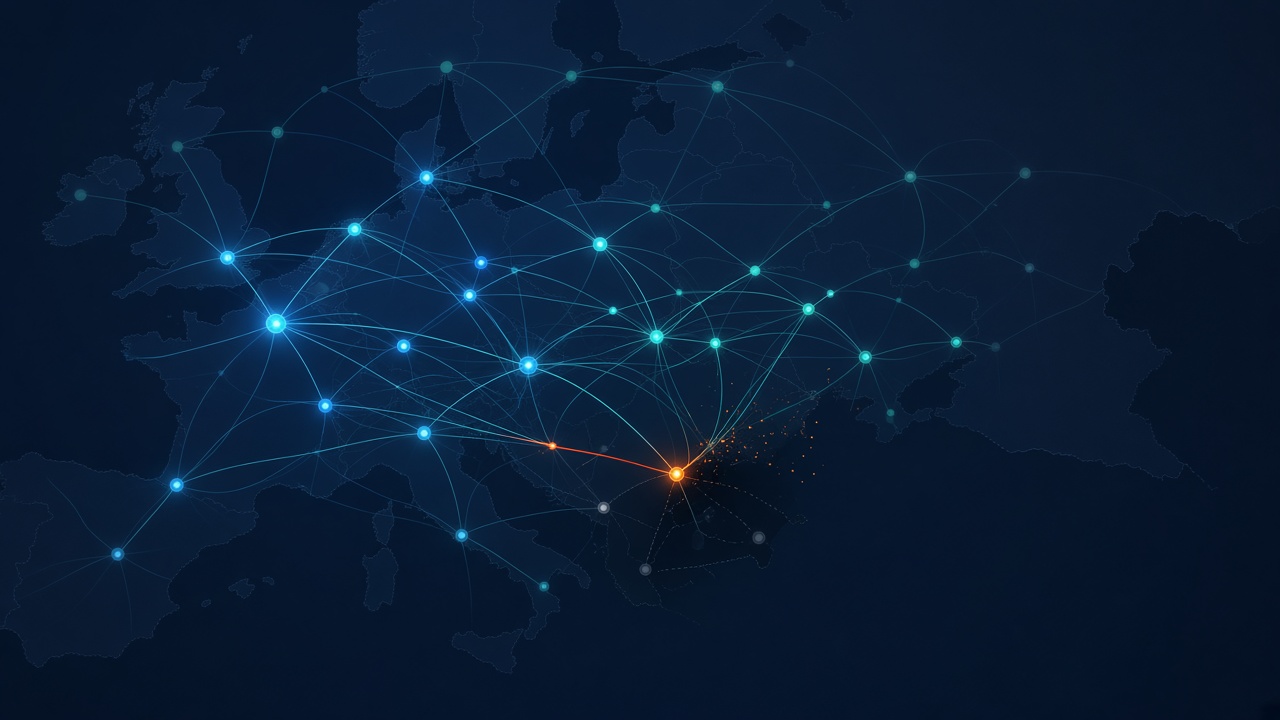
At the RIPE 93 meeting in Sofia, operators who keep Europe's networks running debated how to shield core internet services from US sanctions, after a Treasury designation took the Italian provider Autistici/Inventati offline. The Amsterdam-based RIPE NCC is already budgeting millions to bring its own infrastructure back in-house.
The people who run Europe's internet plumbing spent last week asking an uncomfortable question: what happens when Washington decides one of them should disappear?
The debate, reported on Sunday by heise online, took place at the 93rd meeting of RIPE (Réseaux IP Européens) in Sofia. RIPE's operational arm, the RIPE NCC, is headquartered in Amsterdam and hands out IP addresses for Europe, the Middle East and Central Asia. Many members urged colleagues to map their dependencies on US-controlled infrastructure and cut them where they can. The core problem is structural. The DNS root zone and many of the largest domain registries, including Verisign, which runs .com and .net, fall under US law.
A provider erased overnight
The trigger was the case of Autistici/Inventati, a volunteer-run Italian provider of email, blogs and websites. On 26 August 2026 the US Treasury's Office of Foreign Assets Control (OFAC) designated the group a Specially Designated Global Terrorist. Within two days the US-based Public Interest Registry (PIR), which operates .org, suspended autistici.org. According to heise, that took around 10,000 blogs, 1,500 websites and 16,000 mailboxes offline. The provider shut its services after its bank, Banca Etica, froze its accounts in early September over fear of US secondary sanctions.
The case has since reached the Netherlands. On 13 October Amsterdam police seized a server said to belong to the provider at a data centre in Amsterdam Science Park, acting on a US legal-assistance request, NRC reported. The Dutch public prosecutor told NRC it had "no grounds" to refuse the request under the Dutch-US treaty on mutual legal assistance (translated).
"We must not forget that Autistici was not a political organisation but a service provider," Timo Hilbrink of the Dutch provider Freedom Internet told the meeting, according to heise (translated). He warned that the RIPE NCC itself could quickly come into the crosshairs, because it allocates IP addresses to networks in Iran. That raised a pointed question: what would happen if the registry lost its own ripe.net domain?
No easy exit
Proposals in Sofia ranged from the practical to the radical. One idea was to move RIPE's main domain under .nl, which is run by the Dutch foundation SIDN. "What if SIDN is then targeted?" asked Babak Farrokhi of the resolver operator Quad9, who also wondered aloud whether the community would have to start accepting cryptocurrency and running onion services (translated). Another participant suggested a European clone of Let's Encrypt, the US non-profit whose free TLS certificates underpin much of the web. Routing veteran Randy Bush warned that any intervention in the DNS would also hit global routing, because the two systems depend on each other.
The Internet Society, which owns PIR, has not offered much reassurance. Its chief executive, Sally Wentworth, wrote in early October that refusing to apply the sanctions would have exposed PIR to "considerable criminal and civil risk," heise reported (translated).
Money behind the rethink
The RIPE NCC is already changing course. In June it dropped the "cloud-first" strategy it adopted in 2019, citing geopolitical risk, The Register reported. "You were right," managing director Hans Petter Holen told members who had opposed handing services to large cloud providers, according to heise (translated). The registry's draft 2027 budget raises capital spending from €930,000 to €10.5m. Most of that goes on renewing its technical infrastructure, with €2.2m set aside for office renovations. The budget projects a €1.1m deficit on income of €42.5m. Members discussed it on 28 October, and the board is due to approve a final version in December.
Sanctions are also hitting the registry's finances directly. Because Dutch banks follow US sanctions, the RIPE NCC cannot always collect fees from sanctioned members. According to heise, deferred or uncollectable fees have built up to more than €7m since 2021. The registry has not confirmed that figure separately.
For European policymakers who talk about digital sovereignty, this is a concrete test. The bodies that coordinate Europe's internet still depend on US-run domains, certificates and banks, and a single US designation showed how quickly that dependence can take a service offline.
Sources
- heise online: RIPE-Mitglieder diskutieren über Abhängigkeit von US-Internetinfrastruktur (Monika Ermert, 1 Nov 2026, German)
- US Treasury: Treasury Takes Action Against Violent Far-Left Terrorist Networks
- NRC: Politie Amsterdam neemt op Amerikaans verzoek server in beslag van linkse internetdienstverlener A/I (14 Oct 2026, Dutch)
- NRC: OM had 'geen grond' om Amerikaans verzoek inbeslagname servers A/I te weigeren (15 Oct 2026, Dutch)
- RIPE NCC: Draft Activity Plan and Budget 2027 Published
- RIPE 93 plenary programme, 27 Oct 2026
- The Register: Geopolitical jitters push Europe's internet registry away from cloud-first strategy (19 Jun 2026)