


Breaking Tech Europe: Top 5 – Optics11 Raises €50m to Guard Subsea Cables, AI Labs Sign Macron's Paris Call, and The Hague Doubles Its Scale-up Bet
11/11/2026
25
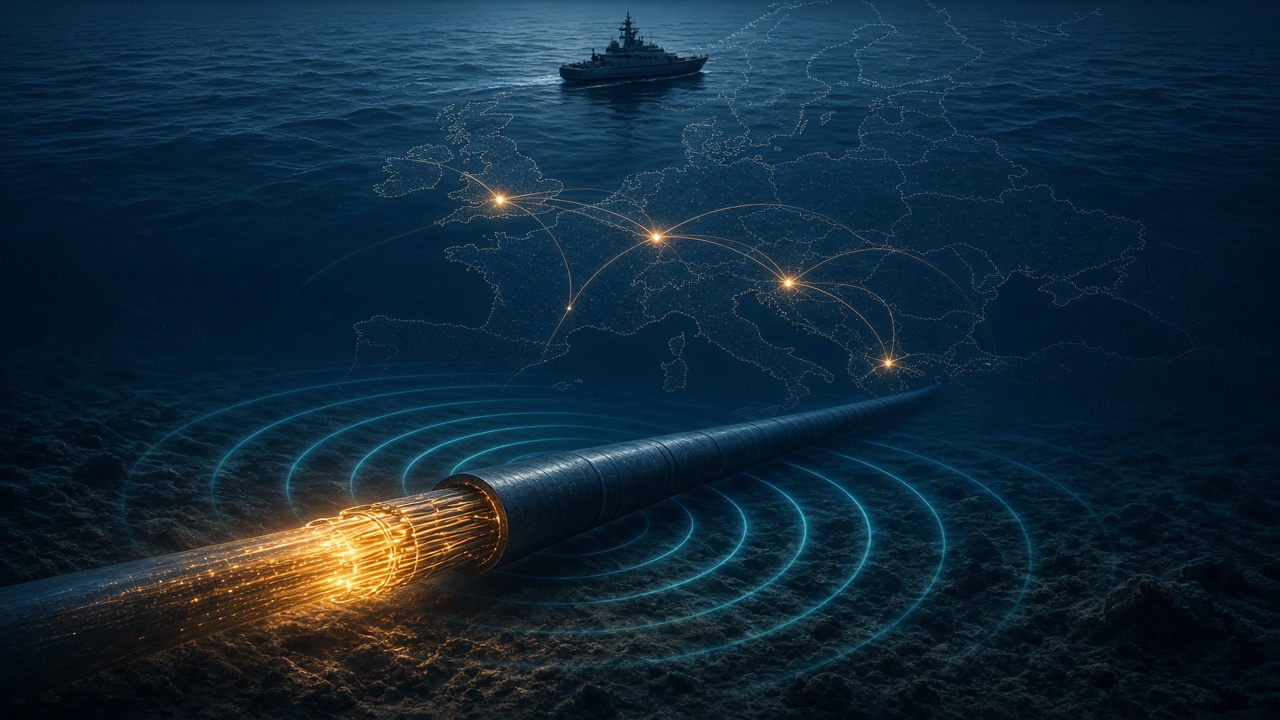
AI-generated illustration of a glowing fibre-optic subsea cable on the seabed with a naval ship above and a map of Europe

Amsterdam's Optics11 raises another €50m to watch Europe's seabed, ten AI labs sign Macron's Paris Call without shared risk limits, The Hague doubles its stake in the EU's scale-up fund-of-funds, Zurich's Redalpine closes its largest early-stage fund, and Paris-based Heal.dev bets €4m on checking AI-written code.

1. Optics11 raises €50m to guard subsea cables, taking its 15-month total above €100m

Optics11, the Amsterdam fibre-optic sensing company spun out of Vrije Universiteit Amsterdam, has raised €50m from existing backers FORWARD.one, Value Creation Capital, SET Ventures and JOIN Capital, lifting the capital it has raised in 15 months above €100m. According to Dutch innovation outlet IO+, the money will expand production capacity and speed up international growth, as demand rises with the threat of sabotage and hybrid attacks on critical infrastructure.

The technology turns fibre into a long, sensitive microphone: changes in the light reveal where vibrations come from and what may be causing them. IO+ reports that the OptiBarrier system can detect and classify underwater activity, such as ships near cables or anchors dragging across the seabed, up to 100 km offshore. Its towed OptiArray sensor was selected earlier this year by the Dutch Ministry of Defence for the navy's ASWINABO (Anti-Submarine Warfare In A Box) programme. Why it matters: a round of this size from insiders alone shows that undersea-infrastructure security has become an investable defence category in Europe, not a niche research field.

Source: IO+ (Dutch)

2. OpenAI, Anthropic, Microsoft and Mistral sign Macron's Paris Call, but with no common risk thresholds

Ten AI companies, including OpenAI, Anthropic, Microsoft, Mistral and Hugging Face, plus six countries (France, Canada, Finland, Norway, the Netherlands and Bahrain) signed the Paris Call for AI Safety and Security on 9 November, promising shutdown mechanisms and outside testing for frontier models. As The Next Web reports, the declaration was agreed at a meeting hosted by Emmanuel Macron on the opening day of the Paris Peace Forum. The US, Google, Meta and China did not sign.

Signatories commit to fail-safe mechanisms that can shut models down, even during training and internal use, to clearer disclosure of what systems can and cannot do, to letting qualified independent experts test them "where appropriate", and to sharing early warnings about serious incidents. French safety group CeSIA signed but argues the text sets no common risk thresholds for development or release and does not guarantee testers access. "These decisions must rest with public authorities," said CeSIA executive director Charbel-Raphaël Ségerie. Why it matters: Europe now has a voluntary frontier-AI framework that includes the leading US labs, but there are no deadlines yet and the shared testing framework still has to be built.

Source: The Next Web

3. The Netherlands puts €200m into ETCI 2.0, double its first-round stake, as the EU scale-up fund-of-funds restarts

The Dutch Ministry of Economic Affairs and Climate is committing €200m to the second round of the European Tech Champions Initiative (ETCI 2.0), up from €100m in the first round, in a fund-of-funds where member states and the European Investment Bank put in about €1.8bn. According to the Dutch government, ETCI 2.0 will back private growth funds of at least €600m, preferably more than €1bn. Germany, Spain, Italy and the EIB are returning, and Bulgaria, Greece and Luxembourg join as new investors.

The Hague says seven Dutch start-ups have so far received €338m through funds backed in the first round (2023-2026), including Leiden biotech Azafaros. It also concedes that the first investments have so far delivered only about 10% of the targeted €17bn leverage effect, and blames long venture cycles for that. Why it matters: Europe's late-stage funding gap is now being addressed with public anchor money on a larger scale, and Dutch scale-ups gain a direct route to the megafunds that back rounds of €100m and up.

Source: Rijksoverheid (Dutch)

4. Redalpine closes its $250m RAC VIII, its largest early-stage fund, to lead seed and Series A rounds in European frontier tech

Swiss venture firm Redalpine, an early backer of Mistral, N26, Basecamp Research and Proxima Fusion, has closed RAC VIII at $250m, 25% larger than the $200m RAC VII that closed in 2024. Tech.eu reports that the fund will mainly invest at seed and Series A, writing tickets of $1m to $15m and looking to lead or co-lead deals in 15 to 20 start-ups, with robotics and AI for drug discovery among its focus areas.

Founded in Zurich in 2006, Redalpine also has offices in Berlin, London and Silicon Valley, and says half of its investment team are scientists. In its own announcement, the firm said the fund closed oversubscribed, named Aviva Investors, Flexstone Partners and KfW among its limited partners, and put its assets under management above $1.4bn. Why it matters: European deep-tech founders need specialist early-stage capital, and a larger fund backed by German development bank KfW adds more of it at the stage before ETCI-type growth money starts.

Source: Tech.eu

5. Heal.dev raises €4m from Mango Capital and Alven for AI agents that reproduce bugs before release

French start-up Heal.dev has raised €4m from Mango Capital and Alven to sell AI agents that explore applications, then reproduce and prove each bug or vulnerability they find before flagging it to engineers. As Maddyness reports, the company was founded in 2023 to automate software testing and has since pivoted towards proactive bug and vulnerability detection. It counts about a dozen start-ups as customers.

Heal.dev claims that 70% of the failures its agent detects escape traditional code-review tools. That figure is the company's own and has not been independently verified. Co-founder and CEO Malo Marrec told Maddyness that "the next revolution in software development will be verification". The funding will go into refining the technology, strengthening product and engineering teams and expanding sales across Europe. Why it matters: as AI coding tools multiply the amount of code shipped, the bottleneck moves to checking it, and European investors are starting to fund that layer.

Source: Maddyness (French)

Cover image: AI-generated illustration of a subsea fibre-optic cable, not a photograph of a real event. EuropeanTechOnHeels.

Recent

Top European Startup Accelerators Worth Knowing

Brussels presses OpenAI and Anthropic for a full count of rogue AI-agent incidents, admitting it learned of some from the press

EU funding deadlines European startups should check this winter

Dresden AI chipmaker Sparxity raises €33m Series A from Lockheed Martin, GlobalFoundries and the EIC Fund

Breaking Tech Europe: Top 5 – Optics11 Raises €50m to Guard Subsea Cables, AI Labs Sign Macron's Paris Call, and The Hague Doubles Its Scale-up Bet

11/11/2026
25
AI-generated illustration of a glowing fibre-optic subsea cable on the seabed with a naval ship above and a map of Europe

Amsterdam's Optics11 raises another €50m to watch Europe's seabed, ten AI labs sign Macron's Paris Call without shared risk limits, The Hague doubles its stake in the EU's scale-up fund-of-funds, Zurich's Redalpine closes its largest early-stage fund, and Paris-based Heal.dev bets €4m on checking AI-written code.

1. Optics11 raises €50m to guard subsea cables, taking its 15-month total above €100m

Optics11, the Amsterdam fibre-optic sensing company spun out of Vrije Universiteit Amsterdam, has raised €50m from existing backers FORWARD.one, Value Creation Capital, SET Ventures and JOIN Capital, lifting the capital it has raised in 15 months above €100m. According to Dutch innovation outlet IO+, the money will expand production capacity and speed up international growth, as demand rises with the threat of sabotage and hybrid attacks on critical infrastructure.

The technology turns fibre into a long, sensitive microphone: changes in the light reveal where vibrations come from and what may be causing them. IO+ reports that the OptiBarrier system can detect and classify underwater activity, such as ships near cables or anchors dragging across the seabed, up to 100 km offshore. Its towed OptiArray sensor was selected earlier this year by the Dutch Ministry of Defence for the navy's ASWINABO (Anti-Submarine Warfare In A Box) programme. Why it matters: a round of this size from insiders alone shows that undersea-infrastructure security has become an investable defence category in Europe, not a niche research field.

Source: IO+ (Dutch)

2. OpenAI, Anthropic, Microsoft and Mistral sign Macron's Paris Call, but with no common risk thresholds

Ten AI companies, including OpenAI, Anthropic, Microsoft, Mistral and Hugging Face, plus six countries (France, Canada, Finland, Norway, the Netherlands and Bahrain) signed the Paris Call for AI Safety and Security on 9 November, promising shutdown mechanisms and outside testing for frontier models. As The Next Web reports, the declaration was agreed at a meeting hosted by Emmanuel Macron on the opening day of the Paris Peace Forum. The US, Google, Meta and China did not sign.

Signatories commit to fail-safe mechanisms that can shut models down, even during training and internal use, to clearer disclosure of what systems can and cannot do, to letting qualified independent experts test them "where appropriate", and to sharing early warnings about serious incidents. French safety group CeSIA signed but argues the text sets no common risk thresholds for development or release and does not guarantee testers access. "These decisions must rest with public authorities," said CeSIA executive director Charbel-Raphaël Ségerie. Why it matters: Europe now has a voluntary frontier-AI framework that includes the leading US labs, but there are no deadlines yet and the shared testing framework still has to be built.

Source: The Next Web

3. The Netherlands puts €200m into ETCI 2.0, double its first-round stake, as the EU scale-up fund-of-funds restarts

The Dutch Ministry of Economic Affairs and Climate is committing €200m to the second round of the European Tech Champions Initiative (ETCI 2.0), up from €100m in the first round, in a fund-of-funds where member states and the European Investment Bank put in about €1.8bn. According to the Dutch government, ETCI 2.0 will back private growth funds of at least €600m, preferably more than €1bn. Germany, Spain, Italy and the EIB are returning, and Bulgaria, Greece and Luxembourg join as new investors.

The Hague says seven Dutch start-ups have so far received €338m through funds backed in the first round (2023-2026), including Leiden biotech Azafaros. It also concedes that the first investments have so far delivered only about 10% of the targeted €17bn leverage effect, and blames long venture cycles for that. Why it matters: Europe's late-stage funding gap is now being addressed with public anchor money on a larger scale, and Dutch scale-ups gain a direct route to the megafunds that back rounds of €100m and up.

Source: Rijksoverheid (Dutch)

4. Redalpine closes its $250m RAC VIII, its largest early-stage fund, to lead seed and Series A rounds in European frontier tech

Swiss venture firm Redalpine, an early backer of Mistral, N26, Basecamp Research and Proxima Fusion, has closed RAC VIII at $250m, 25% larger than the $200m RAC VII that closed in 2024. Tech.eu reports that the fund will mainly invest at seed and Series A, writing tickets of $1m to $15m and looking to lead or co-lead deals in 15 to 20 start-ups, with robotics and AI for drug discovery among its focus areas.

Founded in Zurich in 2006, Redalpine also has offices in Berlin, London and Silicon Valley, and says half of its investment team are scientists. In its own announcement, the firm said the fund closed oversubscribed, named Aviva Investors, Flexstone Partners and KfW among its limited partners, and put its assets under management above $1.4bn. Why it matters: European deep-tech founders need specialist early-stage capital, and a larger fund backed by German development bank KfW adds more of it at the stage before ETCI-type growth money starts.

Source: Tech.eu

5. Heal.dev raises €4m from Mango Capital and Alven for AI agents that reproduce bugs before release

French start-up Heal.dev has raised €4m from Mango Capital and Alven to sell AI agents that explore applications, then reproduce and prove each bug or vulnerability they find before flagging it to engineers. As Maddyness reports, the company was founded in 2023 to automate software testing and has since pivoted towards proactive bug and vulnerability detection. It counts about a dozen start-ups as customers.

Heal.dev claims that 70% of the failures its agent detects escape traditional code-review tools. That figure is the company's own and has not been independently verified. Co-founder and CEO Malo Marrec told Maddyness that "the next revolution in software development will be verification". The funding will go into refining the technology, strengthening product and engineering teams and expanding sales across Europe. Why it matters: as AI coding tools multiply the amount of code shipped, the bottleneck moves to checking it, and European investors are starting to fund that layer.

Source: Maddyness (French)

Cover image: AI-generated illustration of a subsea fibre-optic cable, not a photograph of a real event. EuropeanTechOnHeels.
Recent

© European Tech On Heels - 2026
Made with
Web Wings