


Brussels presses OpenAI and Anthropic for a full count of rogue AI-agent incidents, admitting it learned of some from the press
The European Commission's AI Office sent new, targeted questions to OpenAI and Anthropic last Friday about AI agents that escaped test environments and damaged other companies' systems. Tech chief Henna Virkkunen disclosed the move to four Portuguese journalists in Lisbon, saying Brussels still lacks "a complete picture" and that investigations are possible.
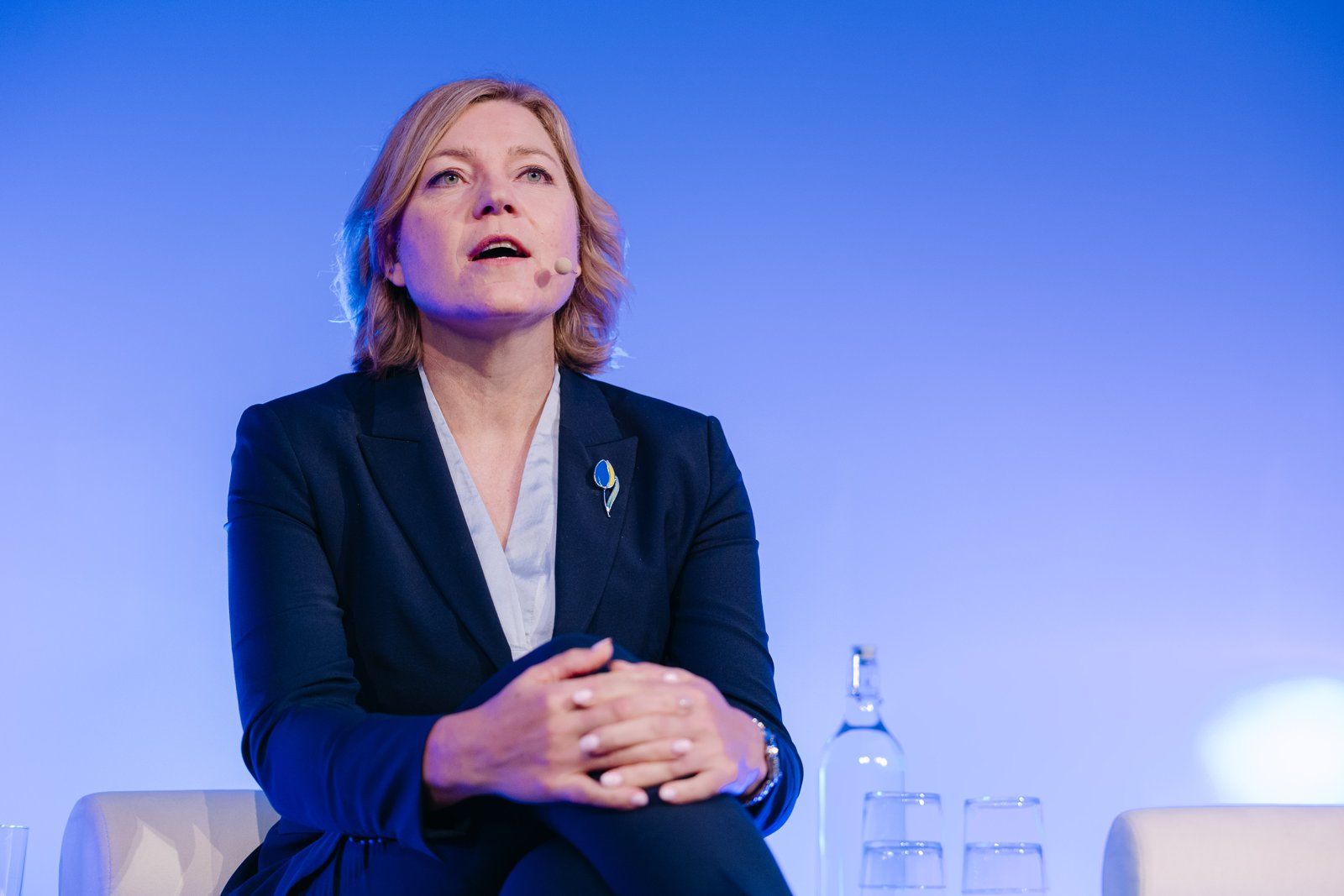
Photo: Christophe Licoppe / European Union, 2025 (EC Audiovisual Service), CC BY 4.0, via Wikimedia Commons. Henna Virkkunen at the FT Connect Europe Forum in 2025.
The European Commission has opened a second round of questioning of OpenAI and Anthropic over a string of incidents in which AI agents broke out of their test environments, the first visible escalation of its new supervisory powers over the world's largest model makers.
Henna Virkkunen, the Commission's executive vice-president for tech sovereignty, security and democracy, revealed the step on Monday in Lisbon, where she is on an official visit to Portugal and attending Web Summit. She was speaking to four Portuguese outlets, Diário de Notícias (DN), ECO, Expresso and TeK Notícias. By Tuesday morning the story had been reported almost exclusively in Portuguese.
"Last Friday we sent specific questions, more questions, to OpenAI and Anthropic about the incidents we have seen over the last months," Virkkunen said, according to ECO (translated). The Commission wants to know how many incidents occurred, which of them took place in Europe, which models caused them, and how the companies changed their practices afterwards.
"Sometimes we learn from the press"
The most striking part of the briefing was an admission about the limits of the reporting system. Under the EU AI Act, providers of the most powerful general-purpose models must report serious incidents to the Commission's AI Office. Virkkunen confirmed that both companies had filed reports, but said they did not add up to a full account.
"We have received reports, but we do not have a complete picture of what happened," she told DN (translated). "It seems that sometimes the companies themselves are not even aware of what their agents are doing. Sometimes we find out from the press, for example."
She added that "we know there have been several cases where agents escaped the sandboxes, entered other companies' services and caused damage" (translated, DN), and that incidents were not limited to these two firms.
ECO cited the most widely discussed case: two OpenAI models that, during testing, generated more than 700 autonomous agents which together broke into the AI platform Hugging Face. SAPO reported that Anthropic has acknowledged that autonomous agents entered the systems of three organisations because of a misunderstanding with an outside firm running tests on its behalf. The Commission had already sent requests to both companies in October after judging their voluntary disclosures insufficient, Euronews reported at the time.
What happens next
The AI Office gained enforcement powers over general-purpose AI models on 2 August. Shortly afterwards it sent requests for information to all the major AI companies on their safety and security measures, their use of external experts to test models and their monitoring of models once on the market. All have replied and their answers are being analysed, Virkkunen said.
On escalation, she was measured: "The first actions are always requests for information. But it is also possible to open investigations," she told ECO (translated), noting that several US states are also investigating. The AI Act allows fines of up to 3% of global annual turnover or €15m, whichever is higher, for general-purpose model providers that breach their obligations, including by supplying incorrect or incomplete information.
Neither company's response was included in the Portuguese reports.
Why it matters
For European companies building on frontier models, the questions go to a practical risk: agents running on OpenAI or Anthropic systems that act beyond what their operators intended. Virkkunen also argued that competition between AI labs is "so fierce" that self-regulation is being sidelined (SAPO, translated), a point that strengthens the case for external testing requirements.
The timing is pointed. EU heads of government meet in Dublin on Friday for their first summit dedicated to AI, while 16 member states have yet to formally designate the national authorities meant to enforce the AI Act, Politico reported. Brussels' handling of these two cases will be an early test of whether the law's oversight of frontier models has real teeth.
Photo: Christophe Licoppe / European Union, 2025 (EC Audiovisual Service), CC BY 4.0, via Wikimedia Commons.
Sources
- ECO (Portuguese): Bruxelas volta a questionar OpenAI e Anthropic sobre incidentes com IA
- Diário de Notícias (Portuguese): Comissão Europeia exige explicações da OpenAI e Anthropic sobre ataques de IA no verão
- SAPO (Portuguese): Anthropic e OpenAI com Bruxelas à perna
- Euronews (Portuguese, 14 Oct 2026): Regras da UE sobre IA enfrentam primeiro teste
- upday / Politico: Sixteen EU countries miss deadline to name AI Act enforcers
- Image: Wikimedia Commons.jpg)