




Breaking Tech Europe: Top 5 – ElevenLabs Eyes a $33bn Valuation, Meta's Irish Arm Sets Aside €4bn for Fines, and SAP Taps Planqc's Quantum Computers
A London-founded voice-AI company prepares to triple its valuation, Meta's Dublin unit reveals its fines war chest, SAP plugs into German quantum hardware, a Warsaw robotics start-up raises $20m and a Swedish investor bets SEK1.7bn on AI-built software companies: the European tech stories that matter this Friday, 27 November 2026.
1. ElevenLabs is in early talks to raise at a $33bn valuation, three times its February price
ElevenLabs, Bloomberg and $33bn: the London-founded voice-AI company is preparing a funding round for the first quarter of 2027 at a target valuation 50% above the $22bn set in September.
ElevenLabs is in early talks with investors about a new round that could value it at $33bn, Sifted reports, citing Bloomberg. According to Bloomberg's sources, the company plans to start the process in the first three months of 2027, although some investors are pushing for it to begin sooner; the discussions are described as preliminary, and neither the size of the round nor the investors have been disclosed. The new figure would be triple the $11bn valuation of ElevenLabs' $500m Series D in February 2026, led by Sequoia Capital, and 50% above the $22bn price of a $300m employee tender offer in September, Tech Funding News notes. One person familiar with the matter told Bloomberg annualised revenue has reached about $700m, up $100m since September. ElevenLabs declined to comment.
2. Meta's main Irish unit has set aside almost €4bn for potential regulatory fines
Meta Platforms Ireland, €4bn and €98.6bn: the Dublin-based unit added €922m to its fines provision in 2025 while booking revenue equal to 52% of Meta's global total, newly filed accounts show.
The provision for potential regulatory fines stood at €4bn at the end of December 2025, after an additional €922m was set aside during the year and €82.79m was released, The Irish Times reports from the accounts filed with the Companies Registration Office. According to the Data Protection Commission's website, €2.8bn in fines levied against Meta and its subsidiaries are under appeal; a €17m fine from a 2022 Facebook case is the only one listed as collected. Revenue rose 15.5% to €98.6bn and pre-tax profit rose 14% to €3.32bn. The unit paid €3.3bn in dividends to its parent in 2025, its board has approved a further €2bn for 2026, and headcount fell 4% to 1,667.
3. SAP will let its applications run tasks on quantum computers from Garching start-up Planqc
SAP and Planqc: SAP applications are to access Planqc's quantum computers through an interface for specific optimisation tasks, such as loading lorries, with no financial terms disclosed.
Under the partnership, SAP software will combine classical cloud servers with simulated and real quantum computers from Planqc, and feed the results directly into existing business processes, Handelsblatt reports, citing dpa. "Europe has a strong research base and key parts of the technological supply chain," said Planqc co-founder and chief executive Alexander Glätzle. "What matters now is turning that into competitive products and a viable industry." Planqc gave no financial details. The deal follows the EU's Quantum Act, presented on Wednesday, which Handelsblatt says is intended to support the technology with €50bn; the German government aims to make at least two error-corrected quantum computers available to industrial users by 2030.
4. Warsaw's Lute raises $20m to teach warehouse and retail robots a sense of touch
Lute, OTB Ventures, FORWARD.one and Naval Ravikant: the ten-month-old Polish start-up has raised $20m across pre-seed and seed for AI models that combine camera images with tactile sensors.
The seed round was co-led by OTB Ventures and FORWARD.one, and the earlier pre-seed by Credo Ventures and Seedcamp, with Inovo VC, Borusan Ventures, ff Venture Capital and angel investor Naval Ravikant also taking part, dailyAI reports. Lute, founded in January 2026 by former PolyAI machine-learning lead Paweł Budzianowski and roboticist Krzysztof Walas, has offices in Warsaw and San Mateo. It says its first model, Lute-0, matches Physical Intelligence's open π0.5 model on shop tasks at half the latency, and that its models already run at Europe's largest car-parts distributor. dailyAI stresses that these are company claims: Lute has not disclosed its valuation, its customers or its benchmark method.
5. Epidemic Sound co-founder Oscar Höglund gets SEK1.7bn at Monterro to build AI-era software companies from scratch
Monterro and Oscar Höglund: the Swedish software investor's new fund has SEK1.7bn to back niche business ideas and is recruiting founders from industry.
Höglund will lead Monterro's new vehicle for building software companies from the ground up, Dagens industri reports, with SEK1.7bn in total to invest. "Now it takes months instead of years to build something," he told Di's sister title Breakit. The fund is now looking for potential founders from the business world to run niche software ideas. Monterro's chief executive is Gustav Lagercrantz.
Why it is breaking news
These stories point in the same direction: AI is reshaping where European capital goes and how fast companies are built. ElevenLabs' target, if reached, would triple its valuation within a year, backed by reported annualised revenue of about $700m, while Lute and Monterro show investors backing AI at the earliest stages, from tactile robotics in Poland to company-building in Sweden. SAP's agreement with Planqc gives a European quantum start-up a route into everyday enterprise software just as Brussels launches its Quantum Act. And Meta's Irish accounts put a number on the regulatory risk facing Big Tech in Europe: a €4bn provision against €2.8bn of DPC fines that remain under appeal.
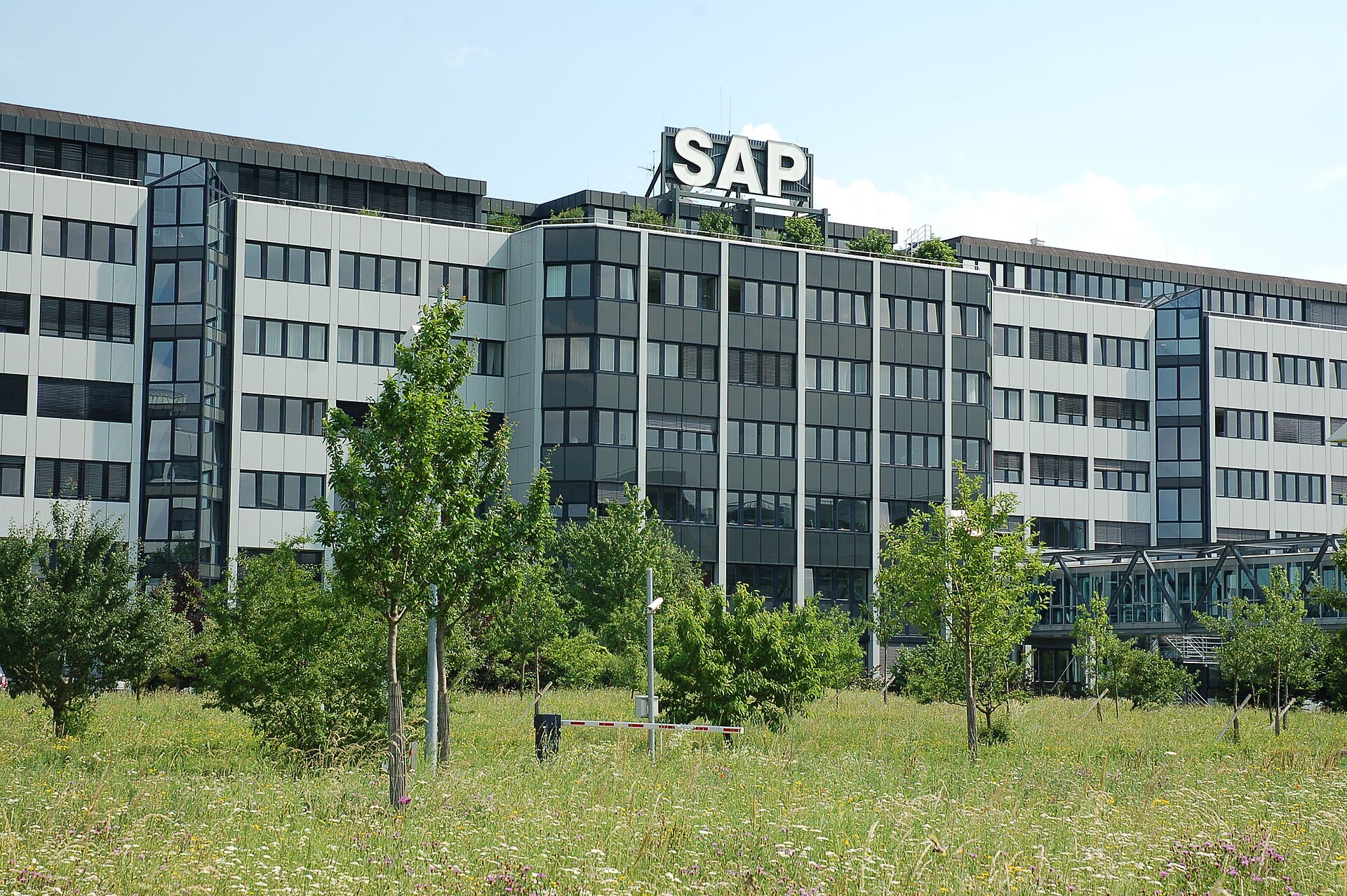
Sources: Sifted (citing Bloomberg), The Irish Times, Handelsblatt (dpa), dailyAI and Dagens industri, linked in each item. Cover image: SAP headquarters in Walldorf, photographed by Vladislav Bezrukov, CC BY 2.0, via Wikimedia Commons.