

Quantum Computing Trends Europe Should Watch

10/11/2026
26
Quantum Computing Trends Europe Should Watch

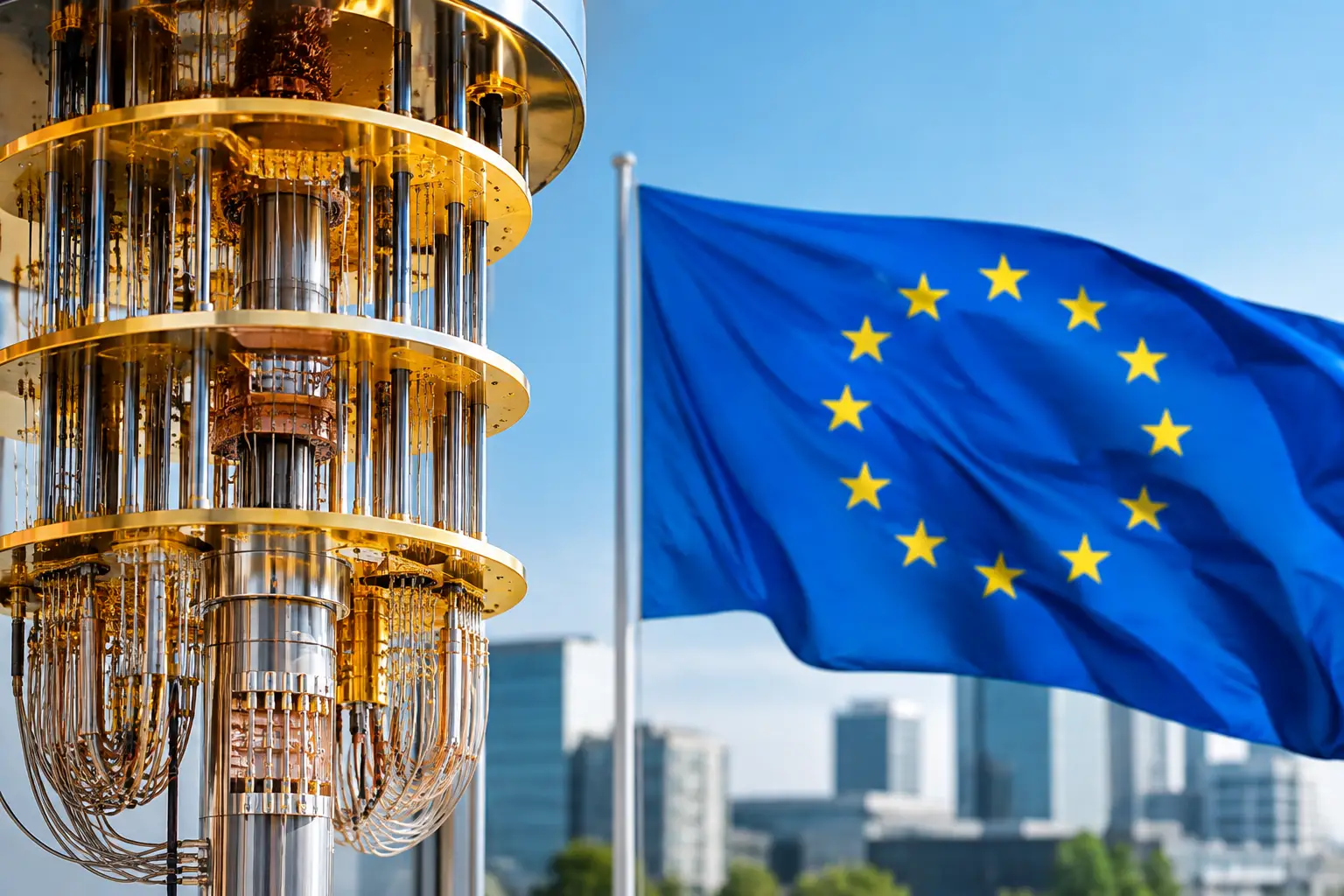
Quantum computing trends are no longer confined to physics labs and investor decks. They are starting to shape decisions in European cybersecurity teams, pharmaceutical R&D departments, public institutions, and deep-tech startups. The shift is not that quantum computers can suddenly solve every hard problem. It is that the surrounding ecosystem - hardware, software, skills, funding, standards, and security planning - is becoming commercially relevant now.

For professionals following European tech, the key question is not who will build a universal quantum machine first. It is where practical value, credible expertise, and public accountability will take shape along the way.

Quantum Computing Trends Moving Beyond the Hype

The industry is still early, and that distinction matters. Current quantum processors are vulnerable to errors, expensive to operate, and limited in the problems they can tackle better than conventional systems. Claims of broad quantum advantage should be met with healthy skepticism.

Yet the field has progressed from a narrow hardware race into a full technology stack. European universities, national labs, startups, cloud providers, and corporates are building capabilities around different approaches, including superconducting qubits, trapped ions, neutral atoms, photonics, and silicon-based designs. There is no settled winner, which creates opportunity but also makes strategic bets more complicated.

The most meaningful signal is not a flashy qubit count. It is whether a platform can improve qubit quality, reduce error rates, connect processors effectively, and give developers tools they can actually use. For buyers and investors, benchmarks need context. A larger machine is not automatically a more useful machine.

Error correction becomes the real scoreboard

Error correction is moving from a highly technical research subject to a central business metric. Quantum information is fragile: noise from the environment and imperfect operations can distort calculations quickly. Useful large-scale quantum computing will require many physical qubits working together to create more reliable logical qubits.

This is why the next phase will reward sustained engineering, not just headline announcements. Companies that can demonstrate better control, calibration, and error-correction performance may be better positioned than those simply promising dramatic future scale.

For Europe, this creates room to compete on specialized strengths. The region has established research depth in quantum science, photonics, advanced manufacturing, and precision instrumentation. Turning that depth into durable companies will depend on patient capital, procurement pathways, and founders who can bridge scientific and commercial worlds.

Europe Is Building a Quantum Strategy, Not One Company

Unlike consumer software, quantum technology depends heavily on long-term research infrastructure and public coordination. European nations have recognized this through national quantum programs, research funding, and cross-border initiatives. The goal is not only economic upside. Quantum capability increasingly sits alongside AI, chips, cloud, and cybersecurity as a strategic capacity.

That does not mean every country needs to build a quantum computer. A strong ecosystem can include component suppliers, cryogenic systems specialists, quantum-safe security providers, application developers, testing facilities, educators, and investors with the patience to understand deep-tech timelines.

The Netherlands is particularly relevant in this picture because of its concentration of quantum research, photonics expertise, and active startup networks. Germany, France, the United Kingdom, Finland, Switzerland, and Denmark also bring distinct strengths. The competitive question is whether European collaboration can be fast enough to prevent talent, intellectual property, and scale-up opportunities from drifting elsewhere.

There is a trade-off here. Fragmented national programs can duplicate effort and make procurement harder for startups. Over-centralization, however, can slow experimentation. The most effective policy mix will support shared standards and infrastructure while leaving room for regional clusters to specialize.

The application race is becoming more disciplined

Early quantum conversations often centered on use cases such as drug discovery, financial optimization, logistics, and new materials. Those remain promising, but the market is learning to separate long-term potential from near-term deployment.

Hybrid approaches are likely to lead. In these models, classical systems handle most of the workload while quantum processors are tested on carefully selected parts of a problem. This is less dramatic than replacing conventional high-performance computing, but it is where teams can build real expertise without pretending the technology is already mature.

Materials science may be one of the strongest long-range opportunities. Modeling molecular interactions is computationally difficult, and advances could affect batteries, fertilizers, industrial chemistry, and medicines. But a useful result still requires domain data, scientific validation, and a pathway into physical production. Quantum hardware alone does not create a climate solution or a drug candidate.

Businesses should therefore avoid broad “quantum strategy” statements with no operational focus. A better approach is to identify a small number of computationally demanding problems, assess whether quantum methods could plausibly help, and keep a clear classical baseline. If a conventional model delivers the answer more cheaply and reliably, it should win.

Post-Quantum Security Is the Immediate Business Case

The most urgent quantum issue for many organizations is not using quantum computing. It is preparing for the day when capable quantum machines could undermine widely used public-key cryptography.

That day is not a fixed date, and current quantum devices cannot break modern encryption at the scale required. Still, data with a long shelf life is exposed to a “harvest now, decrypt later” risk. An attacker can collect encrypted data today and attempt to decrypt it if and when the necessary quantum capability arrives.

This makes post-quantum cryptography a present-tense planning issue, especially for governments, financial services, healthcare providers, telecoms, and infrastructure operators. The work is often unglamorous: mapping cryptographic dependencies, identifying systems that cannot be easily updated, testing new algorithms, and ensuring vendors have credible migration plans.

Crypto agility matters as much as the selected algorithm. Organizations need the ability to replace cryptographic components without rebuilding every application or connected device. That is a governance challenge involving procurement, legacy systems, product design, and executive ownership.

For European leaders, this is also a trust issue. Security migrations should not become a closed conversation among cryptographers and IT teams. Boards need to understand data retention risks, regulators need realistic transition timelines, and customers deserve clarity about how sensitive information is being protected.

Talent and Representation Will Shape the Field

Quantum is often presented as a domain reserved for theoretical physicists. Those experts are essential, but the sector needs a much wider talent base: software engineers, product managers, cybersecurity specialists, technical sales leaders, ethicists, policy professionals, and communicators who can explain uncertainty without overselling it.

That is also where representation becomes a business concern, not a branding exercise. Deep tech has a familiar risk: new industries can recreate old exclusion patterns while they are still small enough for networks and hiring habits to become entrenched. If women and other underrepresented groups are absent from the first wave of founding teams, technical leadership, investment committees, and standards groups, the sector loses perspective as well as talent.

Visibility changes who sees a future in the field. European companies and institutions can act early by featuring women technical leaders, widening recruitment beyond traditional physics pipelines, funding interdisciplinary training, and making conference lineups reflect the expertise already present in the ecosystem.

The point is not to lower the scientific bar. It is to stop confusing a narrow professional network with the full supply of capable people.

What to Watch Next

Over the next few years, look past promotional claims and watch for four practical indicators: stronger demonstrations of error correction, application pilots with transparent classical comparisons, credible post-quantum migration programs, and European startups that can move from research grants to repeatable commercial revenue.

Also watch who gets to define the agenda. Quantum standards, public funding priorities, security rules, and procurement criteria will influence the market long before fault-tolerant machines become widely available. Those rooms should include not only hardware experts and incumbent vendors, but also people who understand public interest, workforce access, and the industries expected to adopt the technology.

Quantum computing may take longer to mature than the loudest forecasts suggest. That is not a reason to dismiss it. It is a reason to build literacy now, ask sharper questions, and make sure the European quantum economy is shaped by more than the usual voices.


Recent

Breaking Tech Europe: Top 5 – Onodrim Raises $300m to Buy Defence Suppliers, Brussels Readies a Dark-Patterns Ban, and 16 EU States Miss AI Act Deadline

Breaking Tech Europe: Top 5 – Brussels Targets TikTok's Feed, Amsterdam Arrests Data-Centre Protesters, and TEKEVER Lands in Odense

Breaking Tech Europe: Top 5 – Resilience Care Raises €48m from PSG, Oxford's Alethio Banks $90m, and Vensum Power Lands €9m

Breaking Tech Europe: Top 5 – UK Eyes Under-16 Ban for Vinted and eBay, Mistral Buys SkipLabs, and Gliwice's Aformic Raises $6.95m

Quantum Computing Trends Europe Should Watch

10/11/2026
26
Quantum Computing Trends Europe Should Watch

Quantum computing trends are no longer confined to physics labs and investor decks. They are starting to shape decisions in European cybersecurity teams, pharmaceutical R&D departments, public institutions, and deep-tech startups. The shift is not that quantum computers can suddenly solve every hard problem. It is that the surrounding ecosystem - hardware, software, skills, funding, standards, and security planning - is becoming commercially relevant now.

For professionals following European tech, the key question is not who will build a universal quantum machine first. It is where practical value, credible expertise, and public accountability will take shape along the way.

Quantum Computing Trends Moving Beyond the Hype

The industry is still early, and that distinction matters. Current quantum processors are vulnerable to errors, expensive to operate, and limited in the problems they can tackle better than conventional systems. Claims of broad quantum advantage should be met with healthy skepticism.

Yet the field has progressed from a narrow hardware race into a full technology stack. European universities, national labs, startups, cloud providers, and corporates are building capabilities around different approaches, including superconducting qubits, trapped ions, neutral atoms, photonics, and silicon-based designs. There is no settled winner, which creates opportunity but also makes strategic bets more complicated.

The most meaningful signal is not a flashy qubit count. It is whether a platform can improve qubit quality, reduce error rates, connect processors effectively, and give developers tools they can actually use. For buyers and investors, benchmarks need context. A larger machine is not automatically a more useful machine.

Error correction becomes the real scoreboard

Error correction is moving from a highly technical research subject to a central business metric. Quantum information is fragile: noise from the environment and imperfect operations can distort calculations quickly. Useful large-scale quantum computing will require many physical qubits working together to create more reliable logical qubits.

This is why the next phase will reward sustained engineering, not just headline announcements. Companies that can demonstrate better control, calibration, and error-correction performance may be better positioned than those simply promising dramatic future scale.

For Europe, this creates room to compete on specialized strengths. The region has established research depth in quantum science, photonics, advanced manufacturing, and precision instrumentation. Turning that depth into durable companies will depend on patient capital, procurement pathways, and founders who can bridge scientific and commercial worlds.

Europe Is Building a Quantum Strategy, Not One Company

Unlike consumer software, quantum technology depends heavily on long-term research infrastructure and public coordination. European nations have recognized this through national quantum programs, research funding, and cross-border initiatives. The goal is not only economic upside. Quantum capability increasingly sits alongside AI, chips, cloud, and cybersecurity as a strategic capacity.

That does not mean every country needs to build a quantum computer. A strong ecosystem can include component suppliers, cryogenic systems specialists, quantum-safe security providers, application developers, testing facilities, educators, and investors with the patience to understand deep-tech timelines.

The Netherlands is particularly relevant in this picture because of its concentration of quantum research, photonics expertise, and active startup networks. Germany, France, the United Kingdom, Finland, Switzerland, and Denmark also bring distinct strengths. The competitive question is whether European collaboration can be fast enough to prevent talent, intellectual property, and scale-up opportunities from drifting elsewhere.

There is a trade-off here. Fragmented national programs can duplicate effort and make procurement harder for startups. Over-centralization, however, can slow experimentation. The most effective policy mix will support shared standards and infrastructure while leaving room for regional clusters to specialize.

The application race is becoming more disciplined

Early quantum conversations often centered on use cases such as drug discovery, financial optimization, logistics, and new materials. Those remain promising, but the market is learning to separate long-term potential from near-term deployment.

Hybrid approaches are likely to lead. In these models, classical systems handle most of the workload while quantum processors are tested on carefully selected parts of a problem. This is less dramatic than replacing conventional high-performance computing, but it is where teams can build real expertise without pretending the technology is already mature.

Materials science may be one of the strongest long-range opportunities. Modeling molecular interactions is computationally difficult, and advances could affect batteries, fertilizers, industrial chemistry, and medicines. But a useful result still requires domain data, scientific validation, and a pathway into physical production. Quantum hardware alone does not create a climate solution or a drug candidate.

Businesses should therefore avoid broad “quantum strategy” statements with no operational focus. A better approach is to identify a small number of computationally demanding problems, assess whether quantum methods could plausibly help, and keep a clear classical baseline. If a conventional model delivers the answer more cheaply and reliably, it should win.

Post-Quantum Security Is the Immediate Business Case

The most urgent quantum issue for many organizations is not using quantum computing. It is preparing for the day when capable quantum machines could undermine widely used public-key cryptography.

That day is not a fixed date, and current quantum devices cannot break modern encryption at the scale required. Still, data with a long shelf life is exposed to a “harvest now, decrypt later” risk. An attacker can collect encrypted data today and attempt to decrypt it if and when the necessary quantum capability arrives.

This makes post-quantum cryptography a present-tense planning issue, especially for governments, financial services, healthcare providers, telecoms, and infrastructure operators. The work is often unglamorous: mapping cryptographic dependencies, identifying systems that cannot be easily updated, testing new algorithms, and ensuring vendors have credible migration plans.

Crypto agility matters as much as the selected algorithm. Organizations need the ability to replace cryptographic components without rebuilding every application or connected device. That is a governance challenge involving procurement, legacy systems, product design, and executive ownership.

For European leaders, this is also a trust issue. Security migrations should not become a closed conversation among cryptographers and IT teams. Boards need to understand data retention risks, regulators need realistic transition timelines, and customers deserve clarity about how sensitive information is being protected.

Talent and Representation Will Shape the Field

Quantum is often presented as a domain reserved for theoretical physicists. Those experts are essential, but the sector needs a much wider talent base: software engineers, product managers, cybersecurity specialists, technical sales leaders, ethicists, policy professionals, and communicators who can explain uncertainty without overselling it.

That is also where representation becomes a business concern, not a branding exercise. Deep tech has a familiar risk: new industries can recreate old exclusion patterns while they are still small enough for networks and hiring habits to become entrenched. If women and other underrepresented groups are absent from the first wave of founding teams, technical leadership, investment committees, and standards groups, the sector loses perspective as well as talent.

Visibility changes who sees a future in the field. European companies and institutions can act early by featuring women technical leaders, widening recruitment beyond traditional physics pipelines, funding interdisciplinary training, and making conference lineups reflect the expertise already present in the ecosystem.

The point is not to lower the scientific bar. It is to stop confusing a narrow professional network with the full supply of capable people.

What to Watch Next

Over the next few years, look past promotional claims and watch for four practical indicators: stronger demonstrations of error correction, application pilots with transparent classical comparisons, credible post-quantum migration programs, and European startups that can move from research grants to repeatable commercial revenue.

Also watch who gets to define the agenda. Quantum standards, public funding priorities, security rules, and procurement criteria will influence the market long before fault-tolerant machines become widely available. Those rooms should include not only hardware experts and incumbent vendors, but also people who understand public interest, workforce access, and the industries expected to adopt the technology.

Quantum computing may take longer to mature than the loudest forecasts suggest. That is not a reason to dismiss it. It is a reason to build literacy now, ask sharper questions, and make sure the European quantum economy is shaped by more than the usual voices.

Recent

© European Tech On Heels - 2026
Made with
Web Wings