



Startup Events That Actually Move Your Career

14/11/2026
37
Startup Events That Actually Move Your Career

A crowded room, a name badge, and a program packed with panels do not automatically add up to opportunity. The best startup events can sharpen your market view, lead to a role or customer conversation, and put your work in front of people who should know it. The rest are simply expensive calendars with bad coffee.

For women working across European tech, the calculation can be more personal. Events remain places where capital, press attention, hiring decisions, and partnerships circulate - yet not every room distributes attention equally. The goal is not to attend everything. It is to be intentional about where you show up, how you participate, and what you do once the lights are down.

Why startup events still matter

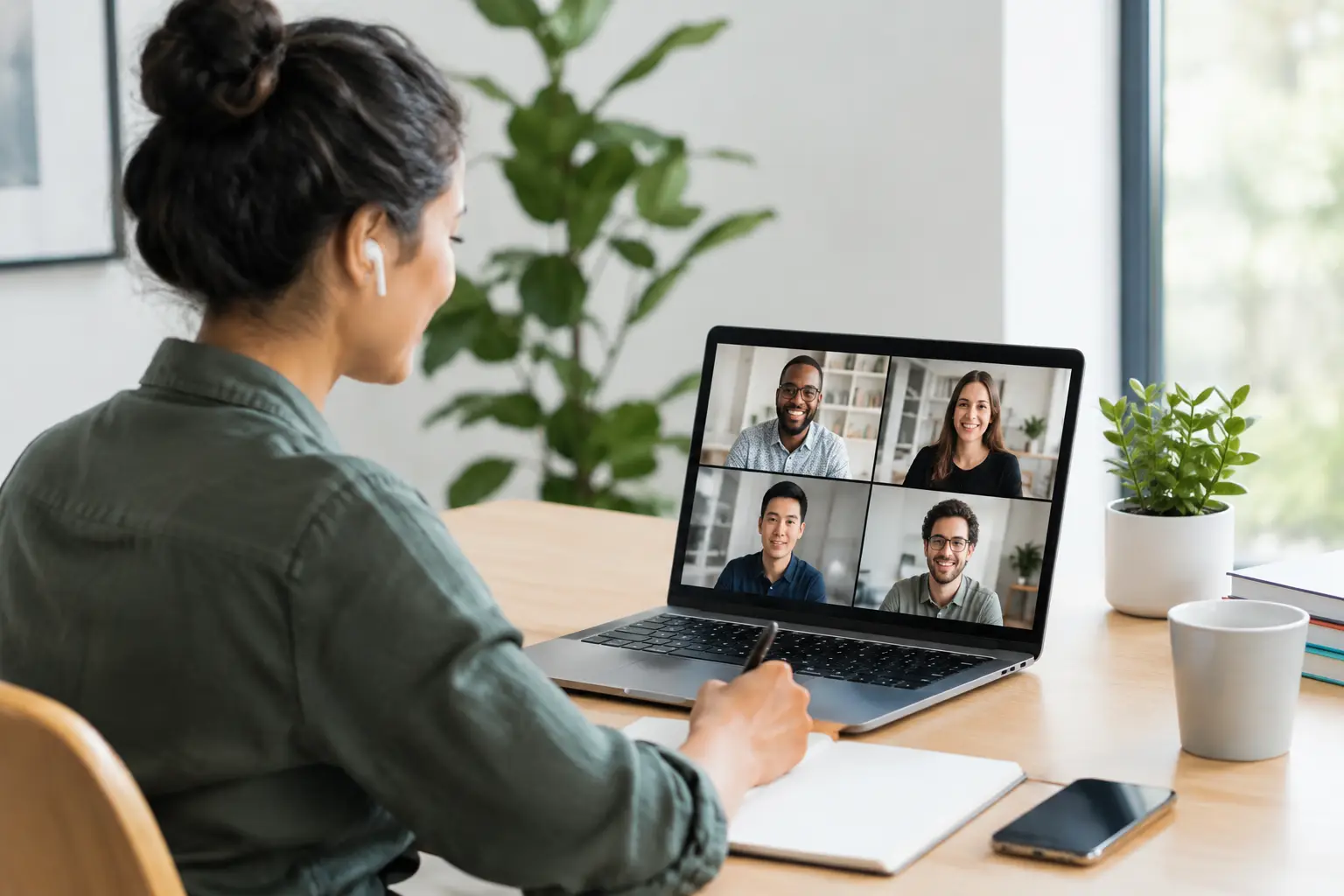
Digital communities have made it easier to follow founders, investors, and product leaders without leaving your desk. That is useful, particularly for people balancing demanding jobs, caregiving, or travel budgets. But a well-designed in-person event offers something a busy feed cannot: context.

You hear which themes are attracting serious investor interest rather than social engagement. You notice which founders can clearly explain a problem and which companies are only repeating a trend. You learn how people describe the market when they are not writing a pitch deck. For operators, that intelligence can inform a hiring plan, a product decision, or a decision to explore a new sector.

The relationship value is real, too, but it is often misunderstood. Networking is not a competition to collect the most contacts. A useful conversation might be a founder comparing go-to-market challenges, a recruiter describing an emerging role, or a journalist seeking a more diverse set of expert voices. Those connections become valuable because there is a reason to continue them.

There is also a visibility argument. When women are present as speakers, moderators, founders, technical experts, and active audience members, the public picture of who builds technology changes. Representation at startup events is not a side issue to the agenda. It affects whose ideas are funded, quoted, hired, and remembered.

Choose startup events with a clear purpose

Before registering, decide what a good outcome looks like. “Meet interesting people” is pleasant, but it is too vague to guide your time. A founder might want three conversations with potential design partners. A product marketer may be researching how AI buyers are changing their evaluation process. Someone considering a career move could be looking for a more honest view of a company or function.

Then assess the event against that goal. Start with the attendee profile, not the event’s headline speaker. A major conference can be excellent for market visibility, media conversations, and broad trend spotting. It can be weak for meaningful one-to-one conversations if everyone is rushing between stages. A smaller ecosystem dinner may have fewer recognizable names but a far stronger chance of sustained dialogue.

Look at the speaker list as a signal, not proof. Who has been invited to define the conversation? Are women represented beyond panels explicitly labeled as diversity discussions? Are technical leaders, operators, and early-stage founders included alongside investors and CEOs? A program that repeatedly centers the same narrow group often reproduces the same narrow network in the room.

Location and format matter as well. Events in Amsterdam, Berlin, Paris, London, and Stockholm can attract different mixes of capital, talent, and sectors. A deep-tech forum may be more relevant to a climate founder than a general startup festival. An evening meetup can suit a first conversation; a two-day conference may justify travel only when there are several high-value reasons to attend.

The trade-off is simple: the biggest event is not always the most useful one. Choose concentration over noise.

Do the work before the badge pickup

The most productive event conversations usually begin before the event itself. Review the agenda and identify a manageable number of people or companies you genuinely want to understand. Read enough to ask a specific question. “I saw your team is expanding into Germany - what changed in the market to make that the right moment?” is far more memorable than “Tell me about what you do.”

If an introduction makes sense, send a concise note before the event. Explain why you would value ten minutes and make the request easy to decline. Avoid treating people as targets in a lead-generation campaign. Curiosity, relevance, and respect travel well in every European tech hub.

Prepare a short introduction that does more than state your title. Say what you work on, the problem you care about, and what you are trying to learn or build next. This is especially useful for people whose role is broad or changing. A clear narrative gives others a practical way to remember you and make an introduction later.

Have better conversations, not more of them

At an event, it is tempting to scan the room for the most senior person available. That can lead to a night of rushed exchanges and little follow-up. Instead, stay present in the conversation in front of you. Ask what is difficult right now, what the person is seeing in their market, or what they think the room is missing. Listen for common ground, but do not force a transaction.

For founders, specificity is especially powerful. Rather than delivering the entire pitch, describe the customer problem and invite a response. For job seekers, talk about the work you want to be trusted with, not just the role you want to land. For investors and ecosystem builders, share a useful observation or a relevant connection only when it is genuinely useful.

Women can face a familiar dynamic at startup events: being interrupted, assumed to be in a junior role, or approached as a social accessory rather than a decision-maker. There is no single correct response. Sometimes a direct correction is warranted: “I lead product for this team.” Sometimes moving toward a more constructive conversation is the better use of energy. Organizers and allies also have a responsibility to intervene, make introductions based on expertise, and avoid leaving inclusion work to those excluded by the room.

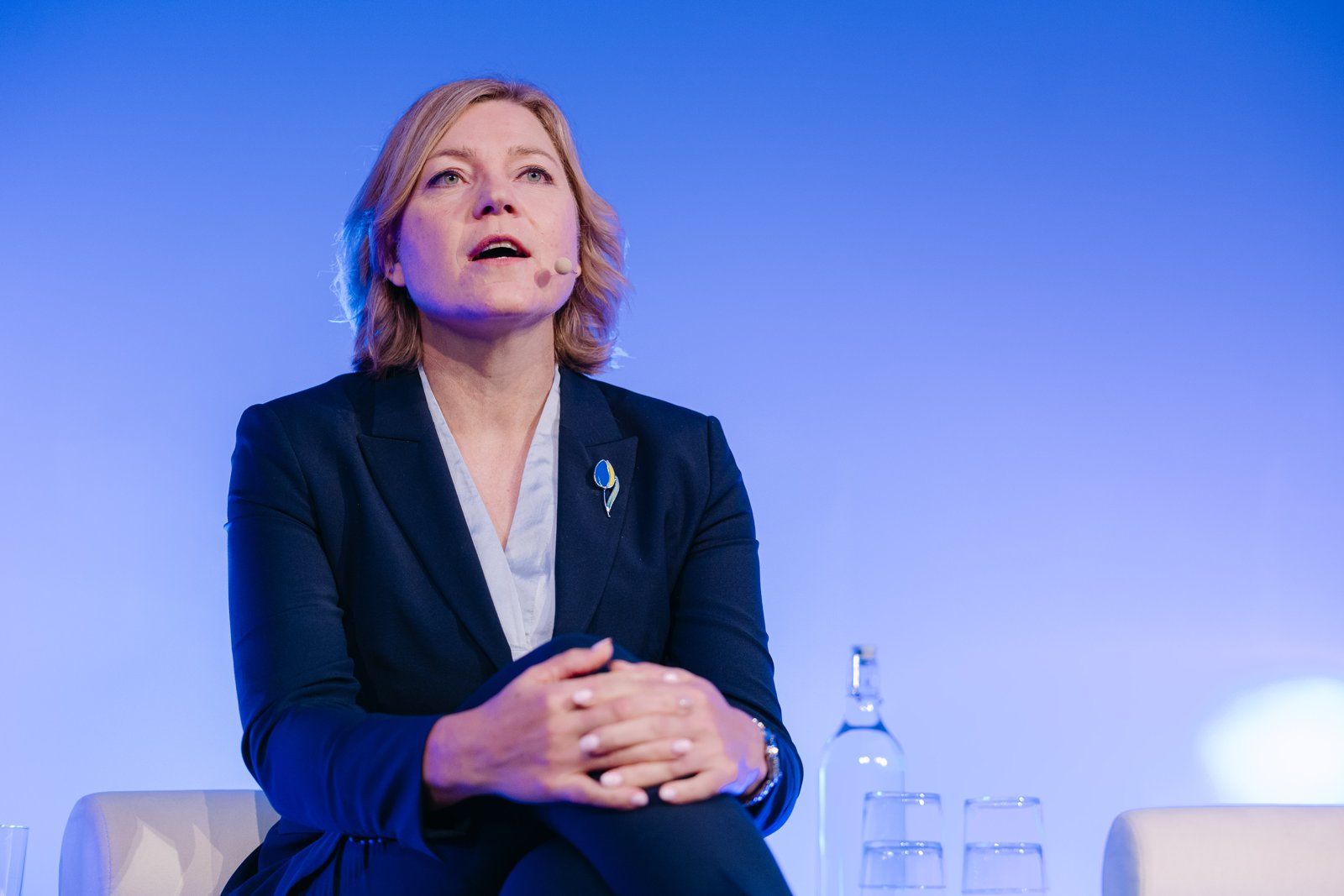
If you are invited to speak, treat it as more than a personal milestone. Use concrete examples, name the teams and collaborators behind the work, and make your expertise visible without shrinking it. If a panel lacks a needed perspective, say so. The strongest event programs are not those with the most logos. They are the ones that make the ecosystem more accurate.

Turn one conversation into momentum

The value of startup events is often decided in the 48 hours afterward. Follow up while the conversation is still recognizable, and refer to one specific detail. A short message can share the resource you mentioned, suggest a next conversation, or thank someone for a useful perspective. Generic “great to meet you” notes rarely create a reason to reply.

Keep a simple record of who you met and what was discussed. This is not about turning people into a spreadsheet. It prevents promising conversations from disappearing beneath an overloaded inbox. For a founder, it may reveal recurring customer concerns. For a professional exploring a move, it can show which companies or communities consistently feel thoughtful and well-run.

It also helps to contribute after the event. Share a considered takeaway with your network, congratulate a speaker whose point changed your thinking, or introduce two people when there is clear mutual relevance. Publicly amplifying women’s expertise matters here. Too often, women do the work, contribute on stage, and then disappear from the recap conversation.

What organizers need to do differently

Attendees can be strategic, but event design shapes who gets access. Organizers should measure representation across speakers, moderators, investors, founders, and attendees receiving promotional attention. Counting women on a single panel is not the same as creating a representative program.

Practical details carry weight. Transparent speaker selection, fair compensation, accessible venues, clear conduct policies, and programming that does not rely entirely on late-night socializing all widen participation. So does moderating panels well. A moderator who redirects interruptions, asks technical questions of technical women, and shares airtime intentionally changes the experience of the room.

EuropeanTechOnHeels sees this as a visibility issue as much as an events issue. The people shaping Europe’s technology future are already diverse. The agenda, the stage, and the post-event coverage should reflect that reality.

The next event on your calendar does not need to transform your career overnight. Go in with a real question, make a few conversations count, and leave people with a precise sense of the work you do. That is how a room becomes part of your professional momentum.

Recent

Encrypted Messaging Apps: What Privacy Really Means

Best Tools for Asynchronous Teams in 2026

Top European Startup Accelerators Worth Knowing

Brussels presses OpenAI and Anthropic for a full count of rogue AI-agent incidents, admitting it learned of some from the press

Startup Events That Actually Move Your Career

14/11/2026
37
Startup Events That Actually Move Your Career

A crowded room, a name badge, and a program packed with panels do not automatically add up to opportunity. The best startup events can sharpen your market view, lead to a role or customer conversation, and put your work in front of people who should know it. The rest are simply expensive calendars with bad coffee.

For women working across European tech, the calculation can be more personal. Events remain places where capital, press attention, hiring decisions, and partnerships circulate - yet not every room distributes attention equally. The goal is not to attend everything. It is to be intentional about where you show up, how you participate, and what you do once the lights are down.

Why startup events still matter

Digital communities have made it easier to follow founders, investors, and product leaders without leaving your desk. That is useful, particularly for people balancing demanding jobs, caregiving, or travel budgets. But a well-designed in-person event offers something a busy feed cannot: context.

You hear which themes are attracting serious investor interest rather than social engagement. You notice which founders can clearly explain a problem and which companies are only repeating a trend. You learn how people describe the market when they are not writing a pitch deck. For operators, that intelligence can inform a hiring plan, a product decision, or a decision to explore a new sector.

The relationship value is real, too, but it is often misunderstood. Networking is not a competition to collect the most contacts. A useful conversation might be a founder comparing go-to-market challenges, a recruiter describing an emerging role, or a journalist seeking a more diverse set of expert voices. Those connections become valuable because there is a reason to continue them.

There is also a visibility argument. When women are present as speakers, moderators, founders, technical experts, and active audience members, the public picture of who builds technology changes. Representation at startup events is not a side issue to the agenda. It affects whose ideas are funded, quoted, hired, and remembered.

Choose startup events with a clear purpose

Before registering, decide what a good outcome looks like. “Meet interesting people” is pleasant, but it is too vague to guide your time. A founder might want three conversations with potential design partners. A product marketer may be researching how AI buyers are changing their evaluation process. Someone considering a career move could be looking for a more honest view of a company or function.

Then assess the event against that goal. Start with the attendee profile, not the event’s headline speaker. A major conference can be excellent for market visibility, media conversations, and broad trend spotting. It can be weak for meaningful one-to-one conversations if everyone is rushing between stages. A smaller ecosystem dinner may have fewer recognizable names but a far stronger chance of sustained dialogue.

Look at the speaker list as a signal, not proof. Who has been invited to define the conversation? Are women represented beyond panels explicitly labeled as diversity discussions? Are technical leaders, operators, and early-stage founders included alongside investors and CEOs? A program that repeatedly centers the same narrow group often reproduces the same narrow network in the room.

Location and format matter as well. Events in Amsterdam, Berlin, Paris, London, and Stockholm can attract different mixes of capital, talent, and sectors. A deep-tech forum may be more relevant to a climate founder than a general startup festival. An evening meetup can suit a first conversation; a two-day conference may justify travel only when there are several high-value reasons to attend.

The trade-off is simple: the biggest event is not always the most useful one. Choose concentration over noise.

Do the work before the badge pickup

The most productive event conversations usually begin before the event itself. Review the agenda and identify a manageable number of people or companies you genuinely want to understand. Read enough to ask a specific question. “I saw your team is expanding into Germany - what changed in the market to make that the right moment?” is far more memorable than “Tell me about what you do.”

If an introduction makes sense, send a concise note before the event. Explain why you would value ten minutes and make the request easy to decline. Avoid treating people as targets in a lead-generation campaign. Curiosity, relevance, and respect travel well in every European tech hub.

Prepare a short introduction that does more than state your title. Say what you work on, the problem you care about, and what you are trying to learn or build next. This is especially useful for people whose role is broad or changing. A clear narrative gives others a practical way to remember you and make an introduction later.

Have better conversations, not more of them

At an event, it is tempting to scan the room for the most senior person available. That can lead to a night of rushed exchanges and little follow-up. Instead, stay present in the conversation in front of you. Ask what is difficult right now, what the person is seeing in their market, or what they think the room is missing. Listen for common ground, but do not force a transaction.

For founders, specificity is especially powerful. Rather than delivering the entire pitch, describe the customer problem and invite a response. For job seekers, talk about the work you want to be trusted with, not just the role you want to land. For investors and ecosystem builders, share a useful observation or a relevant connection only when it is genuinely useful.

Women can face a familiar dynamic at startup events: being interrupted, assumed to be in a junior role, or approached as a social accessory rather than a decision-maker. There is no single correct response. Sometimes a direct correction is warranted: “I lead product for this team.” Sometimes moving toward a more constructive conversation is the better use of energy. Organizers and allies also have a responsibility to intervene, make introductions based on expertise, and avoid leaving inclusion work to those excluded by the room.

If you are invited to speak, treat it as more than a personal milestone. Use concrete examples, name the teams and collaborators behind the work, and make your expertise visible without shrinking it. If a panel lacks a needed perspective, say so. The strongest event programs are not those with the most logos. They are the ones that make the ecosystem more accurate.

Turn one conversation into momentum

The value of startup events is often decided in the 48 hours afterward. Follow up while the conversation is still recognizable, and refer to one specific detail. A short message can share the resource you mentioned, suggest a next conversation, or thank someone for a useful perspective. Generic “great to meet you” notes rarely create a reason to reply.

Keep a simple record of who you met and what was discussed. This is not about turning people into a spreadsheet. It prevents promising conversations from disappearing beneath an overloaded inbox. For a founder, it may reveal recurring customer concerns. For a professional exploring a move, it can show which companies or communities consistently feel thoughtful and well-run.

It also helps to contribute after the event. Share a considered takeaway with your network, congratulate a speaker whose point changed your thinking, or introduce two people when there is clear mutual relevance. Publicly amplifying women’s expertise matters here. Too often, women do the work, contribute on stage, and then disappear from the recap conversation.

What organizers need to do differently

Attendees can be strategic, but event design shapes who gets access. Organizers should measure representation across speakers, moderators, investors, founders, and attendees receiving promotional attention. Counting women on a single panel is not the same as creating a representative program.

Practical details carry weight. Transparent speaker selection, fair compensation, accessible venues, clear conduct policies, and programming that does not rely entirely on late-night socializing all widen participation. So does moderating panels well. A moderator who redirects interruptions, asks technical questions of technical women, and shares airtime intentionally changes the experience of the room.

EuropeanTechOnHeels sees this as a visibility issue as much as an events issue. The people shaping Europe’s technology future are already diverse. The agenda, the stage, and the post-event coverage should reflect that reality.

The next event on your calendar does not need to transform your career overnight. Go in with a real question, make a few conversations count, and leave people with a precise sense of the work you do. That is how a room becomes part of your professional momentum.
Recent

© European Tech On Heels - 2026
Made with
Web Wings